
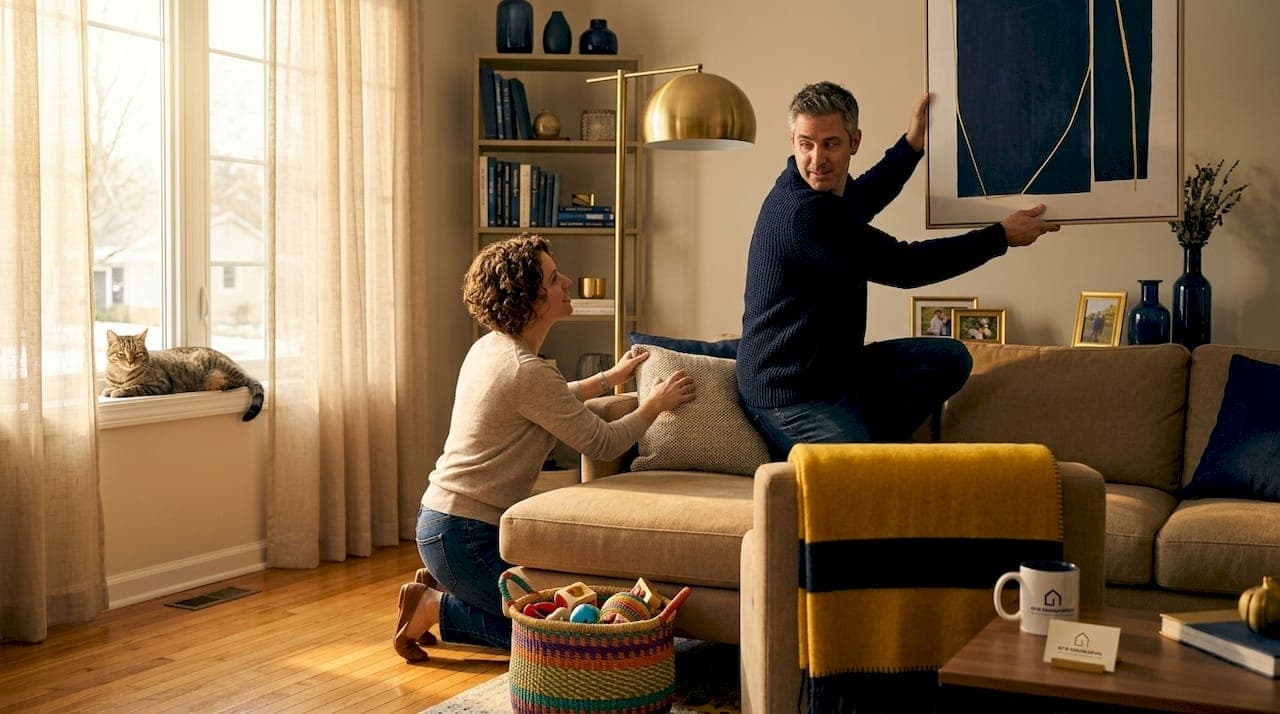
A home can be fully functional and still quietly work against you. Outdated interiors affect concentration, mood, and daily energy in ways most homeowners never consciously attribute to their surroundings. Understanding why update home interiors is not simply a question of aesthetics. It is a question of psychological comfort, financial return, and long-term livability. This guide covers the practical case for refreshing your space, which updates deliver measurable value, when renovation differs from remodeling, and how to approach interior changes with intention rather than impulse.
Table of Contents
- Key takeaways
- Why update home interiors: recognizing design drift
- Financial returns from updating interiors
- Psychological comfort and daily livability
- Renovation versus remodeling: choosing the right scope
- How to start updating your home interiors strategically
- My perspective on thoughtful interior updates
- Work with Ofirengineering for your next interior project
- FAQ
Key takeaways
| Point | Details |
|---|---|
| Design drift ages interiors silently | Even functional homes read as dated when multiple outdated elements accumulate, reducing visual energy. |
| Minor kitchen remodels lead ROI rankings | A minor kitchen refresh averages 113% return, making it one of the smartest updates for resale value. |
| Environment fatigue is a real cost | 58% of homeowners who delay refreshes report reduced motivation and comfort inside their own homes. |
| Renovation and remodeling serve different goals | Cosmetic renovation suits quick refreshes; structural remodeling suits long-term functionality and layout improvements. |
| Paced, intentional updates outperform trend-chasing | Small, coordinated changes to lighting, hardware, and textiles deliver outsized impressions without full replacement costs. |
Why update home interiors: recognizing design drift
Most homeowners do not decide one morning that their home looks dated. It happens gradually. A style that felt current in 2015 or 2019 accumulates detail by detail until the whole room reads as a time capsule. This process is called design drift, and it is the reason why a home can feel oppressive without any single obvious cause.
By 2026 standards, homes with matching furniture sets and uniform recessed lighting often feel cold and visually heavy rather than polished. The cool gray palettes, farmhouse-adjacent shiplap, and matching bedroom suites that dominated the early 2020s have given way to warmer neutrals, organic shapes, layered textures, and sculptural lighting that creates intimacy rather than uniformity.
The key insight here is that you do not need to replace everything. Design drift usually clusters around a few high-visibility anchors. Identifying those anchors is the starting point for any effective interior refresh. Common culprits include:
- Uniform recessed lighting with no layering or warmth variation
- Matching furniture suites that eliminate visual tension and interest
- Cool gray or beige walls that now read as flat rather than neutral
- Dated hardware on cabinets, doors, and fixtures
- Heavy window treatments that block natural light
Layered lighting with ambient, task, and accent sources is consistently cited as one of the fastest ways to shift a room's visual language without touching furniture or flooring. Adding one sculptural floor lamp or pendant changes the quality of light in a room immediately.
Pro Tip: Start any interior refresh with lighting changes before touching furniture or paint. Lighting is the lowest-cost, highest-impact lever for how a space feels at any hour of the day.
Financial returns from updating interiors
The importance of home renovations is often framed in emotional terms, but the financial case is equally compelling. Not all updates deliver the same return, and understanding the difference between profitable and loss-leading projects prevents costly mistakes.
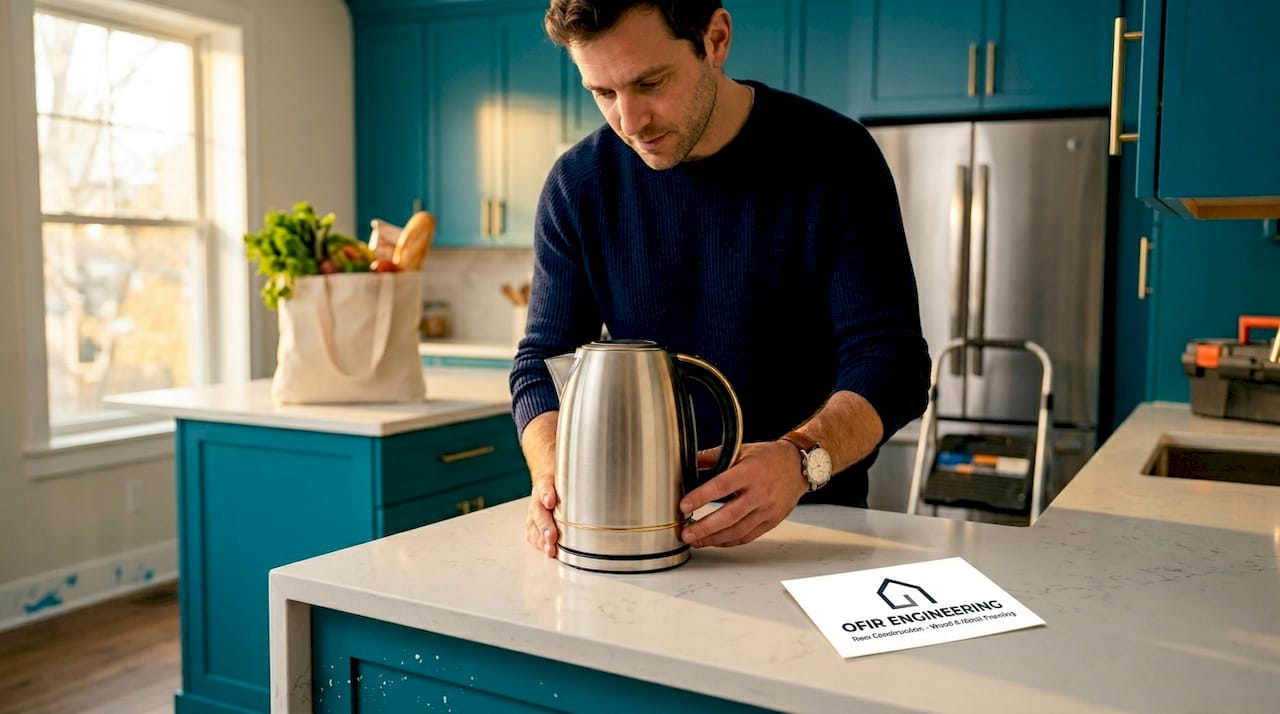
Minor kitchen remodels cost approximately $28,458 on average and return around $32,141 in resale value. That is roughly a 113% ROI, which makes a focused kitchen refresh one of the few home improvements that recoup more than their cost. By contrast, major upscale kitchen remodels and full bathroom overhauls typically return far less per dollar spent.
The table below summarizes typical return on investment for common interior update categories:
| Update Type | Average Cost | Estimated ROI |
|---|---|---|
| Minor kitchen remodel | $28,458 | ~113% |
| Midrange bathroom remodel | $25,000 | ~80% |
| Hardwood floor refinishing | $3,000–$5,000 | ~100%+ |
| Interior paint refresh | $1,500–$3,500 | ~60–80% |
| Cabinet hardware and lighting swap | $500–$2,000 | High relative to cost |
The pattern across these figures is consistent. Focused, midrange updates that align with buyer expectations outperform large-scale overhauls. Choosing projects that match neighborhood comps is critical. Over-improving a property beyond what comparable homes in the area support reduces ROI significantly, a common mistake for homeowners updating interiors primarily for resale.
For Jacksonville homeowners seeking to understand which specific projects deliver the best returns locally, the Ofirengineering resource on Jacksonville renovations with strong returns provides regionally grounded guidance that national averages cannot replicate.
Pro Tip: Before committing to any renovation budget, pull three to five recent comparable sales in your neighborhood and note what finishes and features those homes had. That data tells you exactly where to spend and where to stop.
Psychological comfort and daily livability
The financial case for updating interiors is compelling, but the daily quality-of-life argument is what actually motivates most homeowners to act. Research confirms that this is not about vanity.
58% of homeowners who delay home refreshes report feeling less motivated and less comfortable in their own spaces. This condition, referred to as environment fatigue, is a measurable response to surroundings that no longer reflect the occupant's current taste, needs, or identity. It creates a low-grade friction that affects productivity, relaxation, and overall home satisfaction without most homeowners connecting the feeling to its source.
Psychology also helps explain why updates tend to build momentum once started. The Diderot Effect describes the pattern where updating one element creates a desire to update surrounding elements for visual coherence. This is driven by dopamine-related novelty pursuit and is entirely normal. Understanding it helps homeowners pace their updates intentionally rather than overspending in a reactive sprint.
Homeowners benefit most from updates that improve emotional connection and functionality. Aesthetics alone rarely produce lasting satisfaction.
Performance-focused refreshes go beyond surface styling to address health and comfort directly. The EPA recommends outdoor-venting range hoods during and for 10 to 20 minutes after cooking, along with MERV 13 or higher air filters to reduce indoor pollutants. Upgrading ventilation systems, replacing old filtration, and improving window treatments for thermal comfort are all examples of performance refreshes that improve the lived experience of a home rather than just its appearance.
Pro Tip: Use rotational updating to maintain freshness without spending money. Move artwork between rooms, reframe pieces, and adjust furniture spacing seasonally. The effort takes 30 minutes and the result consistently surprises homeowners who have stopped noticing their own spaces.
Renovation versus remodeling: choosing the right scope
One of the most common sources of confusion for homeowners planning interior updates is the distinction between renovation and remodeling. The two terms are often used interchangeably, but they describe fundamentally different scopes of work with different costs, timelines, and disruption levels.
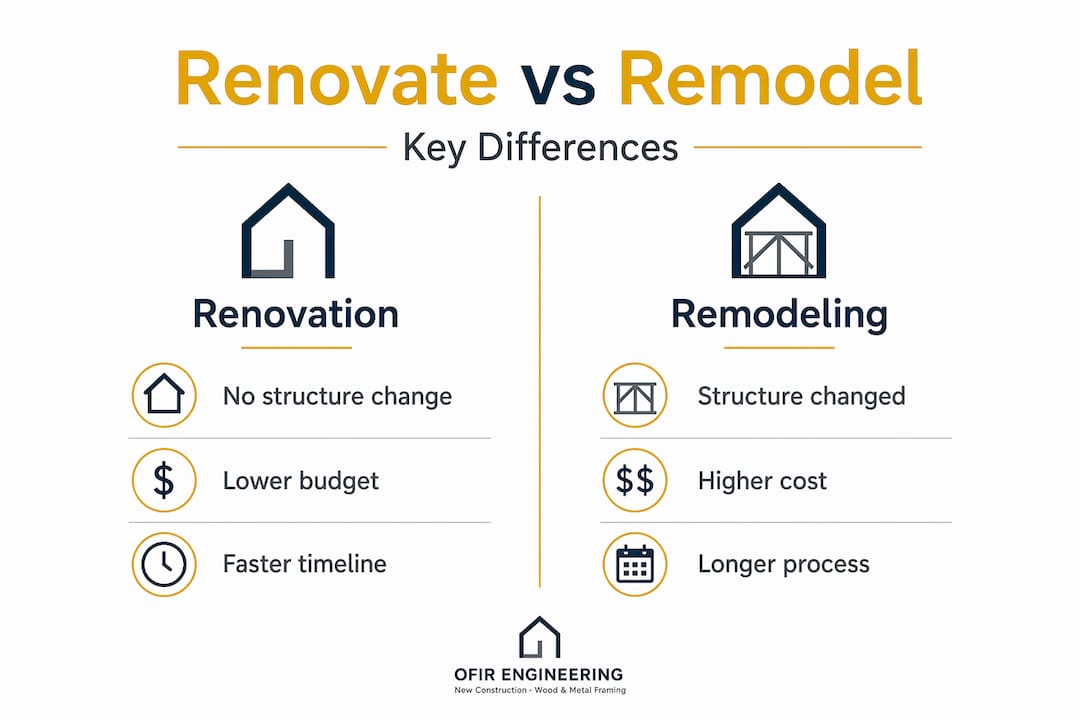
Renovation updates design and finishes without altering the home's structure or layout. A renovation project might include repainting walls, replacing flooring, swapping cabinet hardware, installing new light fixtures, or updating bathroom tile. These projects refresh the look and feel of a space without requiring permits for structural changes or significant disruption to daily life.
Remodeling, by contrast, changes the structure or layout of a space. Opening a wall to create an open floor plan, converting a garage into a living area, or relocating plumbing to reconfigure a bathroom are all remodeling projects. They typically require permits, longer timelines, and larger budgets, but they address functional limitations that cosmetic renovation cannot resolve.
The table below clarifies when each approach makes practical sense:
| Criteria | Renovation | Remodeling |
|---|---|---|
| Structural changes needed | No | Yes |
| Budget range | Lower | Higher |
| Permit requirements | Usually minimal | Required for most changes |
| Project timeline | Days to weeks | Weeks to months |
| Best suited for | Aesthetic refresh, finish updates | Layout improvements, space additions |
| Disruption to daily life | Low to moderate | Moderate to high |
For homeowners weighing these options, understanding the key differences between renovation and remodeling before starting any project prevents budget overruns and misaligned expectations. Ofirengineering supports both project types for Jacksonville homeowners, providing planning and execution expertise across the full range of residential update scopes.
How to start updating your home interiors strategically
Knowing why to update is only part of the equation. Knowing how to begin is where most homeowners stall. The tendency to want to change everything at once leads to overspending, buyer's remorse, and interiors that feel assembled in a rush rather than refined over time.
A structured approach makes the process manageable and produces better outcomes. Here is a practical sequence for beginning:
- Audit your current space by room. Walk through each room and note what reads as dated, what causes friction in daily use, and what you actively avoid. These are your update priorities.
- Separate cosmetic from performance needs. Identify whether each issue is visual (paint, hardware, textiles) or functional (ventilation, storage, layout). Tackle performance issues first since they affect health and daily comfort directly.
- Start with coordinated small changes. 60 to 70% of a room's refresh can be achieved through accessories, lighting, and textiles alone. Replace dated hardware, add a sculptural light source, and introduce warm-toned linens before committing to larger expenses.
- Set a paced update schedule. Slow decorating produces greater long-term satisfaction than rapid overhauls driven by current trends. Plan updates in phases over 12 to 24 months, giving each change time to settle before adding more.
- Treat updates as a coordinated system. Swapping dated hardware and updating lighting creates a stronger cumulative impression than isolated decor swaps. Coordinate changes across finishes, fixtures, and soft furnishings for a cohesive result.
- Engage a qualified contractor for structural or mechanical work. Any update that involves electrical, plumbing, or structural elements requires licensed expertise to meet code requirements and protect your investment.
Pro Tip: When updating interiors for resale, invest in maximizing renovation ROI before listing. Buyers notice lighting, hardware, and kitchen finishes first. These are the elements that create price perception in the first 60 seconds of a showing.
My perspective on thoughtful interior updates
I have spent over a decade working alongside Jacksonville homeowners through renovation and remodeling projects, and the same mistake appears repeatedly. Homeowners see a trend on a design platform, execute it quickly and completely, and then feel disappointed when the result feels impersonal or already dated two years later.
In my experience, the homeowners with the most satisfying interiors are the ones who resist the urge to match a room to a single moment in time. They update in layers. They keep anchors with personal meaning and refresh the supporting elements. They spend more time deciding and less time replacing.
What I have also learned is that lighting is almost always underestimated. I have watched rooms transform with two lighting changes and no furniture moved. Conversely, I have seen expensive furniture placed into rooms with bad lighting and the result looked worse than before. Lighting is infrastructure, not accessory.
The other thing worth stating plainly is that not every update needs a contractor. Many of the highest-impact changes cost under $500 and involve no construction at all. Understanding that threshold, knowing when a project moves from a styling exercise to a construction project that requires licensed expertise, is one of the most practical things a homeowner can internalize. When you reach that threshold, working with a company that has the technical depth and project management structure to execute correctly makes all the difference.
— Owen
Work with Ofirengineering for your next interior project
Ofirengineering brings over 15 years of licensed residential construction experience to Jacksonville homeowners navigating updates at every scale. Whether you are planning a focused cosmetic renovation or a full structural remodel, the team provides detailed project planning, precise execution, and continuous communication from first assessment through final walkthrough. The firm's expertise covers everything from minor interior refreshes to complete home remodels using both Wood Frame and Light Gauge Steel systems. Homeowners ready to turn interior update plans into completed projects can explore Ofirengineering's complete renovation guide or review the full range of services at the Jacksonville remodeling and value page to find the right starting point.
FAQ
Why update home interiors even when nothing is broken?
Functional homes can still cause environment fatigue when their visual language no longer reflects current occupant needs or tastes. Research shows that 58% of homeowners who delay refreshes report reduced motivation and comfort, even in structurally sound spaces.
What interior updates add the most resale value?
Minor kitchen remodels consistently rank highest, returning approximately 113% of their cost in resale value. Coordinated lighting and hardware updates also deliver strong returns relative to their cost.
How often should you refresh home interiors?
There is no fixed schedule. Pacing updates over 12 to 24 months using a structured audit approach produces better results than reactive overhauls. Small, coordinated changes every one to two years maintain freshness without large financial commitments.
What is the difference between renovating and remodeling?
Renovation updates finishes and aesthetics without structural changes, while remodeling alters the layout or structure of a space. Renovation suits quick refreshes with minimal disruption; remodeling suits long-term functional improvements that require permits and extended timelines.
Can small changes genuinely impact home interiors?
Yes. Accessories, lighting, and textiles can achieve 60 to 70% of a room's refresh without replacing furniture or flooring. Coordinated hardware and lighting changes create the strongest cumulative impressions at the lowest cost.