

Many homeowners assume that construction planning is where projects slow down before they even begin. In practice, the opposite is true. Understanding why plan residential construction decisions matter before breaking ground is what separates projects that finish on time and on budget from those that run months over schedule with surprise costs attached. This guide covers the full picture: permits, budgets, inspection sequencing, and risk management, drawing on real regulatory benchmarks and the expertise Ofirengineering has built across more than 15 years of residential construction in Jacksonville, Florida.
Table of Contents
- Key takeaways
- Why plan residential construction from the start
- How a cost plan prevents budget overruns
- Scheduling inspections and contractor sequencing
- Planning for weather, labor, and material variables
- My perspective on why homeowners undervalue planning
- How Ofirengineering supports your residential construction plan
- FAQ
Key takeaways
| Point | Details |
|---|---|
| Planning prevents permit delays | Incomplete submissions trigger review cycles that can push start dates back by weeks or months. |
| Cost plans control budgets | A structured cost plan created before construction starts prevents scope creep and aligns design decisions with available funds. |
| Inspection sequencing matters | Work cannot legally proceed past certain phases without a passed inspection, making scheduling coordination non-negotiable. |
| Risk buffers protect schedules | Weather, labor shortages, and material delays are predictable risks that thorough planning accounts for in advance. |
| Early engagement saves money | Involving an experienced contractor or project manager before design is finalized consistently reduces total project cost. |
Why plan residential construction from the start
The permit process alone is a compelling reason to begin planning well before any site work starts. Most homeowners think of permitting as a single step. In reality, permit review involves multiple rounds of back-and-forth communication between applicants and city officials, each round capable of adding weeks to the timeline if submitted documents are incomplete or non-compliant.
Sacramento's residential building program offers a useful benchmark. Plan reviews take 10 to 15 business days, and that clock restarts every time a resubmission is required. The permit itself has an expiration condition: authorized work must begin within 180 days or the permit expires and a new application is required. Boulder County enforces an identical rule, specifying that a permit expires if work stops for 180 days, requiring a new permit to resume.
These timelines have direct financial consequences. A permit expiration means re-application fees, additional review cycles, and the possibility that updated code requirements now apply to your project. For homeowners planning a new home in Jacksonville or anywhere else, the gap between submitting inadequate documents and receiving final approval is not a minor inconvenience. It can derail financing schedules, delay contractor start dates, and compound into significant cost overruns.
- Incomplete architectural or structural drawings trigger automatic resubmission requests
- Missing site survey data or drainage calculations are among the most common causes of first-round rejection
- Code compliance errors discovered mid-review require design revisions before the review clock resumes
- Each resubmission round resets the review period, multiplying the original delay
Pro Tip: Before submitting for any residential permit, have a licensed contractor or project manager conduct a document review against local code requirements. Submitting a complete, code-compliant package on the first attempt is the single most effective way to control your permit timeline.
Ofirengineering's construction planning tips for Jacksonville consistently emphasize this point: thorough pre-submission document preparation is not administrative overhead. It is schedule protection.
How a cost plan prevents budget overruns
A construction cost plan is a structured budget document created during the pre-construction phase that breaks down every anticipated expense across the project lifecycle. It is not a rough estimate. A cost plan functions as a project control document used to compare bids, monitor spending, and flag variances before they become crises.
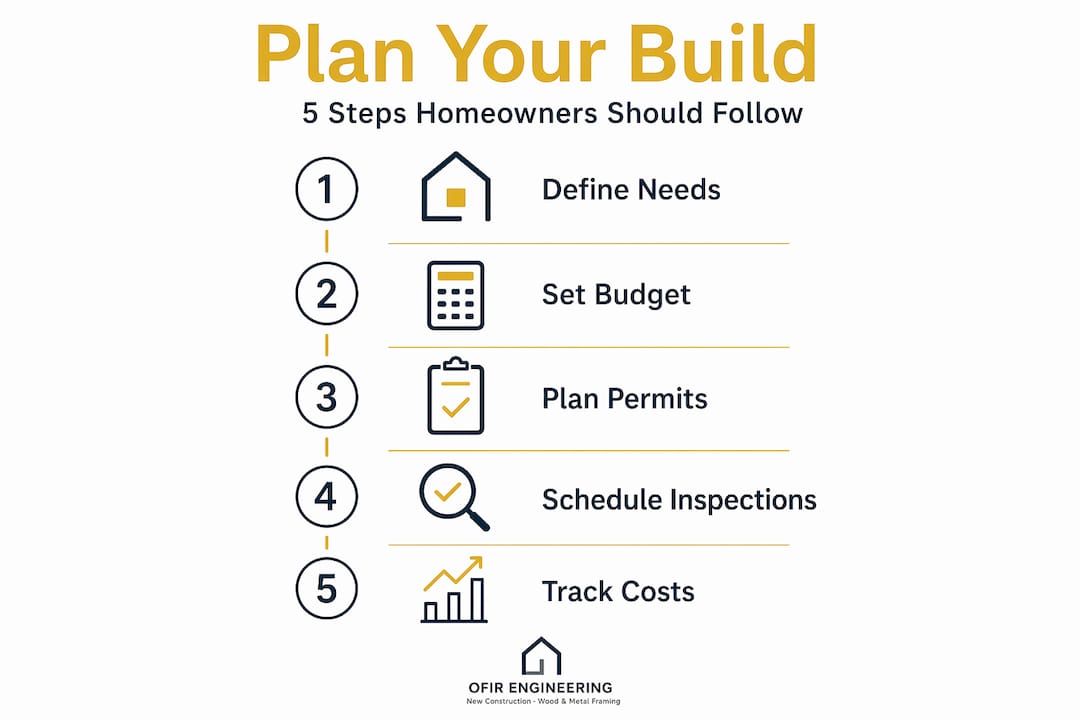
The distinction matters because scope creep, the gradual expansion of a project beyond its original parameters, is responsible for a large share of residential construction cost overruns. Without a documented cost plan, design changes made during construction are evaluated in isolation rather than against a total budget picture. A homeowner who upgrades flooring material mid-project, adds a window not shown on original plans, or changes roof pitch after framing begins may not realize the cumulative financial impact until the contractor submits a change order.
| Planning approach | Budget outcome |
|---|---|
| No formal cost plan | Design changes proceed without visibility into cumulative cost impact |
| Basic estimate only | Provides a starting number but no mechanism for monitoring variance |
| Structured cost plan | Every change is evaluated against approved budget; contingency funds are tracked |
| Cost plan with risk allowance | Accounts for material price fluctuation and labor rate changes in advance |
The table above illustrates why the advantages of construction planning extend beyond organizational tidiness. A cost plan with a built-in contingency allowance, typically 10 to 15 percent of the total project value for residential new construction, gives homeowners a financial buffer for legitimate unknowns without treating every surprise as a budget emergency.
Pro Tip: Ask your contractor to produce a line-item cost plan before design is finalized, not after. Early cost visibility allows you to make material and design choices that reflect your actual budget rather than discovering misalignment after structural drawings are complete.
Ofirengineering integrates cost planning into every new construction engagement, providing clients with a clear financial framework before a single permit application is submitted.
Scheduling inspections and contractor sequencing
Inspections are mandatory checkpoints embedded in the residential construction process. Work cannot legally proceed past specific phases until an inspector reviews and approves completed work. This is not discretionary. Framing cannot be enclosed until a framing inspection passes. Electrical and plumbing rough-ins must be inspected before walls are closed. Foundation work requires inspection before the slab is poured.
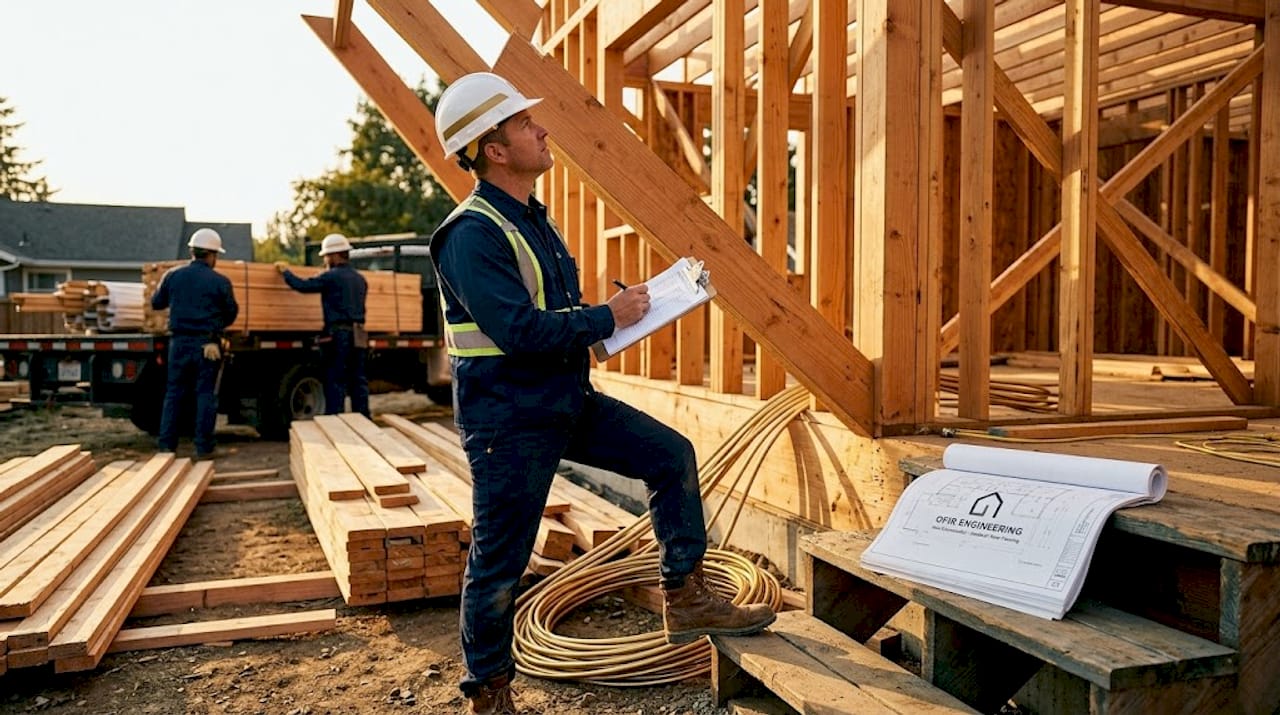
The coordination of inspections with project phases and trade contractor readiness is one of the most technically demanding aspects of residential construction management. When inspections are scheduled without verifying that the required work is fully complete and documented, inspectors arrive to incomplete conditions and schedule a re-inspection. That re-inspection introduces a delay of days or weeks, and every trade contractor who was lined up to follow that phase must be rescheduled.
Here is how proper scheduling prevents these stoppages:
- Map every required inspection to the phase it gates, creating a dependency chart before construction starts
- Build contractor sequencing around confirmed inspection windows rather than assumed availability
- Maintain a documentation checklist for each inspection so that photographs, material certifications, and structural calculations are ready before the inspector arrives
- Schedule inspections at least three to five business days in advance, accounting for local inspection department backlogs
- Build a one to two day buffer between inspection scheduling and the downstream trade contractor's start date to absorb re-inspection scenarios without cascading delays
Pro Tip: Request your local building department's inspection checklist for each phase at the beginning of the project, not when you are standing in front of a framed wall waiting for approval. Knowing what the inspector is looking for in advance eliminates most re-inspection scenarios.
Ofirengineering's project management expertise for Jacksonville homes reflects over 15 years of managing exactly these sequencing challenges. The firm's approach treats inspection phase coordination as a core project management function, not a scheduling afterthought.
Planning for weather, labor, and material variables
Even the most thoroughly planned residential build encounters conditions that cannot be fully controlled. Pre-construction planning helps manage typical construction phases and the risk factors that intersect with them, including weather delays, labor shortages, and supply chain disruptions. The goal of planning is not to eliminate these risks. It is to reduce their impact on schedule and cost when they occur.
Good planning accommodates buffers and contingencies for each of the following predictable risk categories:
- Weather delays: Jacksonville's climate includes hurricane season and periods of significant rainfall that can halt exterior work, excavation, and concrete pours. A schedule that accounts for weather windows at each phase reduces the shock of a two-week rain delay in the framing phase.
- Labor availability: Skilled trade contractors, electricians, plumbers, and HVAC technicians often work across multiple projects simultaneously. A well-planned construction schedule locks in trade contractors in advance with defined start windows, reducing the risk of gaps between phases.
- Material lead times: Specialty materials including engineered lumber, Light Gauge Steel components, and custom windows can carry lead times of four to twelve weeks. Ordering these items during the pre-construction phase rather than mid-construction prevents work stoppages waiting for materials to arrive.
- Supply chain price fluctuations: Material prices shift between the design phase and construction start. A cost plan that includes a material escalation allowance accounts for this variance rather than absorbing it as an unexpected cost.
- Permit and inspection delays: As outlined above, regulatory timelines introduce unavoidable delays. Planning for them as a scheduled event rather than an interruption maintains overall project continuity.
Ofirengineering's home construction timeline guide details how each of these variables maps to specific project phases, giving homeowners a realistic view of how long each stage takes and where the highest risk windows fall.
My perspective on why homeowners undervalue planning
I have worked on residential construction projects for over 15 years, and the pattern I see most consistently is this: homeowners who resist the planning phase are often the same ones who call six months into a project asking why costs have doubled and the certificate of occupancy is nowhere in sight.
The frustration is understandable. Planning feels like time spent not building. But what I have seen repeatedly is that projects where comprehensive planning was treated as the first phase of construction, not a precursor to it, consistently outperform those where planning was compressed to get shovels in the ground faster.
The uncomfortable reality is that most residential construction problems are not caused by bad contractors or bad luck. They are caused by insufficient information at the moment a critical decision was made. A homeowner who did not understand permit expiration rules loses their approval status. A homeowner who did not have a cost plan approves a design change that triggers four more. A homeowner who did not understand inspection sequencing commits to a move-in date that depends on a phase that was never properly scheduled.
What I advise is early engagement with an experienced contractor before finalizing design. Not to hand over control, but to get the realistic inputs that shape good planning decisions. At Ofirengineering, the conversations that happen before a permit is filed are often where we add the most value. That is where we catch the decisions that would have cost clients significantly more money to unwind later.
— Owen
How Ofirengineering supports your residential construction plan
Ofirengineering brings over 15 years of licensed residential construction experience in Jacksonville to every project, from planning for a new home through to final inspection. Whether you are starting from raw land or managing a full-home renovation, the team provides cost planning, permit management, contractor coordination, and project oversight under one roof. Engaging Ofirengineering during the pre-construction phase means your schedule, budget, and permit documentation are built on accurate information before any work begins. Explore new residential construction services to learn how Ofirengineering can take your project from concept to certificate of occupancy with the precision planning your investment deserves.
FAQ
Why does planning matter so much for residential construction?
Planning prevents permit rejections, budget overruns, and inspection delays that stop work legally and add significant cost. Projects with thorough pre-construction plans consistently finish closer to schedule and original budget than those without.
How long does a residential permit review typically take?
Residential plan reviews take approximately 10 to 15 business days in many jurisdictions, but that timeline resets with each resubmission caused by incomplete or non-compliant documents.
What happens if a building permit expires before work starts?
A permit expires if work does not start within 180 days of issuance, requiring a new application, additional fees, and a full review cycle that may apply updated code requirements.
What is a construction cost plan and why do I need one?
A construction cost plan is a line-item budget document created before construction begins. It functions as a control tool to evaluate design changes against total budget, track spending, and maintain contingency reserves for unexpected costs.
How do inspections affect a residential construction schedule?
Required inspections gate each construction phase, meaning work cannot legally proceed until each inspection passes. Poor scheduling of these checkpoints causes trade contractor delays and project pauses that compound across the entire schedule.