
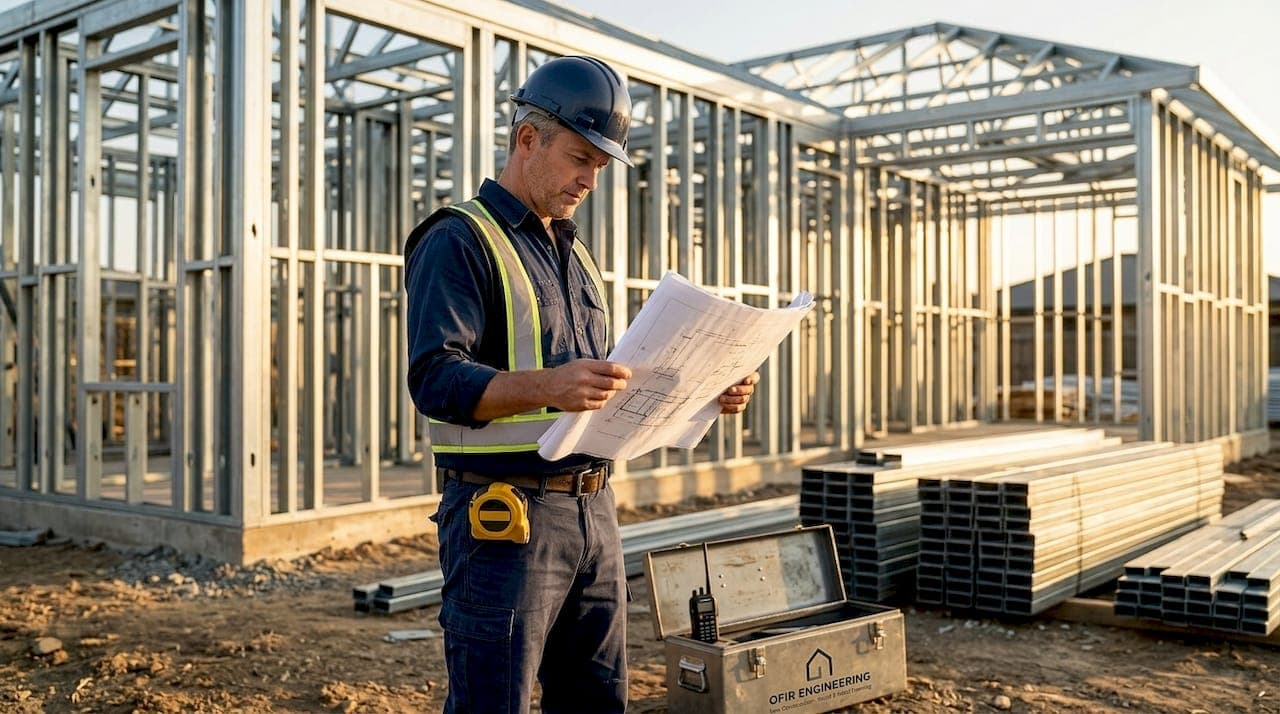
Durability is one of the most misunderstood concepts in construction. Most people assume that what is durable construction simply refers to how strong a material is on day one. In practice, durability describes something far more demanding: the capacity of materials and building systems to maintain their mechanical, physical, and aesthetic performance over an extended service life, even under continuous environmental and operational stress. This guide breaks down the science behind durable construction, compares the most reliable materials and methods, and explains how individuals, builders, and architects can apply these principles to deliver buildings that hold their value for decades.
Key Takeaways
| Point | Details |
|---|---|
| Durability goes beyond strength | A material's long-term performance under environmental stress matters more than its initial load capacity. |
| Material properties are measurable | Porosity, chemical stability, and weathering resistance are the key indicators of genuine durability. |
| Lifecycle costs favor durable builds | Higher upfront material investment typically returns savings through reduced repair frequency and lower maintenance costs. |
| Exposure class drives material choice | Specifying materials based on site-specific environmental hazards is the foundation of sound durability design. |
| Emerging materials extend service life | Supplementary cementitious materials and green concrete alternatives improve durability while supporting sustainability goals. |
What durable construction really means
The industry term for this field of practice is durability design, and it sits at the intersection of material science, structural engineering, and lifecycle planning. According to research on building material performance, durable construction means building materials and systems that maintain mechanical, physical, and aesthetic performance over time despite environmental and operational stresses, without requiring excessive maintenance to do so.
That distinction, performance maintenance rather than initial strength, changes how professionals should think about material selection from the start.
The key measurable properties that determine whether a material qualifies as genuinely durable include:
- Mechanical resistance: the ability to withstand static and dynamic loads over repeated cycles without fatigue or fracture
- Porosity and permeability: low-permeability materials resist moisture ingress, which is the root cause of most long-term degradation
- Chemical stability: resistance to acidic, alkaline, or saline environments that cause internal reactions in concrete and corrosion in metals
- Weathering resistance: dimensional stability and surface integrity under UV exposure, freeze-thaw cycles, and thermal movement
These properties are not static. A material that performs well under controlled conditions may deteriorate rapidly when placed in a coastal environment or subjected to freeze-thaw cycling. Defining durable construction materials, then, requires understanding the specific stressors a structure will face throughout its service life, not just on installation day.
Lifecycle impact is the other critical dimension. Durability reduces life-cycle impacts including repair frequency, resource use, and maintenance costs, which means it carries direct environmental and financial benefits that compound over decades.
Pro Tip: When evaluating materials, ask for standardized durability test data such as water absorption rates, carbonation depth measurements, or corrosion resistance ratings. Marketing language like "high-quality" tells you nothing; test data tells you everything.
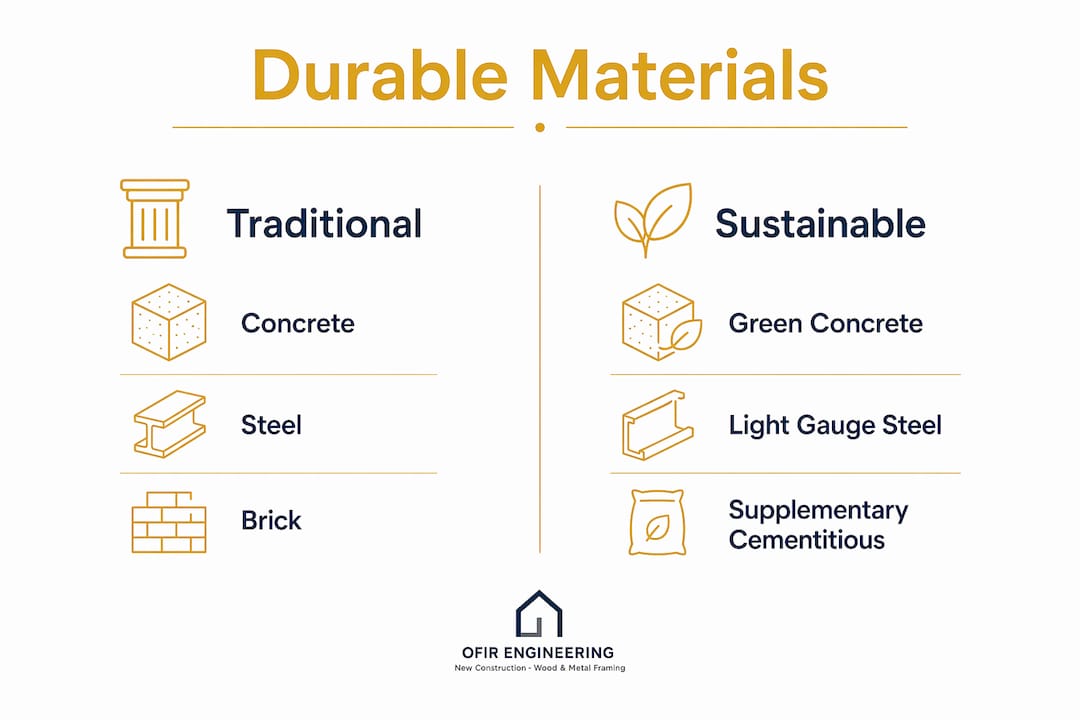
Durable materials compared: types, trade-offs, and selection
Defining durable construction materials in practice means weighing multiple variables at once: performance under local environmental conditions, maintenance requirements, upfront cost, and long-term sustainability. No single material wins on every dimension.
Traditional durable materials
Reinforced concrete remains the most widely used structural material globally, but its durability is highly condition-dependent. Chloride-induced corrosion and carbonation are the primary degradation mechanisms in reinforced concrete, leading to steel reinforcement deterioration when moisture is present. Structures in coastal zones or areas with de-icing salt exposure face significantly accelerated degradation without protective design measures.
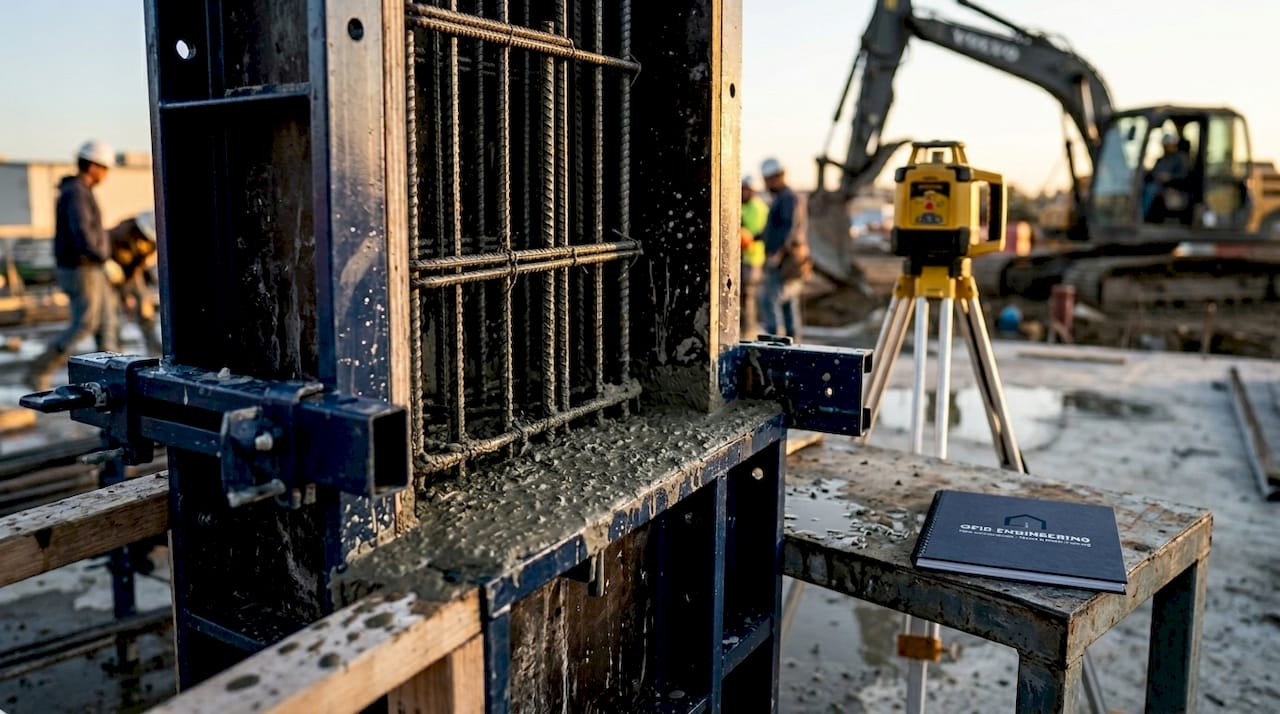
Steel and metal construction presents a different durability profile. Durable metal buildings require minimal upkeep and provide long-term savings through resilience and energy performance. Steel does not rot, warp, or attract biological growth. Properly coated and detailed steel framing can outlast wood-frame construction by several decades in humid or high-moisture environments like Jacksonville, Florida.
Brick and stone deliver excellent weathering resistance and chemical stability but come with higher labor costs and limited design flexibility compared to steel or concrete systems.
Emerging sustainable alternatives
Green concrete is a more durable and eco-friendly alternative to traditional concrete, with lower permeability and reduced cracking, though it carries higher upfront costs. It uses recycled industrial byproducts as partial cement replacements, which reduces both embodied carbon and long-term porosity.
| Material | Durability Rating | Maintenance Level | Upfront Cost | Sustainability |
|---|---|---|---|---|
| Reinforced concrete | High (condition-dependent) | Moderate | Moderate | Moderate |
| Light Gauge Steel | Very high | Low | Moderate to high | High |
| Brick/stone | High | Low to moderate | High | Moderate |
| Green concrete | High | Low | High | Very high |
| Traditional wood frame | Moderate | High | Low to moderate | Moderate |
Pro Tip: For projects in weather-exposed environments, prioritize materials with documented performance data specific to your climate zone. A material rated for arid conditions may degrade rapidly in humid subtropical regions without additional protective detailing.
The advantages of resilient construction become clearest when comparing materials over a 30-to-50-year horizon rather than at the point of purchase. Materials with lower initial costs but higher maintenance demand consistently produce greater total expenditure over a full building lifecycle.
How durability reduces costs and extends building life
The financial case for investing in durable construction is straightforward when viewed through a lifecycle cost framework rather than an initial-budget perspective. Buildings that require frequent repairs, surface treatments, or structural interventions accumulate costs that far exceed the premium paid for more durable materials at the outset.
The practical cost advantages compound across several dimensions:
- Reduced repair frequency: Structures built with low-permeability, corrosion-resistant materials experience fewer structural repairs, particularly in aggressive environments. Each avoided repair eliminates not only material costs but also labor, project downtime, and the indirect costs of occupant disruption.
- Lower maintenance expenditure: Metal-framed and concrete structures with proper protective design demand significantly less routine maintenance than wood-frame construction exposed to moisture cycles. This translates directly to reduced annual operating costs for property owners.
- Structural safety over time: Degradation that goes unaddressed, particularly corrosion in reinforced concrete or rot in wood-frame assemblies, creates structural safety risks that escalate in remediation cost the longer they are deferred.
- Property value retention: Buildings with documented durability design and material specifications carry higher appraised values and attract better financing terms, particularly for investment and commercial properties.
- Environmental resource savings: Durability linked to environmental impact reduction means that longer-lived structures consume fewer resources over their service life compared to structures requiring early replacement or major reconstruction.
A well-documented example of lifecycle advantage is Light Gauge Steel framing, which Ofirengineering deploys in new residential construction in Jacksonville. Steel does not absorb moisture, does not support mold growth, and does not experience the creep and dimensional change associated with wood in humid climates. The result is a structure that requires fewer corrective interventions over a 40-to-60-year service life, reducing the total cost of ownership substantially compared to a conventionally framed equivalent.
The benefits of durable construction also extend to insurance costs and building code compliance. Structures designed and built to demonstrable durability standards often qualify for reduced insurance premiums and face fewer compliance remediation requirements during resale inspections.
Applying durability principles in practice
Translating durability theory into a functional construction specification requires a structured, exposure-based approach. Effective durability design requires specifying requirements derived from exposure classes and hazard analysis, then translating those requirements into material targets such as permeability thresholds and protective layer specifications.
For builders, architects, and individuals planning projects, the following framework provides a practical starting point:
- Identify the exposure class: Classify the project site by environmental hazard. For Jacksonville-area projects, this typically includes high humidity, salt air proximity for coastal sites, UV intensity, and wind-driven rain. Each factor informs material and detailing choices.
- Specify material properties by exposure: Once exposure classes are defined, translate them into minimum material performance targets. For concrete exposed to chloride environments, specify maximum water-cement ratios and minimum cover depths. For steel, specify coating systems rated for the relevant corrosivity category.
- Design protective measures into the assembly: Permeability barriers, vapor control layers, drainage planes, and corrosion-resistant fasteners are not optional additions. They are integral to achieving the durability performance the material specification promises.
- Plan for maintenance from day one: Even the most durable materials benefit from scheduled inspections and proactive interventions. Sealant reapplication, coating inspection, and drainage system maintenance should be documented in a maintenance plan delivered with the project.
- Verify contractor competence: Material specifications are only as effective as the installation quality. Contractors without documented experience in the specified systems introduce execution risk that undermines the designed durability performance.
Ofirengineering applies these principles across all residential construction and renovation projects, drawing on over 15 years of experience with both Light Gauge Steel and Wood Frame systems in the Jacksonville area. The firm's construction planning approach incorporates exposure analysis and durability specification as standard project planning elements, not as afterthoughts.
Pro Tip: When reviewing a construction contract, verify that the specification section references specific material performance standards, not just product names. Performance standards are enforceable; brand names alone are not.
Emerging trends in durability design
The field of durability design is advancing rapidly, particularly in concrete construction where capacity-based mix design now incorporates both compressive strength and durability performance targets simultaneously, improving long-term structural performance and service life estimation.
Supplementary Cementitious Materials, commonly called SCMs, are at the center of this shift. Fly ash, ground granulated blast furnace slag, and silica fume each improve resistance to chloride penetration and reduce internal porosity when substituted for a portion of Portland cement. The challenge lies in calibrating SCM replacement rates to meet both durability and compressive strength targets without compromising early-age load-bearing capacity.
| Trend | Mechanism | Primary Benefit |
|---|---|---|
| SCM integration | Reduces porosity and chloride penetration | Extended service life in aggressive environments |
| Performance-based assessment | Probabilistic durability modeling | More accurate service life prediction and reuse planning |
| Circular concrete construction | Reuse and lifecycle extension | Reduced material waste and carbon impact |
| Green concrete adoption | Recycled materials and lower permeability | Improved durability with reduced embodied carbon |
Circular construction, the practice of designing structures for disassembly, reuse, and material recovery, is also gaining traction. Performance-based probabilistic frameworks for durability assessment now support reuse strategies by providing quantified estimates of remaining service life, allowing structural elements to be certified for reuse rather than defaulting to demolition and replacement.
Ofirengineering monitors these developments closely and incorporates proven innovations into project specifications as they reach demonstrated reliability in field applications.
My perspective on what durability really costs you
I have spent years watching projects get value-engineered down to the cheapest compliant material, and the pattern is remarkably consistent. The savings disappear within a decade, sometimes sooner. What I have found in practice is that the conversation about durability almost always happens too late. It tends to surface during a remediation project, not during design.
The part that frustrates me most is how preventable most durability failures are. Corrosion in reinforced concrete, rot in improperly detailed wood framing, fastener failure in coastal environments. These are not mysterious outcomes. They are predictable consequences of ignoring exposure analysis and protective design. The research on durability as performance maintenance has existed for years, but it does not always make it into the specification.
My honest advice: treat durability design as a line item in your project budget, not as an implicit outcome of using reputable materials. Ask your contractor how they have translated your site's exposure conditions into material and detailing specifications. If they cannot answer that question clearly, that is important information. The buildings I am most confident in are not the ones with the highest initial budgets. They are the ones where durability was specified deliberately, verified during construction, and supported by a maintenance plan from day one.
— Owen
Build smarter with Ofirengineering
Ofirengineering brings over 15 years of licensed construction experience to residential and commercial projects across Jacksonville, with a disciplined focus on durable new construction using Light Gauge Steel and Wood Frame systems. Every project begins with a thorough exposure analysis and material specification process designed to maximize service life and minimize lifecycle costs. Whether you are planning a new home, a full renovation, or a phased upgrade, Ofirengineering's team provides the technical guidance needed to make durability decisions with confidence. Explore the full range of construction and steel services or contact Ofirengineering directly to discuss your project requirements and receive a detailed consultation.
FAQ
What is durable construction in simple terms?
Durable construction refers to building methods and materials that maintain their structural, functional, and visual performance over a long service life with minimal maintenance, even under exposure to environmental and operational stresses.
What materials are considered most durable for residential construction?
Light Gauge Steel, reinforced concrete with low water-cement ratios, brick, and stone rank among the most durable residential materials. Steel is particularly effective in humid climates because it does not rot, warp, or support biological growth.
Why invest in durable construction over cheaper alternatives?
Durable construction reduces total lifecycle costs by lowering repair frequency, maintenance expenditure, and early replacement risk. The upfront cost premium is consistently offset by long-term savings, particularly for projects with service life targets of 30 years or more.
How does exposure class affect material selection?
Exposure class defines the environmental hazards a structure faces, such as chloride proximity, UV intensity, or freeze-thaw cycling. Matching material specifications to the identified exposure class is the primary mechanism for achieving target service life in durability design.
What makes a building durable over decades?
A building achieves long-term durability through the combination of low-permeability materials, properly detailed protective assemblies, corrosion-resistant fasteners and connections, and a scheduled maintenance program that addresses degradation before it becomes structural.