
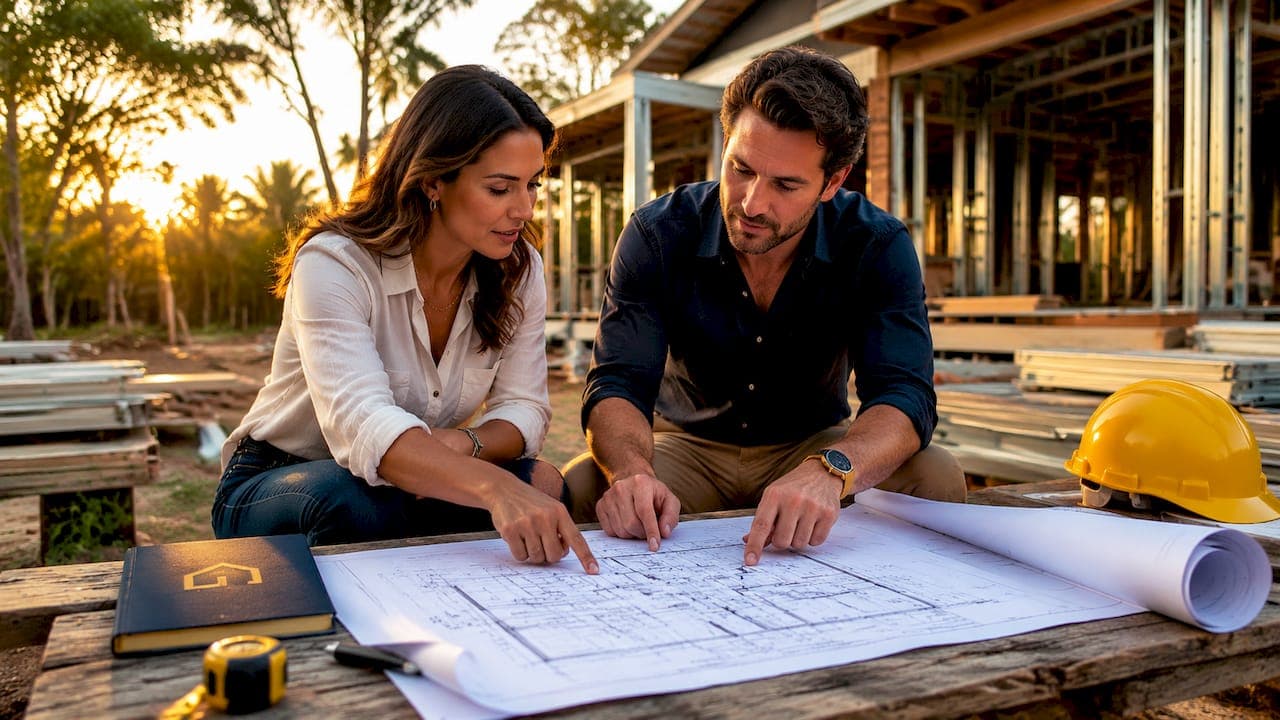
Customization in new construction is defined as the process of modifying structural systems, mechanical layouts, interior finishes, and site-specific design elements before or during the build to reflect the owner's functional and aesthetic priorities. Jacksonville homeowners and property investors have more ways to customize new construction than most markets allow, but only when they understand the local building code constraints, construction phase windows, and material requirements that govern every decision. Ofirengineering, licensed under CHC1540016 and operating in Jacksonville for over 15 years, works with clients to coordinate these decisions from lot selection through final finishes. The key insight: customization influence drops sharply after the rough-in phase closes, so front-loading your decisions is not a preference but a structural requirement of the build process.
What local building codes and environmental factors influence customization in Jacksonville?
Jacksonville sits within Florida's high-wind design territory, and that fact shapes nearly every exterior customization decision a homeowner can make. Florida Building Code requirements mandate impact-rated windows and doors for structures in areas with ultimate design wind speeds at or above 140 mph, or within one mile of the coastline. That requirement eliminates a wide range of standard window styles and glazing options that would otherwise be available in lower-wind states. Selecting windows and doors that are both aesthetically distinctive and code-compliant requires working with a supplier and engineer who understand ASCE 7 wind zone classifications.
Flood zone designations add a second layer of constraint. FEMA flood maps and Jacksonville's zoning atlas determine Base Flood Elevation requirements, which directly affect foundation height and, by extension, the visual profile of the home from the street. A home required to sit 18 inches above grade looks and functions differently than one built at grade, and that elevation affects entry design, garage access, and landscaping options. Confirming your lot's flood zone classification before finalizing any floor plan is a non-negotiable step in the Jacksonville custom home design process.
Zoning regulations govern setbacks, lot coverage ratios, and in some districts, exterior material restrictions. These rules define the physical envelope within which all customization occurs.
| Code Factor | Requirement | Customization Impact |
|---|---|---|
| Wind speed zone | Impact-rated windows/doors at ≥140 mph | Limits window style and glazing options |
| Flood zone (AE, VE) | Elevated foundation per Base Flood Elevation | Affects entry design and garage height |
| Setback requirements | Varies by zoning district | Limits footprint size and outdoor additions |
| Lot coverage ratio | Percentage of lot buildable area | Restricts square footage of structures |
| Exterior material codes | Some districts restrict cladding types | Narrows siding and facade material choices |
Understanding these constraints before engaging a builder is the single most effective way to avoid redesign costs later. Ofirengineering's construction planning guidance addresses each of these factors in the context of Jacksonville's specific regulatory environment.
How to plan design customization during the new construction process phases
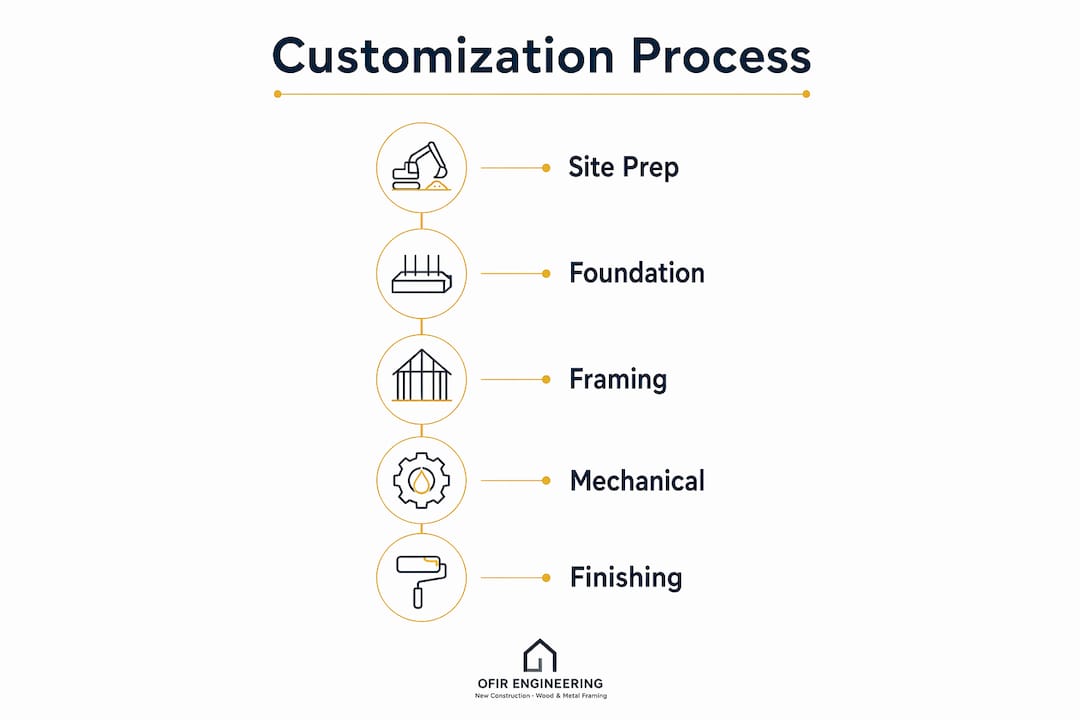
The construction timeline in Jacksonville follows a predictable sequence: site work and foundation, framing and dry-in, rough-ins for mechanical and electrical and plumbing systems, and then finishes. Each phase opens and closes a specific window for customization decisions, and missing a phase window typically means paying for demolition and rework rather than a simple upgrade. Knowing which decisions belong to which phase is the foundation of an effective customization strategy.
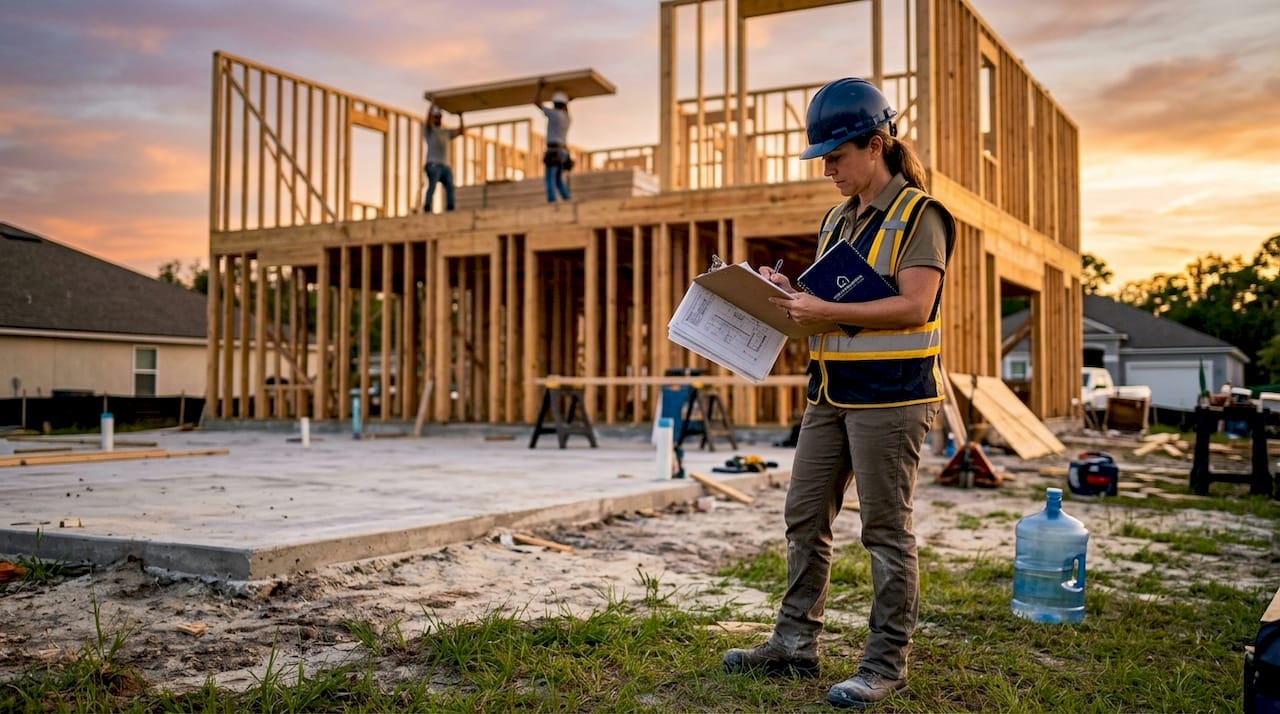
The rough-in phase is the most consequential and the most underestimated. Electrical outlet placement, switch locations, data and media conduit runs, HVAC duct routing, and plumbing stub-out positions are all finalized during rough-ins. Once drywall closes the walls, changing any of these requires cutting, patching, and re-inspecting. Homeowners who arrive at the finishes phase without a clear MEP layout plan consistently report the highest rates of post-construction modification costs.
Here is a numbered sequence of critical customization decisions aligned to construction phases:
- Lot selection and site work: Confirm flood zone, soil conditions, and utility access before purchase. These factors determine foundation type and depth, which affects cost and design options.
- Foundation and framing: Finalize structural modifications such as ceiling height changes, load-bearing wall placement, and window rough opening sizes. Changes here after framing are expensive.
- Rough-in phase: Lock in all outlet, switch, and data port locations. Specify HVAC zone configurations, plumbing fixture rough-in positions, and any specialty systems such as radiant floor heating.
- Insulation and drywall: Select insulation type and R-value. Confirm any in-wall blocking for future grab bars, TV mounts, or cabinetry anchors.
- Finishes phase: Choose flooring materials, cabinetry styles and hardware, countertop materials, tile patterns, paint colors, and fixture finishes. This is the phase most homeowners associate with customization, but it is actually the last window, not the primary one.
Pro Tip: Schedule a dedicated pre-rough-in walkthrough with your contractor and bring a printed floor plan marked with every outlet, switch, and fixture location you want. Verbal agreements during a busy construction site are routinely forgotten. A marked plan becomes a binding reference document.
Ofirengineering coordinates these phase-by-phase decisions for clients, reducing the communication gaps between trades that cause the most common and costly customization failures.
What are the top customizable features and materials for new homes in Jacksonville?
The most impactful ways to personalize a floor plan in a custom Jacksonville home fall into three categories: exterior systems, interior finishes, and technology integration. Each category carries different cost profiles and code compliance requirements. Selecting energy-efficient, impact-rated windows and weather-resistant exterior cladding is not optional in Jacksonville's climate. It is the baseline from which aesthetic differentiation begins.
Outdoor living spaces represent one of the highest-return customization investments in the Jacksonville market. Covered lanais, summer kitchens, and screened enclosures are standard expectations for buyers in Northeast Florida, and building these features into the original construction is significantly less expensive than adding them post-close. The structural connections, electrical rough-ins, and plumbing stubs for outdoor kitchens must be planned during framing and rough-ins respectively.
The table below compares the most frequently selected customizable features, their primary advantages, limitations, and approximate cost positioning.
| Feature | Pros | Cons | Cost Range |
|---|---|---|---|
| Impact-rated windows | Code-compliant, energy-efficient, insurance discount eligible | Higher upfront cost than standard glazing | Moderate to high |
| Custom cabinetry | Maximizes storage, tailored dimensions | Longer lead times, higher cost than stock | High |
| Smart home integration | Centralized control, energy monitoring | Requires pre-wired conduit during rough-ins | Moderate |
| Covered lanai/outdoor kitchen | Increases livable space, high resale value | Requires structural planning during framing | Moderate to high |
| Engineered hardwood flooring | Durable, humidity-resistant vs. solid wood | Requires proper subfloor preparation | Moderate |
| Light Gauge Steel framing | Non-combustible, termite-resistant, dimensionally stable | Requires specialized contractors | Moderate to high |
Ofirengineering specializes in both Light Gauge Steel and Wood Frame construction systems, giving clients the option to select a structural system that matches their durability and budget priorities. For investors focused on long-term asset performance, light gauge steel frame construction offers termite resistance and dimensional stability that wood frame systems cannot match in Florida's humid climate.
How to coordinate MEP systems customization in new construction
Mechanical, electrical, and plumbing systems are the functional infrastructure of a home, and they are also the most technically complex area of new construction customization. Decisions made during the MEP rough-in phase determine how the home performs for decades. Finalizing outlet placement, HVAC zoning, and plumbing layouts during rough-ins maximizes customization impact and eliminates the most common sources of post-occupancy dissatisfaction.
The following areas represent the primary MEP customization opportunities in a Jacksonville new build:
- Electrical: Dedicated circuits for home offices, EV chargers, and kitchen appliances. USB-C outlet integration at key locations. Whole-home surge protection. Pre-wired conduit for future solar or battery storage systems.
- HVAC: Multi-zone systems with independent thermostats for bedrooms, living areas, and bonus rooms. ERV (Energy Recovery Ventilator) integration for improved indoor air quality in Florida's humid climate. Smart thermostat pre-wiring.
- Plumbing: Tankless water heater placement for reduced wait times at fixtures. Recirculation loops for large floor plans. Outdoor shower rough-ins for pool areas. Gas line stubs for future outdoor kitchens.
- Low-voltage systems: Structured wiring panels for data, audio, and security. In-ceiling speaker rough-ins. Camera conduit at entry points and garage.
Pro Tip: When vetting subcontractors for MEP work, request documentation of their Florida license, proof of insurance, and at least two references from Jacksonville new construction projects completed within the past 24 months. A subcontractor experienced in production builds may not have the flexibility or attention to detail that custom MEP layouts require.
Ofirengineering's project management process includes direct coordination with licensed MEP subcontractors to confirm that custom layouts are executed as specified and inspected correctly before walls close.
What common mistakes to avoid when customizing new construction in Jacksonville?
The most expensive customization errors in Jacksonville new construction share a common cause: decisions made too late in the construction sequence. Early and coordinated decision-making is the single most reliable predictor of a successful custom build outcome. The following mistakes account for the majority of budget overruns and design compromises in local projects.
- Delaying finish selections past the builder's deadline: Builders schedule subcontractors weeks in advance. Missing a selection deadline often means defaulting to a builder-standard option or paying a change order premium to accommodate a late choice.
- Ignoring code constraints during the design phase: Selecting windows, doors, or structural configurations that do not meet Florida Building Code requirements forces redesign after permits are submitted, adding weeks and cost to the schedule.
- Underestimating trade coordination complexity: Electrical, plumbing, and HVAC subcontractors work in the same wall cavities. A custom layout in one system can conflict with another if not coordinated through a single project manager.
- Skipping professional engineering review: For homes in high-wind zones or flood-prone areas, engineered design compliance with Florida Building Code is not optional. Attempting to customize structural or envelope elements without licensed engineering review creates permit and inspection failures.
- Over-customizing beyond resale norms: Highly specific interior choices that reflect personal taste but deviate significantly from Jacksonville market expectations can reduce resale appeal. Balancing personalization with market-standard finishes in key areas protects investment value.
Consulting with Ofirengineering before finalizing any customization plan provides a structured review of these risk areas before they become construction problems.
Key takeaways
Effective customization of new construction in Jacksonville requires early code-aware planning, phase-aligned decision-making, and coordinated MEP execution to avoid costly rework and code violations.
| Point | Details |
|---|---|
| Code constraints define the baseline | Florida wind and flood zone rules must be confirmed before any design decisions are finalized. |
| Phase timing determines influence | Structural and MEP customizations must be locked in before rough-ins close, not during finishes. |
| MEP coordination is the highest-risk area | Outlet, HVAC, and plumbing layouts require a single coordinating authority to prevent trade conflicts. |
| Material selection affects compliance and cost | Impact-rated windows and weather-resistant cladding are code requirements, not optional upgrades in many Jacksonville zones. |
| Professional guidance reduces rework | Licensed engineering review and experienced project management directly reduce change order frequency and cost. |
What I've learned from coordinating custom builds in Jacksonville
After working through dozens of new construction projects in Northeast Florida, the pattern that separates successful custom builds from frustrating ones is almost always the same. Clients who arrive with a clear list of priorities ranked by phase, who have already confirmed their lot's flood zone and wind zone classification, and who treat the rough-in walkthrough as a formal milestone consistently end up with homes that match their original vision. Clients who defer those decisions, assuming they can address them during finishes, consistently face change orders and compromises.
The local building code environment is genuinely more restrictive than most clients expect. Florida's wind-borne debris rules and FEMA flood map requirements are not bureaucratic formalities. They are structural realities that shape what is physically possible on a given lot. The most productive approach is to treat code compliance as a design parameter from day one rather than a constraint to work around later.
Ofirengineering's role in these projects is not simply to execute a plan. It is to translate a client's customization goals into a construction sequence that respects code requirements, coordinates trades effectively, and delivers the intended outcome without the rework costs that result from poor sequencing. The custom home building process in Jacksonville rewards clients who engage experienced local partners early and penalizes those who treat engineering consultation as an optional step.
— Owen
Work with Ofirengineering on your Jacksonville new construction
Ofirengineering brings over 15 years of licensed construction experience in Jacksonville to every new build project, with deep familiarity with Florida Building Code requirements, ASCE 7 wind zone compliance, and the MEP coordination demands of custom residential construction.
From lot evaluation and floor plan selection through finish coordination and final inspection, Ofirengineering manages the full construction sequence so that your customization decisions are executed correctly the first time. Whether you are a homeowner designing a primary residence or a property investor building for long-term return, the team provides structured guidance at every phase. Visit the new construction services page to review project capabilities and request a consultation. For investors evaluating material and structural options, the ROI-focused renovation guide provides additional context on maximizing asset value through informed construction decisions.
FAQ
What are the most impactful ways to customize new construction in Jacksonville?
The highest-impact customization decisions in Jacksonville new construction are MEP system layouts, structural ceiling heights, and outdoor living space integration, all of which must be finalized during framing and rough-in phases. Finish selections like cabinetry and flooring are visible but represent a smaller share of total customization value.
How do Jacksonville's building codes affect my customization options?
Florida Building Code requires impact-rated windows and doors in wind zones at or above 140 mph ultimate design speed, which limits glazing and door style options. Flood zone designations also affect foundation height, entry design, and garage configuration.
How much does customizing a new construction home in Jacksonville cost?
Typical new home construction costs range from $180,000 to $330,000 for a three-bedroom build, with custom features adding cost that varies by material selection, system complexity, and trade availability. MEP customizations and structural modifications carry higher cost premiums than finish-level changes.
When should I finalize my floor plan selections for a Jacksonville new build?
Floor plan structural decisions must be finalized before framing begins, and MEP layout decisions must be locked in before rough-ins start. Waiting until the finishes phase to address these elements results in change orders that typically cost significantly more than the original specification would have.
Do I need a licensed engineer to customize a new construction home in Jacksonville?
For homes in high-wind zones or FEMA flood zones, engineered design review is required to confirm Florida Building Code compliance for structural and envelope modifications. Engaging a licensed structural engineer early in the design process prevents permit rejections and inspection failures.