
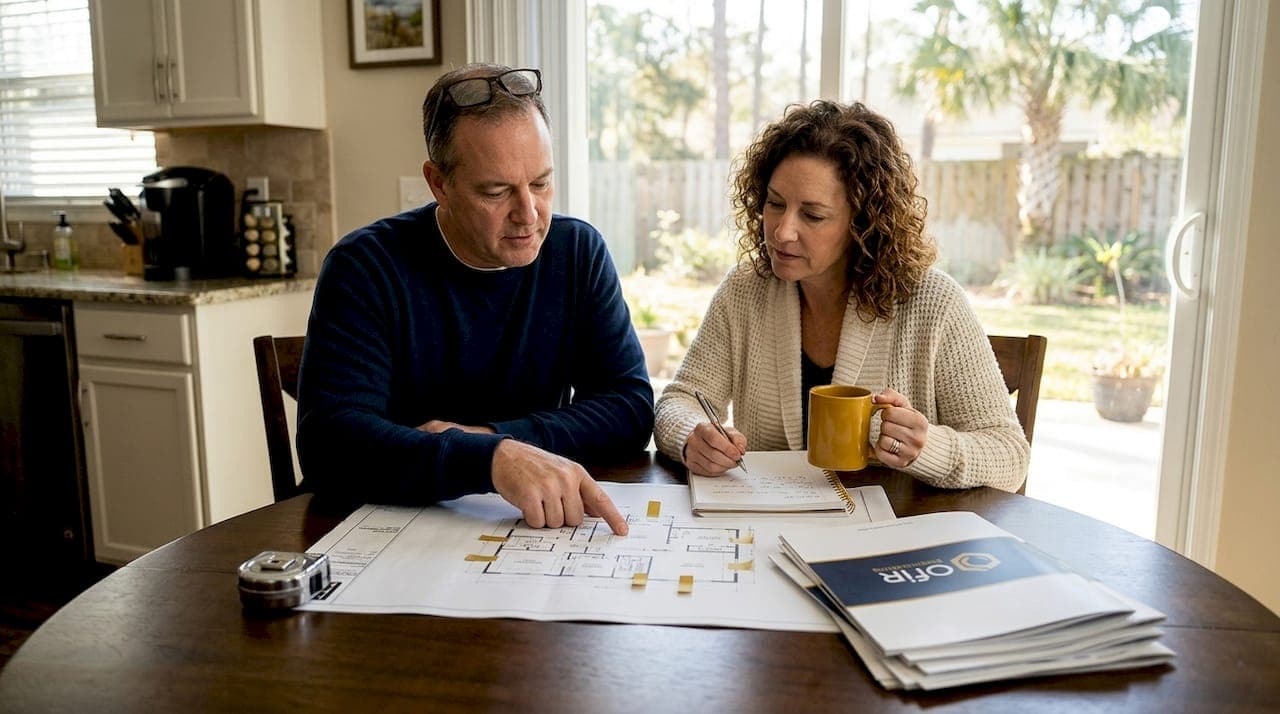
A single planning misstep in a Jacksonville remodel can trigger a chain of consequences that extends timelines by months and inflates budgets by tens of thousands of dollars. Unlike many U.S. cities, Jacksonville operates under Florida's stringent building code framework, sits within a high-wind design zone, and is experiencing rapid population growth that strains the local labor market. These factors combine to make residential remodeling considerably more complex than homeowners typically expect. This article provides structured, expert-backed guidance to help Jacksonville homeowners plan with precision, avoid compliance pitfalls, and execute remodeling projects that deliver lasting value.
Table of Contents
- Why planning is the foundation of remodeling success
- Navigating Jacksonville's unique remodeling challenges
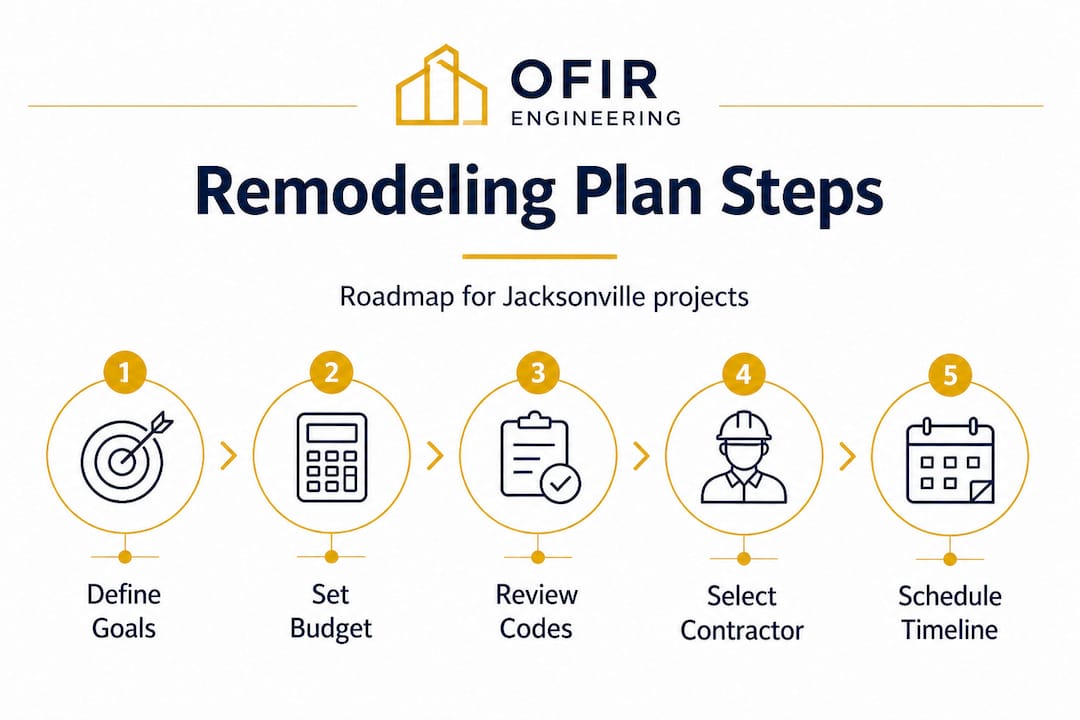
- How to create a foolproof remodeling plan
- Avoiding costly mistakes with strategic planning
- Our experience: The overlooked planning factors Jacksonville homeowners should prioritize
- Next steps: Bring your remodeling vision to life with expert planning
- Frequently asked questions
Key Takeaways
| Point | Details |
|---|---|
| Local expertise matters | Jacksonville-specific codes and climate risks demand tailored planning for remodeling success. |
| Plan for delays | Anticipate labor shortages and permitting delays to avoid costly surprises. |
| Documentation is essential | Keep permits, engineered plans, and compliance paperwork organized for smooth project approval. |
| Strategic planning reduces mistakes | Strong planning helps you avoid compliance errors, budget overruns, and missed schedules. |
Why planning is the foundation of remodeling success
Every successful remodeling project begins long before a single wall is opened or a material is ordered. Planning is not a preliminary formality; it is the structural backbone of the entire project, and its absence is the most consistent predictor of cost overruns, permit delays, and contractor disputes.
Effective planning creates a documented roadmap that aligns everyone involved, from the homeowner and general contractor to subcontractors and city inspectors. When that roadmap is missing or incomplete, each party operates on assumptions, and conflicting assumptions generate expensive corrections. Industry data consistently shows that projects with a clearly defined scope, schedule, and budget experience significantly fewer change orders, which are one of the primary drivers of cost escalation in residential construction.
In Jacksonville specifically, planning must account for local factors like permitting under Florida building codes, structural changes requiring engineered plans, labor shortages due to population growth, and hurricane-rated features. These variables do not just add steps to the planning process; they add time, cost, and complexity that must be anticipated and budgeted for from the outset.
A strong remodeling plan in Jacksonville should address the following foundational components:
- Goal definition: Clearly articulate what the remodel must achieve, whether that is functional improvement, aesthetic upgrades, increased square footage, or energy efficiency gains.
- Scope of work: Document every trade involved, every space affected, and every system that will be altered, including electrical, plumbing, HVAC, and structural elements.
- Realistic budget: Establish a budget that includes a contingency reserve of at least 15 to 20 percent for Jacksonville projects, given the unpredictability of local labor availability and material pricing.
- Compliance check: Identify which elements of your project require permits, inspections, engineered drawings, or wind-load compliance under Florida building code Chapter 16.
"The most expensive words in remodeling are 'we didn't think we'd need a permit for that.' In Jacksonville, the answer is almost always: you do."
Before committing to a contractor or purchasing materials, reviewing a thorough Jacksonville remodeling checklist helps ensure no critical planning steps are overlooked.
Navigating Jacksonville's unique remodeling challenges
Jacksonville homeowners face a set of remodeling conditions that are distinct from most other American cities, and understanding these challenges before the project begins is what separates projects that run smoothly from those that stall mid-construction.
The four primary Jacksonville-specific challenges
| Challenge | Root cause | Planning response |
|---|---|---|
| Permitting delays | Florida code complexity and city review backlog | Submit permit applications 6 to 8 weeks before planned start |
| Engineered plan requirements | Structural changes trigger code requirements | Hire a licensed structural engineer early in design phase |
| Labor shortages | Jacksonville's rapid population growth straining trades | Book subcontractors 8 to 12 weeks in advance |
| Hurricane-rated upgrades | ASCE 7 wind zone requirements for Northeast Florida | Specify impact-rated windows, doors, and roof connections in design |
Florida's building code, one of the most rigorous in the country, mandates permits for a wide range of residential work that other states may allow without review. Structural wall removals, electrical panel upgrades, roofing replacements, and additions all require permit applications in Jacksonville, and each application enters a municipal review queue that can extend project start dates significantly.
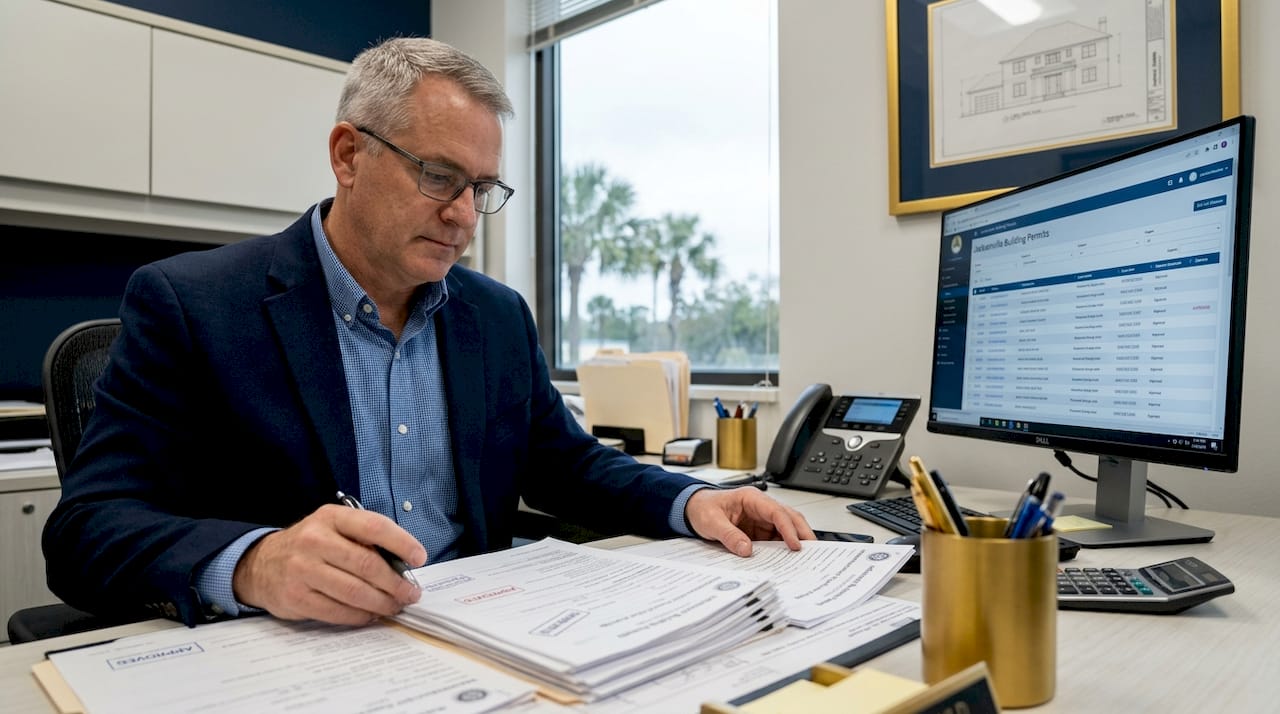
Structural changes deserve particular attention. When load-bearing walls are removed or openings are created, the Florida Building Code requires stamped engineered plans prepared by a licensed structural or civil engineer. This requirement is not negotiable, and a contractor who suggests otherwise is exposing the homeowner to serious liability and potential demolition orders from the city. Understanding the detailed renovation steps for Jacksonville homes helps homeowners sequence these engineering requirements correctly within the overall project timeline.
Jacksonville's position as one of the fastest-growing metropolitan areas in the Southeast has created a genuine labor shortage in skilled trades, particularly among licensed electricians, plumbers, and specialty framers. This means that the contractor who appears available on short notice may not be the most qualified choice, and the most reputable tradespeople often have backlogs extending several months.
Pro Tip: Request a written schedule of subcontractor commitments from your general contractor before signing any agreement. If key trades are not confirmed, your project start date is not confirmed either.
For homeowners looking to build a thorough pre-project framework, the planning tips for Jacksonville homes resource provides code-specific guidance that is directly relevant to 2026 project conditions.
- Determine which portions of your project trigger Florida Building Code permit requirements.
- Commission engineered drawings for any structural modifications before finalizing your contractor selection.
- Obtain at minimum three contractor bids, verifying each bidder's license status through the Florida Department of Business and Professional Regulation.
- Confirm subcontractor availability and schedule commitments in writing before project mobilization.
- Incorporate hurricane-rated specifications for windows, exterior doors, and roofing into your design documents from the beginning.
How to create a foolproof remodeling plan
A remodeling plan that holds up under real-world conditions requires more than a wish list and a rough budget. It requires sequential thinking, detailed documentation, and a disciplined approach to anticipating what can go wrong.
Planning approaches and their typical outcomes
| Planning approach | Common outcome | Risk level |
|---|---|---|
| Informal verbal agreements with contractor | Frequent scope disputes, cost escalation | High |
| Basic written scope without engineer review | Permit rejection, structural compliance failures | High |
| Detailed written scope with partial documentation | Manageable, but vulnerable to change orders | Medium |
| Fully documented plan with engineered drawings and permits in hand | Predictable timeline, minimal disputes, code compliant | Low |
The highest-performing planning approach always includes complete documentation before breaking ground. This means a written scope of work, a signed contract with payment milestones, approved permits, stamped engineered plans where required, and a detailed project schedule with trade sequencing.
Trade sequencing, specifically the order in which subcontractors perform their work, is a frequently underestimated planning element. Demolition must precede rough-in work; rough mechanical, electrical, and plumbing must be inspected before insulation is installed; insulation must be complete before drywall begins. When sequencing is not explicitly planned, scheduling conflicts between trades cause idle days that compound quickly across a project.
The following documentation should be in place before construction begins:
- Signed, detailed contract with itemized scope and payment schedule
- Approved building permits, posted on site as required by Florida law
- Stamped engineered plans for all structural work
- Product specifications for all hurricane-rated assemblies, including manufacturer documentation for impact windows and doors
- A written project schedule showing start and completion dates for each trade phase
Reviewing resources on expert renovation planning helps homeowners understand what complete documentation looks like and how to evaluate whether a contractor's proposal meets that standard.
Pro Tip: Familiarizing yourself with basic construction terminology for Jacksonville projects before your first contractor meeting dramatically improves your ability to evaluate bids, ask the right questions, and catch scope gaps before they become disputes.
Managing the risk of labor shortages requires a specific planning tactic: build schedule buffers into your project timeline at every trade transition point. A realistic buffer of five to ten business days between major phases accounts for the reality that subcontractors in Jacksonville's current market frequently carry back-to-back commitments that leave little room for schedule slippage.
Material procurement planning is equally important. Supply chain disruptions continue to affect delivery timelines for specialty items like impact-rated windows, custom cabinetry, and engineered lumber. Ordering long-lead materials four to six weeks before they are needed on site protects against installation delays caused by late deliveries.
Avoiding costly mistakes with strategic planning
The most expensive remodeling mistakes are almost always preventable, and they share a common origin: insufficient planning at the outset of the project.
- Beginning work without permits: In Jacksonville, unpermitted work discovered during a sale or by a city inspector can require full demolition and reconstruction to code. The cost of retroactive permitting, when it is even possible, consistently exceeds the original cost of obtaining the permit.
- Underestimating structural complexity: Homeowners frequently discover mid-project that what appeared to be a simple wall removal involves load-bearing elements, hidden utilities, or structural issues that require engineering solutions and add significant cost.
- Selecting contractors based on price alone: The lowest bid in Jacksonville's competitive market often reflects a lack of licensed subcontractors, inadequate insurance, or an intent to recover margin through change orders once the project is underway.
- Ignoring hurricane code requirements: Failing to specify hurricane-rated features in the design phase often results in failed inspections and costly replacement of installed but non-compliant assemblies.
- Insufficient contingency reserves: Jacksonville projects routinely encounter unforeseen conditions, including substandard prior construction, hidden moisture damage, and outdated electrical systems, that require budget flexibility to resolve without derailing the project.
Industry insight: Research across residential construction markets consistently shows that projects with a fully documented plan and appropriate contingency reserves complete within 10 percent of their original budget at rates more than twice as high as those without formal planning documentation.
Understanding the distinction between remodeling and renovation also matters for planning purposes. The remodeling vs renovation differences affect which permits are required, which code provisions apply, and how much engineering documentation the project will need. These definitions carry legal weight in Florida, and using them correctly from the beginning of the planning process keeps your project on the right compliance track.
Effective budget management during a remodel requires active monitoring, not just initial planning. Review expenditures against the budget at each project milestone, track committed versus actual costs, and make scope decisions deliberately rather than reactively. Homeowners who engage actively with the financial management of their Jacksonville home remodeling project consistently report better outcomes and fewer financial surprises. Understanding the full remodeling project lifecycle equips homeowners to monitor progress accurately at every phase.
Our experience: The overlooked planning factors Jacksonville homeowners should prioritize
After more than 15 years of executing residential remodeling and new construction projects across Jacksonville, certain planning gaps appear with enough regularity to warrant direct attention.
The first is the consistent underestimation of hurricane preparedness requirements. Many homeowners treat wind-load compliance as a cost add-on rather than a structural design requirement, and this framing leads to decisions that create code problems later. Northeast Florida falls within a wind zone that demands rigorous attention to roof-to-wall connections, opening protection, and garage door wind resistance ratings. These are not optional upgrades; they are code mandates that affect occupant safety and insurance eligibility. Projects that boost home value with remodeling do so most durably when hurricane compliance is treated as a core design criterion, not an afterthought.
The second overlooked factor is neighborhood and community engagement during the permitting phase. Homeowners who notify adjacent neighbors of planned work before permits are submitted often find that the permitting process moves with less friction. Neighbors who feel informed are far less likely to file complaints with the city that trigger additional inspections or compliance reviews. This is particularly relevant for projects involving exterior changes, additions, or work that generates extended construction noise.
The third factor is the reality of Jacksonville's labor market in 2026. Skilled trades in this market are genuinely constrained, and the contractors who communicate clearly about subcontractor commitments, provide detailed schedules, and build buffer time into their proposals are demonstrating professional competence, not padding their timelines. Homeowners who push back against reasonable schedule buffers often find themselves waiting longer, not shorter, because trade commitments cannot be manufactured on demand.
Flexible scheduling is not a sign of contractor weakness. It is an honest acknowledgment of market conditions, and planning documents that account for it protect both the homeowner and the project.
Next steps: Bring your remodeling vision to life with expert planning
Remodeling in Jacksonville demands a level of planning rigor that rewards homeowners who invest the time and expertise required to do it correctly.
Ofir Engineering (license CHC1540016) brings over 15 years of Jacksonville-specific construction experience to every residential project, from single-room remodels to full-home renovations and new construction. The team manages permitting, coordinates engineering documentation, and sequences every trade phase to protect your timeline and budget. Detailed guidance on Jacksonville renovation planning is available to help you prepare before your first consultation. When you are ready to structure your project correctly from the start, the remodeling checklist is a practical first step toward a well-organized, code-compliant project.
Frequently asked questions
What is the first step in planning a remodeling project in Jacksonville?
Always start by identifying your goals, setting a realistic budget, and researching Florida building codes, because permitting under Florida building codes applies to most structural, electrical, plumbing, and roofing work in Jacksonville.
How do Jacksonville's building codes affect remodeling plans?
Local codes require permits and frequently mandate stamped engineered plans for structural modifications, which means permitting and engineered plans must be scheduled into your project timeline well before construction begins.
Why are hurricane-rated features important in Jacksonville remodels?
Northeast Florida's wind zone designation means that hurricane-rated features in Jacksonville such as impact windows, reinforced roof connections, and wind-rated doors are code requirements that directly affect permit approval and homeowner insurance eligibility.
How can planning prevent labor shortages from derailing a remodel?
Booking trades early and building buffer time into phase transitions are effective strategies because labor shortages due to population growth in Jacksonville mean that qualified subcontractors routinely carry multi-week backlogs that cannot be bypassed without advance scheduling.