
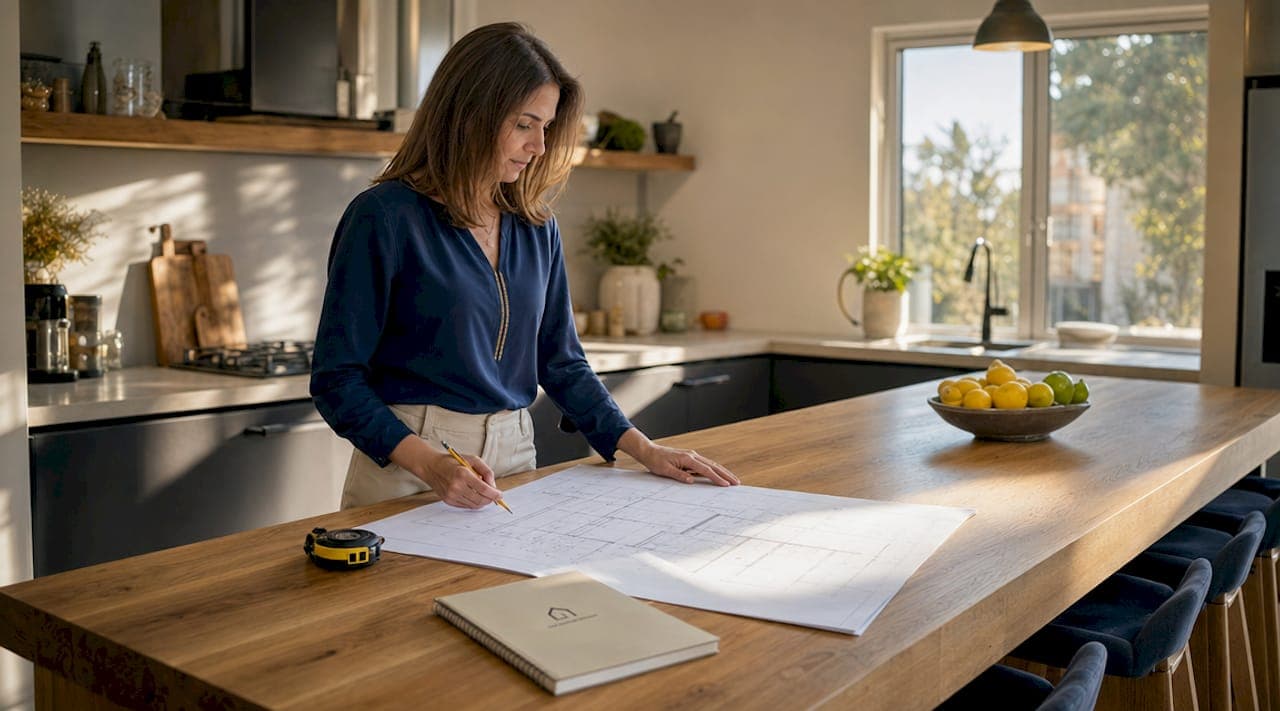
New construction planning steps define the structured sequence of decisions, approvals, and coordination tasks that determine whether a residential build finishes on time, on budget, and to specification. Skipping or compressing any of these steps is the single most common cause of cost overruns and schedule failures in residential projects. Ofirengineering, a licensed Jacksonville construction company with over 15 years of experience in Light Gauge Steel and Wood Frame residential builds, has developed this guide to walk homeowners and property investors through every critical phase. The industry term for this process is preconstruction and construction project management, and understanding it fully before breaking ground is non-negotiable.
What are the critical phases in planning a new construction project?
Construction projects follow five phases: initiation, pre-construction planning, procurement, execution, and closeout, each requiring specific deliverables. Missing any phase creates gaps that compound into expensive problems downstream. The following sequence reflects the standard framework used by licensed contractors and project managers on residential builds.
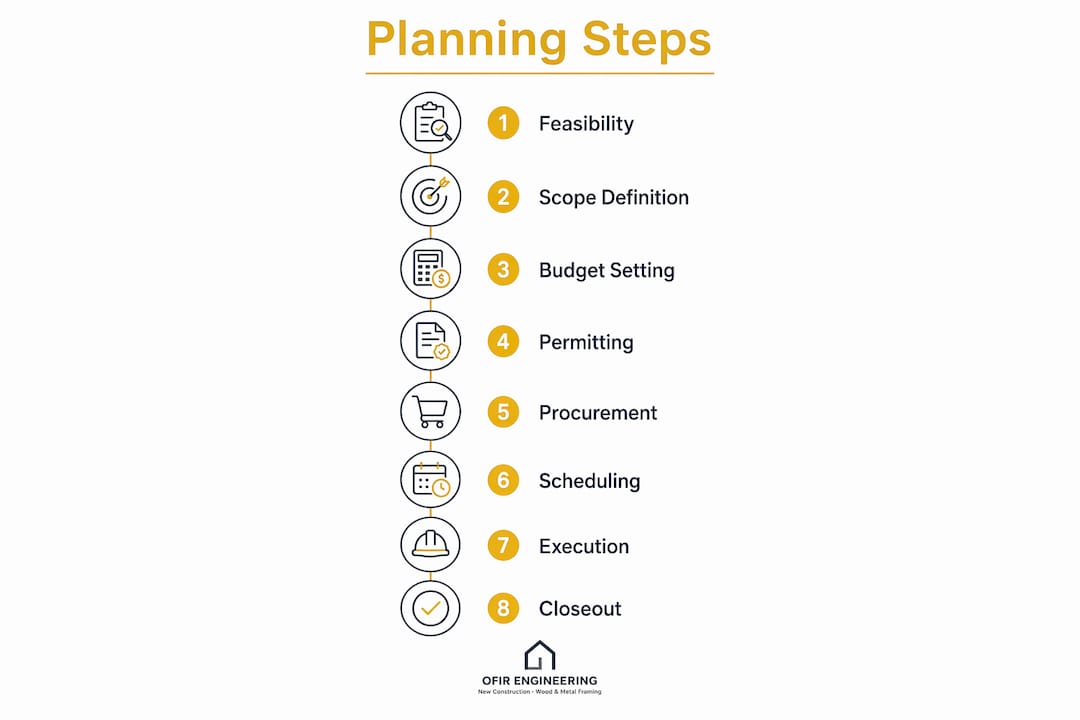
- Initiation and feasibility analysis. Confirm that the site, budget, and regulatory environment support the intended project. This includes soil testing, zoning verification, and a preliminary cost estimate.
- Scope definition and Owner's Project Requirements (OPR). Document exactly what will be built, to what standard, and within what constraints. The OPR is a written record of the owner's goals, budget ceiling, schedule expectations, and quality benchmarks.
- Budgeting and cost estimation. Develop a line-item budget using current material rates, labor costs, and permit fees. Budget contingencies between 5% and 15% are standard practice for managing known and unknown risks.
- Permitting and regulatory compliance. Submit for all required permits and approvals before procurement or construction begins. Permit timelines vary significantly by jurisdiction and must be factored into the construction timeline phases.
- Procurement planning and team assembly. Select and contract qualified general contractors, subcontractors, and suppliers. Align material delivery schedules with the construction sequence.
- Construction execution and monitoring. Manage daily progress against the schedule, handle change orders formally, and conduct regular quality and safety inspections.
- Project closeout. Complete punch lists, obtain final inspections, compile as-built documentation, and transfer all warranties and manuals to the owner.
Pro Tip: Most project value is created during pre-construction, because changes cost less on paper than in the field. Invest time in phases one through three before spending a dollar on materials.
How to conduct effective feasibility analysis and define project scope
Site feasibility is the foundation of every reliable construction project checklist. Site feasibility includes zoning, soil, access, and utilities, all of which must be thoroughly assessed before design begins. Ignoring any one of these factors produces costly change orders once construction is underway.
The key tools and tasks for a thorough feasibility assessment include:
- Boundary and topographic survey. Confirms legal lot dimensions, elevation changes, and drainage patterns that affect foundation design.
- Geotechnical (soil) report. Identifies bearing capacity, expansive soils, or high water tables that require engineered foundation solutions.
- Zoning and land use verification. Confirms permitted uses, setback requirements, height limits, and any deed restrictions or HOA covenants.
- Utility availability check. Locates water, sewer, gas, and electrical connection points and estimates the cost of extending service to the building footprint.
- Environmental review. Identifies wetlands, flood zones (FEMA FIRM maps are the standard reference in Florida), and protected vegetation that restrict development.
Once feasibility is confirmed, the next step is drafting a formal scope statement and OPR document. Clear scope and objectives protect projects from scope creep and keep budgets and timelines on track. The OPR should document the intended use of every space, the structural system (for example, Light Gauge Steel versus Wood Frame), finish levels, energy performance targets, and any phasing requirements.
Common scope pitfalls include adding square footage after design is complete, selecting finishes outside the budget tier established in the OPR, and failing to document verbal agreements in writing. Each of these errors generates change orders that inflate cost and extend the schedule.

Pro Tip: Treat the OPR as a living contract between you and your contractor. Review it at every major milestone and update it formally whenever the scope changes. Ofirengineering uses this document as the primary reference for all project decisions.
Navigating permitting, budget setting, and risk management steps
Permitting is the step most homeowners underestimate when planning a new build. In Jacksonville and throughout Duval County, a typical residential new construction project requires a building permit, electrical permit, plumbing permit, mechanical permit, and in many cases a separate site development or land disturbance permit. Each permit has its own review timeline, and parallel submissions are not always possible.
The following budget and risk management practices are standard on well-managed residential projects:
- Use current material pricing. Budgets built on outdated rates produce shortfalls. Request supplier quotes within 30 days of finalizing the construction documents.
- Separate hard costs from soft costs. Hard costs cover labor and materials. Soft costs cover design fees, permits, surveys, inspections, and financing. Both categories require line-item detail.
- Apply a contingency reserve. A 10% contingency is a practical starting point for most residential projects. Complex sites or custom designs warrant 15%.
- Draft a risk register. List every identified risk, its probability, its potential cost impact, and the mitigation action. Review it monthly.
- Document all permit submissions and responses. Maintain a log of submission dates, review comments, resubmission dates, and approval dates. This record protects the owner if permit delays affect the contract schedule.
The table below summarizes the most common budget risk categories and their typical mitigation strategies.
| Risk category | Mitigation strategy |
|---|---|
| Material price escalation | Lock in supplier pricing with purchase orders at contract execution |
| Permit review delays | Submit permit applications before finalizing the construction contract start date |
| Unforeseen site conditions | Fund a geotechnical report and include a site contingency line in the budget |
| Subcontractor availability | Begin procurement 8 to 12 weeks before the scheduled trade start date |
| Design changes by owner | Require written change order approval before any scope modification proceeds |
Poor permitting preparation is one of the most documented causes of residential project delays. A project that starts construction before all permits are approved risks stop-work orders, which can idle an entire crew for weeks and trigger liquidated damages clauses in fixed-price contracts.
How does procurement and scheduling affect construction progress?
Procurement sequencing linked to CPM (Critical Path Method) scheduling is the mechanism that keeps a residential build moving without gaps or cascading delays. Procurement logic failures cause delivery date misses that cascade into schedule delays across every downstream trade. A framing crew that arrives on site before structural steel or lumber is delivered loses productive days that cannot be recovered without overtime costs.
The steps for effective procurement and team assembly follow a logical order:
- Identify the critical path. Use CPM scheduling software such as Primavera P6 or Microsoft Project to map every task, its duration, and its dependencies. The critical path identifies which activities have zero float and cannot be delayed without pushing the completion date.
- Sequence procurement against the schedule. Each material or subcontractor must be contracted and confirmed before its scheduled mobilization date. Long-lead items such as windows, custom cabinetry, and mechanical equipment require the earliest purchase orders.
- Prequalify subcontractors. Verify licensing, insurance, bonding capacity, and references before issuing subcontracts. In Florida, subcontractors working under a licensed general contractor must hold the appropriate state or county trade license.
- Establish a communication plan. Plans must be documented and accessible, including communication and procurement strategies, to keep teams aligned. Define who receives schedule updates, how RFIs (Requests for Information) are submitted, and the response time standard for each.
- Align the procurement schedule with construction timeline phases. Concrete, framing, roofing, rough mechanical, insulation, drywall, and finish trades each have specific lead times that must be reflected in the procurement log.
The comparison below illustrates the difference between reactive and proactive procurement approaches on a typical residential project.
| Procurement approach | Schedule impact | Cost impact |
|---|---|---|
| Reactive (order when needed) | Frequent delays, idle crews, extended duration | Higher due to rush orders and overtime |
| Proactive (linked to CPM schedule) | Predictable delivery, continuous workflow | Lower due to planned purchasing and volume pricing |
A project management workflow guide that maps procurement to the CPM schedule is one of the most practical tools a homeowner or investor can request from their contractor before construction begins.
Managing construction execution and project closeout effectively
Construction execution is where planning either pays off or falls apart. The quality of the pre-construction work determines how much firefighting the project team does during the build. Effective execution management relies on a consistent set of monitoring and control practices.
Key practices for managing the construction phase include:
- Weekly owner-contractor-architect (OCA) meetings. Regular site meetings focused on progress, plans, and obstacles enable effective coordination and problem resolution. Each meeting must produce a written action item log with assigned owners and due dates.
- Formal change order management. Every scope change, whether initiated by the owner, the contractor, or a field condition, must be documented in a written change order before work proceeds. Verbal approvals are the primary source of budget disputes on residential projects.
- Quality assurance checkpoints. Schedule inspections at foundation, framing, rough-in, insulation, and pre-drywall stages. These checkpoints catch defects before they are concealed and become expensive to correct.
- Safety compliance monitoring. OSHA 29 CFR 1926 governs residential construction safety in Florida. Verify that the contractor maintains a site-specific safety plan and conducts regular toolbox talks.
- Punch list management. Begin the punch list process at least 30 days before the scheduled completion date. A well-managed punch list prevents the final inspection from becoming a source of payment disputes.
Pro Tip: A construction project checklist used actively throughout all phases correlates with fewer reworks and better budget control. Request a copy of your contractor's checklist at the project kickoff meeting and review it at each milestone.
Closeout documentation must include as-built drawings, all permit cards with final inspection signatures, equipment warranties, maintenance manuals, and a certificate of occupancy. Missing punch lists or as-built documents cause payment delays and can complicate future refinancing or resale of the property.
Key takeaways
Successful new construction requires completing at least 12 documented preconstruction steps before mobilizing a crew, because decisions made on paper cost a fraction of what they cost to reverse in the field.
| Point | Details |
|---|---|
| Pre-construction creates the most value | Invest in feasibility, scope, and budgeting before committing to a construction contract. |
| Contingency reserves are non-negotiable | Set aside 10% to 15% of the total budget to absorb unforeseen site conditions and price changes. |
| Procurement must align with the CPM schedule | Order long-lead materials and confirm subcontractors 8 to 12 weeks before their scheduled start. |
| Written documentation prevents disputes | Change orders, meeting minutes, and permit logs protect both the owner and the contractor. |
| Closeout documentation affects resale value | As-built drawings, warranties, and the certificate of occupancy are required for financing and title transfer. |
Why pre-construction planning separates successful builds from costly ones
After working through dozens of residential projects in the Jacksonville area, one pattern stands out clearly: the projects that finish on time and within budget are not the ones with the most experienced crews. They are the ones with the most thorough pre-construction documentation. Homeowners frequently arrive at the construction contract stage having skipped the OPR, the geotechnical report, and a formal risk register. They treat those steps as optional paperwork. They are not.
The uncomfortable reality is that a contractor cannot give you a reliable fixed price without a complete set of construction documents and a confirmed permit timeline. Any number quoted before those two conditions are met is an estimate, not a commitment. I have seen investors lose significant equity on projects that started with verbal agreements and no written scope, because every undocumented assumption eventually becomes a change order.
The new home planning process also demands that homeowners understand the difference between a construction timeline and a wish list. A schedule built without CPM logic and confirmed subcontractor availability is a wish list. Ofirengineering builds schedules from the critical path outward, with procurement dates locked before the contract is signed. That discipline is what makes a Jacksonville home construction project predictable rather than reactive.
My consistent recommendation: complete every pre-construction step before signing a construction contract. The cost of a geotechnical report, a formal OPR, and a permit pre-application meeting is a small fraction of the cost of a single significant change order.
— Owen
How Ofirengineering supports your new construction project
Ofirengineering brings over 15 years of licensed residential construction experience to every project in the Jacksonville area, covering the full range of new construction planning steps from initial feasibility through final closeout.
The team at Ofirengineering provides structured guidance on construction project checklists, permitting submissions, CPM scheduling, and procurement coordination for both Wood Frame and Light Gauge Steel builds. Whether you are a first-time homeowner or an experienced property investor, working with a licensed contractor who manages the entire planning process reduces risk and protects your investment. Explore Ofirengineering's new construction services in Jacksonville to understand how a fully managed build process translates into a predictable outcome. For investors managing multiple projects, the project management services page outlines the full scope of construction management strategies available.
FAQ
What are the first steps in planning a new construction project?
The first steps are site feasibility analysis, scope definition, and budget development. Essential planning includes at least 12 critical steps such as site feasibility, an OPR document, and a risk management plan before construction starts.
How much contingency should a homeowner budget for new construction?
A contingency reserve of 10% to 15% of the total project cost is the standard range for residential new construction. Projects with complex sites, custom designs, or long procurement lead times should use the higher end of that range.
Why does permitting delay construction timelines?
Permit review timelines vary by jurisdiction and are outside the contractor's control once applications are submitted. Submitting permit applications before finalizing the construction contract start date is the most effective way to prevent permit delays from pushing the mobilization date.
What is a CPM schedule and why does it matter for homeowners?
A CPM (Critical Path Method) schedule maps every construction task, its duration, and its dependencies to identify which activities cannot be delayed without extending the project completion date. Homeowners should request a CPM schedule from their contractor before construction begins, because it is the only tool that reliably predicts whether a project will finish on time.
What documents are required at construction closeout?
Closeout documentation must include as-built drawings, all permit cards with final inspection signatures, equipment warranties, maintenance manuals, and a certificate of occupancy. Missing any of these documents can delay final payment, complicate refinancing, and create title issues at resale.