

Industry terms in residential construction are the standardized vocabulary that contractors, architects, homeowners, and investors use to communicate project requirements, contractual obligations, and scope definitions without ambiguity. Mastering this home construction vocabulary is not optional for anyone managing or funding a residential build. Misunderstanding a single term, such as "substantial completion" or a drawing abbreviation like PT, can trigger payment disputes, scope errors, or failed inspections. This guide covers the most consequential residential building terms, from AIA A201-2017 contractual milestones to CSI MasterFormat divisions and renovation scope categories, so every stakeholder can read project documents with confidence and make decisions grounded in accurate understanding.
What are the most important industry terms in residential construction?
Residential construction operates on a shared technical language developed over decades by organizations including the American Institute of Architects (AIA), the Construction Specifications Institute (CSI), and the National Association of Surety Bond Producers (NASBP). These bodies have codified construction industry definitions that govern contracts, specifications, and project documentation across North America. When all parties on a project use the same terminology in building, disputes decrease, timelines tighten, and budgets hold more reliably.
The terms that matter most fall into three categories: contractual milestones, document organization systems, and scope descriptors. Contractual milestones like substantial completion and final completion define when money moves and when legal obligations shift. Document systems like CSI MasterFormat determine how specifications are organized and referenced. Scope descriptors like "renovation" versus "remodel" define how much work is actually authorized and what permits are required. Each category carries real financial and legal weight, and each is explained in the sections below.
For homeowners and investors new to construction, the residential construction terminology guide from Ofirengineering provides a practical starting point before engaging contractors or reviewing bids.
What is substantial completion and how does it affect project milestones?
Substantial completion is defined as the stage when work is sufficiently complete for the owner to occupy or use the project for its intended purpose, with only minor punch list items remaining that do not materially interfere with that use. This definition comes directly from AIA A201-2017, the most widely used general conditions contract in American residential and commercial construction. The practical implication is significant: substantial completion is not the same as full completion, and treating it as such is one of the most common and costly misunderstandings in residential projects.

When substantial completion is reached, several contractual events are triggered simultaneously. Retainage, the percentage of each payment withheld to ensure performance, is typically released at this milestone. Warranty periods begin. The owner assumes responsibility for the building's insurance and utilities. Warranty and correction periods start running from this date, which means a homeowner who delays acknowledging substantial completion may inadvertently shorten the time during which the contractor is obligated to fix defects at no charge.
In practice, substantial completion inspections focus on functional occupancy readiness. Punch list items at this stage typically include touch-ups, hardware adjustments, and minor balancing work on HVAC systems. None of these prevent the owner from living in or using the home. Courts across the United States have consistently upheld this "enough to live in" standard when disputes arise over retainage release or warranty start dates.
"Substantial completion is a contractual milestone, not a quality judgment. It answers one question: can the owner use the building for its intended purpose? Everything else is punch list." — Construction law practitioners, as cited by NASBP.
Pro Tip: Request a written Certificate of Substantial Completion from your architect or project manager on the day the milestone is reached. This document fixes the date officially and protects both owner and contractor from later disputes about when warranty periods began.
What is a punch list and why does it matter at project closeout?
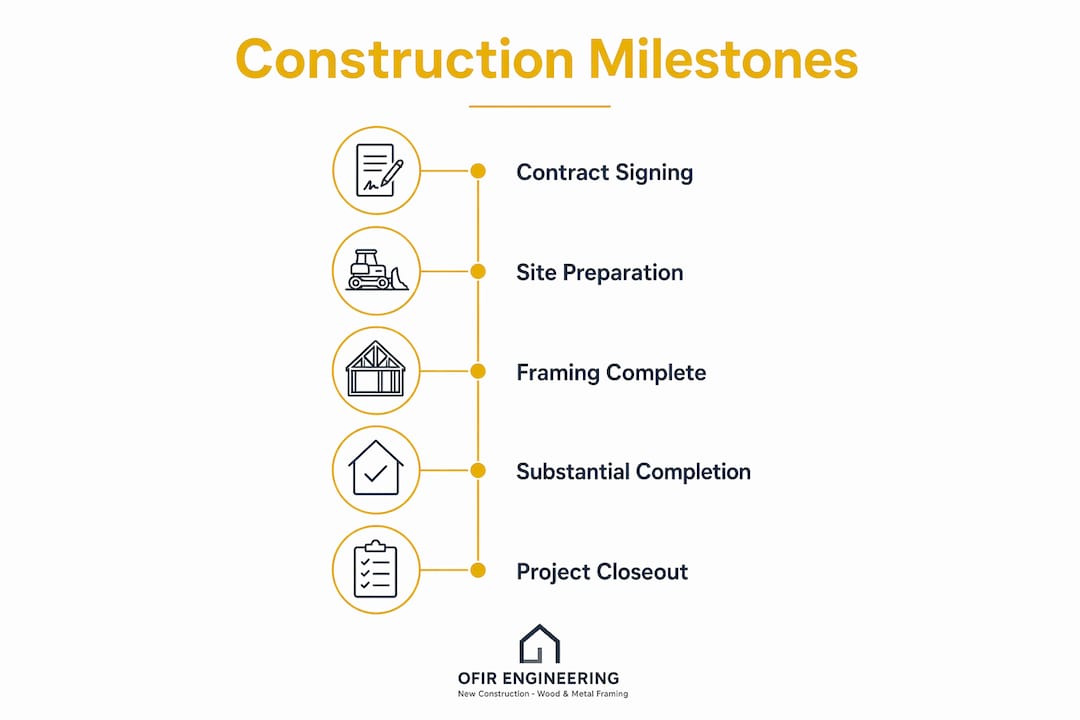
The punch list is the formal, written record of incomplete or defective work items identified at or near substantial completion. It is not a wish list or a change order. It documents work that was already contracted and either not finished or not executed to specification. The distinction matters because change orders involve new scope and new cost, while punch list items are corrections the contractor is obligated to complete within the original contract price.
The process for creating and resolving a punch list follows a defined sequence under AIA A201-2017:
- The contractor prepares the initial punch list and submits it to the architect.
- The architect, owner, and contractor conduct a joint "punch walk" of the completed building to verify items and add any the contractor missed.
- The architect reviews the list and may add items not identified by the contractor.
- The contractor completes all punch list items, typically within 30 to 60 days of substantial completion.
- Final payment is withheld until the architect certifies that all punch list items are resolved.
Typical punch list items in residential construction include paint touch-ups, missing hardware on cabinets and doors, caulking gaps, HVAC balancing, grout repairs, and minor trim adjustments. These are cosmetic or functional corrections, not structural deficiencies. If a structural issue surfaces during the punch walk, it is treated as a separate contractual matter, not a punch list item.
Pro Tip: Homeowners should walk the project themselves before the formal punch walk and document every item with dated photographs. Bringing your own list to the punch walk gives you a stronger position and reduces the chance that minor items are overlooked.
The punch list process is also the last point at which the owner can formally document deficiencies before releasing final payment. Skipping a thorough punch walk or accepting verbal assurances instead of a written list leaves the owner with limited recourse after the final check clears.
How does CSI MasterFormat organize residential construction specs?
CSI MasterFormat is the standardized specification organization system used across North America, maintained by the Construction Specifications Institute. MasterFormat expanded from 16 to 50 divisions in 2004, grouping all construction work by trade, material type, and building system. Architects, general contractors, and subcontractors all reference MasterFormat division numbers when preparing bids, writing specifications, and organizing submittals. For homeowners and investors, understanding the division structure makes it possible to read a project manual without a translator.
The 50 divisions are organized into broad groupings: procurement and contracting requirements (Divisions 00-01), facility construction subgroup (Divisions 02-19), facility services subgroup (Divisions 20-29), and site and infrastructure subgroup (Divisions 30-49). The divisions most relevant to residential construction include the following:
| Division | Title | Residential relevance |
|---|---|---|
| 03 | Concrete | Foundations, slabs, footings |
| 06 | Wood, Plastics, and Composites | Framing, millwork, cabinetry |
| 09 | Finishes | Drywall, flooring, paint, tile |
| 22 | Plumbing | Fixtures, piping, water heaters |
| 23 | HVAC | Heating, cooling, ventilation systems |
Each division is further organized using the three-part SectionFormat structure: Part 1 covers general administrative and procedural requirements, Part 2 addresses materials and products, and Part 3 specifies installation methods and quality control. This consistent structure means that once you know how to read one specification section, you can read any of them.
Learning to navigate MasterFormat empowers homeowners and investors to assess construction proposals with greater precision. When a contractor's bid references Division 09 finishes, you know exactly which scope of work is being priced. When a specification section is missing from a project manual, you can identify the gap before construction begins rather than after a dispute arises.
Pro Tip: When reviewing a contractor's bid, ask for the specification sections organized by MasterFormat division number. Any bid that cannot be mapped to MasterFormat divisions is difficult to compare against competing bids and harder to audit during construction.
How do drawing abbreviations create risk in residential projects?
Construction drawing abbreviations are not universally standardized across the industry. Abbreviations vary by project, by discipline, and by the firm that produced the drawings. The cover sheet abbreviation legend is the only authoritative source for correct interpretation on any given project. Relying on memory or industry convention instead of the project-specific legend is a documented source of bid errors and scope confusion.
Several abbreviations carry dual meanings that create genuine risk when misread:
- PT can mean "painted" in architectural drawings or "pressure treated" in structural drawings. Specifying painted wood where pressure-treated lumber is required creates a moisture and durability failure.
- EF can mean "each face" in masonry specifications or "exhaust fan" in mechanical drawings. Confusing these in a bid leads to either underbidding or incorrect installation.
- TYP means "typical," indicating that a detail applies wherever a similar condition exists. Missing a TYP notation means a contractor may install one detail correctly and replicate an error everywhere else on the project.
- NIC means "not in contract," indicating work excluded from the current scope. Misreading NIC as an abbreviation for a material or system can result in a contractor pricing work that is not their responsibility.
Quantity estimators treat the cover sheet legend as the single authoritative source precisely because firm standards drift and abbreviations frequently carry dual meanings across disciplines. Architectural, structural, mechanical, electrical, and plumbing drawings each have their own abbreviation conventions, and a single project set may include all five disciplines with conflicting usages.
The practical strategy for managing abbreviation risk is straightforward: read the cover sheet legend before reading any drawing, flag any abbreviation that does not appear in the legend, and submit a Request for Information (RFI) to the architect before bidding or building. This process takes minutes and prevents costly corrections.
Pro Tip: Subcontractors should cross-reference abbreviations between their discipline-specific drawings and the architectural cover sheet legend. A mechanical sub who assumes EF means "exhaust fan" without checking the legend may install equipment that the architectural drawings describe as a masonry condition.
How do renovation scope terms affect budgets and permits?
Renovation scope terminology defines how much work is authorized, how much it costs, and whether a building permit is required. The four primary scope terms in residential construction are refresh, update, renovation, and remodel, and each carries a distinct cost range and regulatory implication.
| Term | Typical cost range | Permit usually required? | Scope description |
|---|---|---|---|
| Refresh | $300 to $2,500 | No | Paint, hardware, minor cosmetic changes |
| Update | $2,000 to $15,000 | Rarely | New fixtures, appliances, surface replacements |
| Renovation | $10,000 to $50,000 | Yes | Restoring or improving existing systems and spaces |
| Remodel | $25,000 and above | Yes | Structural changes, layout alterations, system replacements |
These scope definitions carry direct implications for contractor quotes and homeowner expectations. A contractor who quotes a "renovation" when the owner expects a "refresh" will produce a proposal that appears dramatically overpriced. Conversely, an owner who describes a project as a "refresh" when the actual scope requires structural work will receive bids that are dangerously low and incomplete.
Permit requirements follow scope complexity. Refreshes and updates typically do not trigger permit requirements in Jacksonville and most Florida jurisdictions. Renovations and remodels that alter structural elements, plumbing, electrical systems, or HVAC require permits, inspections, and licensed contractor involvement. Ofirengineering's home renovation guide for Jacksonville homeowners explains these distinctions in detail, including which project types require licensed contractor oversight under Florida law.
Using precise scope terminology from the first conversation with a contractor sets accurate expectations, produces comparable bids, and prevents the budget overruns that most often result from scope misalignment rather than construction errors.
Key takeaways
Mastering industry terms in residential construction is the single most effective way to prevent disputes, control budgets, and manage contractor relationships with confidence.
| Point | Details |
|---|---|
| Substantial completion is a milestone, not full completion | It triggers retainage release and warranty clocks; punch list items remain but do not block occupancy. |
| Punch list items differ from change orders | Punch list corrections are owed under the original contract; change orders involve new scope and new cost. |
| CSI MasterFormat organizes specs into 50 divisions | Knowing key divisions like 06 (Wood), 09 (Finishes), and 23 (HVAC) helps owners read and compare bids accurately. |
| Drawing abbreviations require project-specific verification | The cover sheet legend is the only reliable source; PT, EF, and TYP each carry dual meanings across disciplines. |
| Scope terminology determines cost and permit requirements | Refresh, update, renovation, and remodel differ in cost range, complexity, and regulatory obligation. |
Why vocabulary is the most underrated tool on any job site
After working through hundreds of residential projects, one pattern stands out clearly: the disputes that consume the most time and money almost never originate from technical failures. They originate from vocabulary failures. An owner who does not know what substantial completion means will resist releasing retainage at the contractually correct moment, believing the project is unfinished. A subcontractor who does not check the abbreviation legend will install the wrong material and argue that the drawing was ambiguous. A homeowner who calls a full structural remodel a "renovation" will receive bids that do not include permit costs, structural engineering fees, or the additional timeline that the actual scope demands.
The construction industry has invested decades in developing shared language through AIA contract standards, CSI MasterFormat, and project-specific documentation conventions precisely because the cost of miscommunication on a job site is measured in dollars and months. Learning this vocabulary is not an academic exercise. It is a practical skill that directly affects project outcomes.
The advice that most articles skip is this: do not wait until a dispute arises to learn what a term means. Read the contract before signing it. Walk the punch list with the same attention you would give a legal document. Ask your contractor to map their bid to MasterFormat divisions before you approve it. These habits take an hour at the start of a project and save weeks at the end.
— Owen
Build with confidence using Ofirengineering's expertise in Jacksonville

Ofirengineering brings over 15 years of licensed residential construction experience (license CHC1540016) to every project in Jacksonville, from new construction using Light Gauge Steel and Wood Frame systems to full-home renovations and turnkey remodeling. The team manages construction documents, punch list processes, and permit coordination so that homeowners and investors never face the vocabulary gaps described in this article alone. Whether you are planning new construction in Jacksonville or evaluating a renovation scope, Ofirengineering provides the guidance needed to move from concept to certificate of occupancy with precision and accountability. Contact the team to discuss your project and receive a proposal organized by clear, verifiable scope terms.
FAQ
What does substantial completion mean in a construction contract?
Substantial completion is the contractual milestone at which the work is sufficiently complete for the owner to occupy or use the building for its intended purpose. It triggers retainage release, starts warranty periods, and leaves only minor punch list items outstanding.
Who prepares the punch list on a residential project?
The contractor prepares the initial punch list under AIA A201-2017, and the architect and owner review and add items during the punch walk. Punch list completion is a prerequisite for final payment.
What is CSI MasterFormat and why does it matter for homeowners?
CSI MasterFormat is a 50-division specification organization system that groups construction work by trade and material type. Homeowners who understand key divisions like 09 (Finishes) and 22 (Plumbing) can read contractor bids more accurately and identify missing scope items before signing contracts.
Why are construction drawing abbreviations unreliable without a legend?
Drawing abbreviations are not standardized across the industry, and many carry dual meanings depending on the discipline. The project cover sheet legend is the only authoritative source for correct interpretation on a specific project.
What is the difference between a renovation and a remodel?
A renovation typically costs between $10,000 and $50,000 and restores or improves existing systems and spaces, while a remodel starts at $25,000 and involves structural changes or layout alterations. Both require building permits in most jurisdictions, including Jacksonville, Florida.