
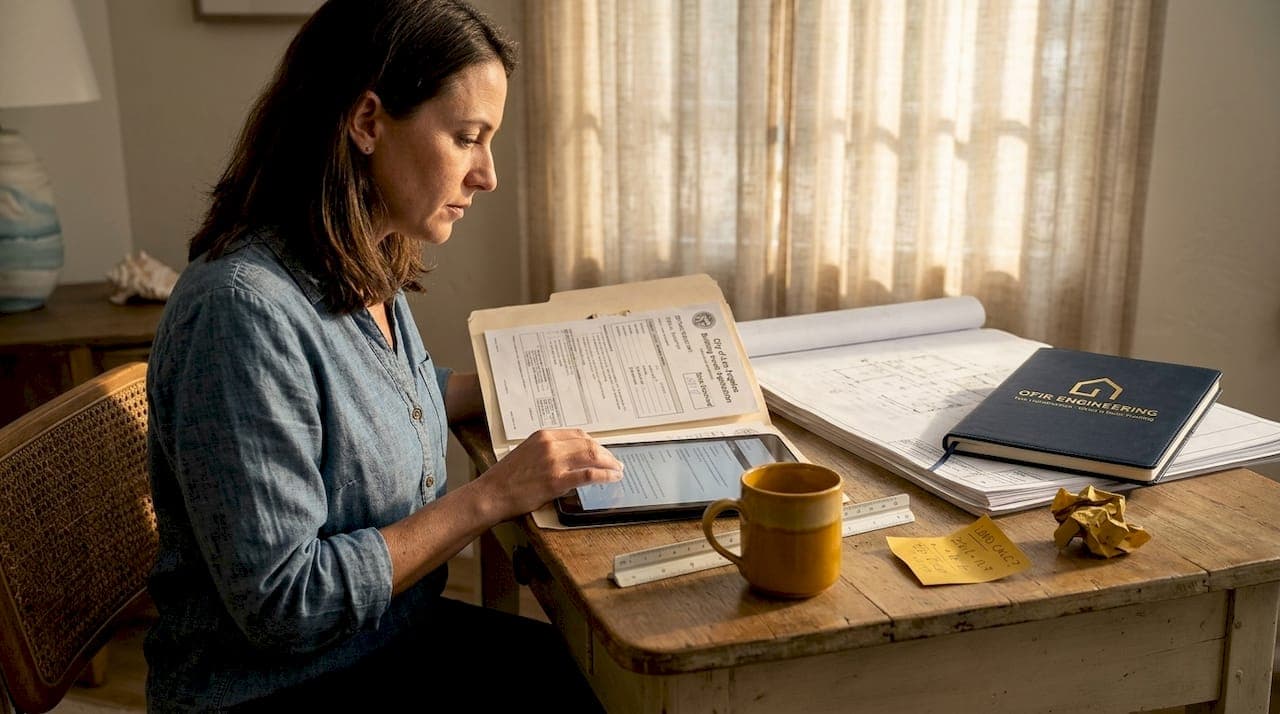
Renovation projects in Jacksonville have a reputation for taking longer and costing more than homeowners initially expect, and in 2026, the complexity has only increased. Stricter permitting timelines, updated wind engineering requirements, and a city inspection division managing a growing backlog all create real obstacles for homeowners and property investors who enter the process without adequate preparation. This guide walks through every major stage of a residential renovation in Jacksonville, from the first permit application through final inspection, covering budgeting, material selection, common pitfalls, and the ROI strategies that actually deliver results in this market.
Table of Contents
- Understand Jacksonville's permitting requirements
- Map out your renovation timeline and budgeting
- Choose materials and design for Jacksonville's climate and 2026 trends
- Avoid common renovation pitfalls and maximize ROI
- Jacksonville renovations in 2026: What most guides miss
- Explore expert Jacksonville renovation support
- Frequently asked questions
Key Takeaways
| Point | Details |
|---|---|
| Permits are vital | Jacksonville requires permits and multiple inspections for residential renovations, so skipping this step risks fines. |
| Plan for delays | Backlogs and revisions can push renovation timelines beyond initial estimates. |
| Budget wisely | The typical spend in 2026 is $15,000, but costs can rise for luxury or complex projects. |
| Pick climate-proof materials | Humidity-resistant and durable materials are crucial for Jacksonville’s unique climate. |
| Maximize ROI | Prioritize permitted, smart upgrades to avoid costly mistakes and boost property value. |
Understand Jacksonville's permitting requirements
Before a single wall comes down or a foundation is poured, the permitting process must be addressed. Jacksonville operates under one of Florida's more structured local building oversight systems, and understanding how it works is the single most important step in avoiding project delays.
All permit applications in Jacksonville are submitted through the JAXEPICS online portal, which is managed by the Building Inspection Division. Homeowners who are on the deed of their primary residence may pull a homeowner permit for many project types, but licensed contractors holding a Florida Certified General Contractor (CGC) or Certified Building Contractor (CBC) license are required for structural work, including additions, load-bearing modifications, and foundation alterations. Permit review typically takes 2 to 8 weeks, with longer timelines applying to projects requiring multiple trade reviews. Inspections are staged at foundation, framing, rough-in mechanical and electrical work, and final completion.
Understanding the difference between remodeling and renovation matters here because it directly affects what permit type your project falls under. A cosmetic remodel, such as replacing cabinet faces without altering plumbing, may require a simpler permit than a full bathroom gut renovation that involves relocating supply lines.
Common permit types and their implications:
- Building permit: Required for structural changes, additions, and new construction work
- Electrical permit: Covers panel upgrades, rewiring, and new circuit installation
- Plumbing permit: Required when moving or adding supply or drain lines
- Mechanical permit: Covers HVAC system replacements and duct reconfiguration
- Homeowner permit: Available only for the homeowner's primary residence and limited to specific project categories
| Permit category | Who can pull it | Typical review time |
|---|---|---|
| Homeowner building | Owner on deed (primary residence) | 2 to 4 weeks |
| Licensed contractor | CGC or CBC license holder | 4 to 8 weeks |
| ADU or accessory structure | Licensed contractor required | 4 to 10 months |
| Structural addition | Licensed contractor required | 6 to 10 weeks |
Two edge cases deserve specific attention in 2026. First, accessory dwelling units (ADUs) have become increasingly common as property investors seek rental income from existing lots, but the permitting timeline for ADUs is substantially longer and involves additional zoning reviews. Second, unpermitted work discovered during a renovation creates compounding problems: the city may require demolition of non-compliant work, and the project timeline expands significantly while corrective permits are processed.
Pro Tip: Before purchasing a property with the intent to renovate, commission a permit history review through the JAXEPICS portal. Discovering unpermitted additions or electrical work after closing is far more expensive to resolve than identifying them pre-purchase.
Familiarizing yourself with core Jacksonville construction terms before meeting with your contractor or permit reviewer will also save considerable time during the planning phase. Misunderstandings between homeowners and inspectors often stem from imprecise terminology rather than substantive disagreements about the work itself.
The wind engineering requirement is another area where Jacksonville diverges from many other Florida markets. As an ASCE 7 wind zone territory, additions and new construction require a wind load analysis prepared by a licensed structural engineer. This applies even to seemingly minor projects, such as screen enclosures and pergola additions, and failure to include wind engineering documentation is one of the most common reasons permit applications are rejected on initial review.
Understanding how to plan renovation steps in advance of submitting to the Building Inspection Division can compress the overall timeline by weeks.
Map out your renovation timeline and budgeting
Once the permitting framework is clear, the next step is building a realistic project timeline and establishing a budget that accounts for Jacksonville-specific variables. Many homeowners underestimate both the duration and the cost of renovation projects because they rely on national averages that do not reflect local labor costs, permit timelines, or material availability.
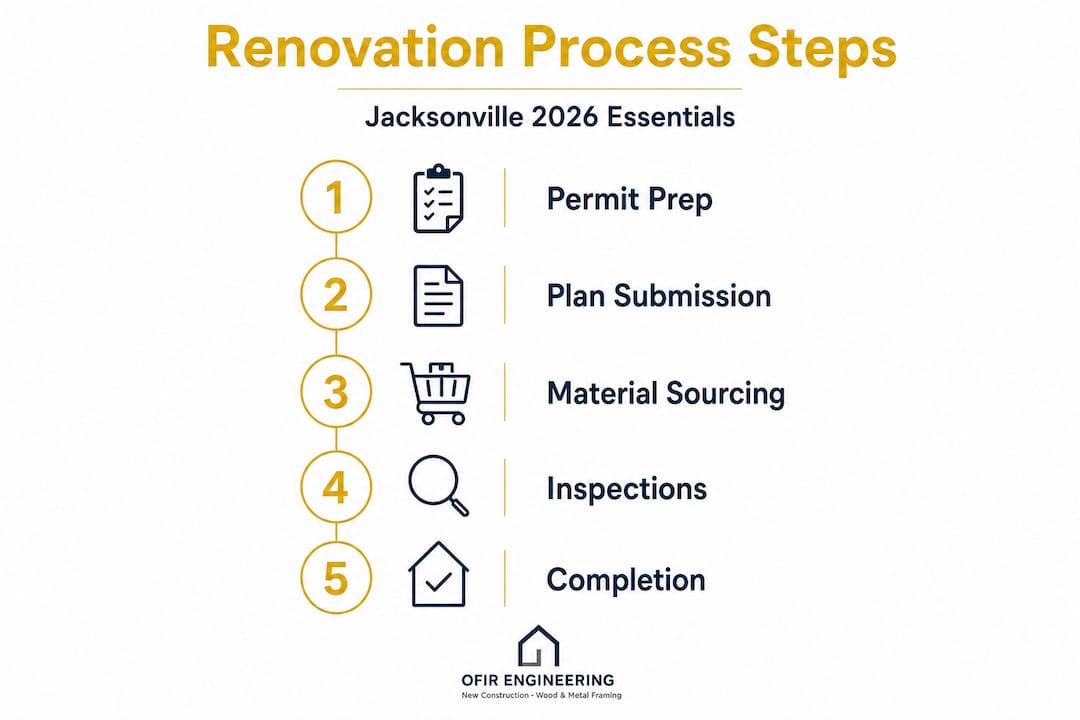
Project timelines follow a predictable structure when properly planned: the planning and design phase runs 1 to 3 months, permit review takes 4 to 8 weeks, and construction itself ranges from 6 weeks for a bathroom renovation to 12 months for a full-home renovation. Jacksonville-specific delays, particularly permit backlog during peak construction seasons and required revisions after initial submission, add time that must be built into the schedule from day one.
Step-by-step renovation timeline for Jacksonville projects:
- Scope definition and design: 4 to 12 weeks depending on project complexity
- Contractor selection and bid comparison: 2 to 4 weeks for a thorough vetting process
- Permit application submission: Immediately following contractor engagement for licensed work
- Permit review and approval: 4 to 8 weeks with potential revision cycles
- Material procurement: Begin ordering long-lead materials during permit review to avoid post-approval delays
- Construction and inspections: 6 weeks (bathroom) to 52 weeks (full home)
- Final inspection and certificate of occupancy: 1 to 3 weeks after construction completion
Budgeting benchmarks for Jacksonville in 2026:
| Project type | Median estimated cost | Duration |
|---|---|---|
| Bathroom renovation | $12,000 to $35,000 | 6 to 10 weeks |
| Kitchen remodel | $25,000 to $80,000 | 8 to 16 weeks |
| Room addition | $80,000 to $200,000+ | 4 to 9 months |
| Full-home renovation | $150,000 to $500,000+ | 9 to 14 months |
| ADU construction | $90,000 to $250,000 | 12 to 18 months |
Pro Tip: Allocate a 15 to 20 percent contingency reserve above your primary budget figure. In Jacksonville, where humidity, unexpected structural findings behind walls, and permit revision cycles are common, the contingency is rarely untouched.
The most reliable step-by-step renovation guide accounts for procurement delays in advance, particularly for imported tile, specialty millwork, and certain HVAC equipment that currently carries extended lead times. A detailed remodeling checklist that tracks both scheduling and procurement milestones prevents the common scenario where construction stalls because materials did not arrive on time.
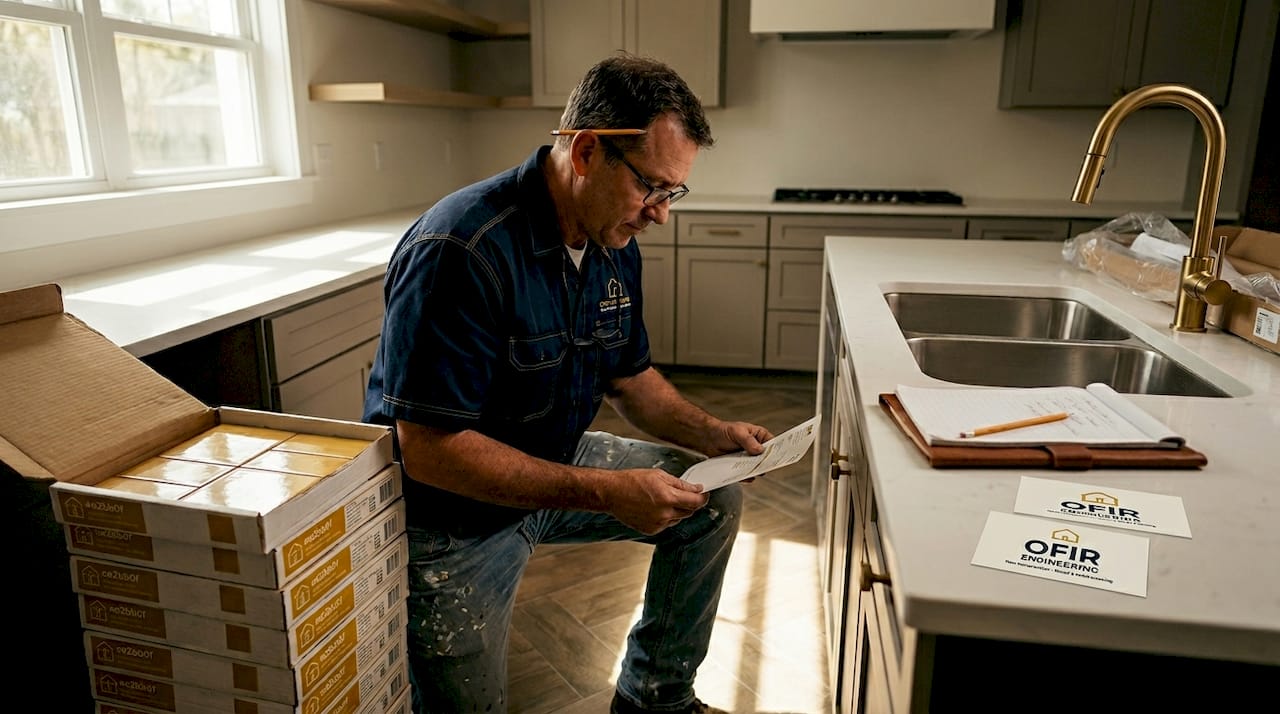
One frequently overlooked cost driver is the post-inspection correction phase. Even well-executed projects may receive inspection notes requiring minor corrections before a final certificate of occupancy is issued. These corrections require re-inspection scheduling, which, in a backlogged inspection division, can add two to four weeks to the project close.
Choose materials and design for Jacksonville's climate and 2026 trends
With the timeline and budget established, material selection and design decisions move to the forefront. Jacksonville's coastal climate creates specific demands that do not apply in interior markets. High humidity, salt air in coastal zones, and the threat of hurricane-force winds require material choices that prioritize durability and moisture resistance above aesthetic preferences alone.
2026 renovation trends are converging on sustainable materials, smart home technology integration, multifunctional spaces, and clean architectural lines. In Jacksonville specifically, these trends intersect with the practical need for humidity-resistant finishes, impact-rated fenestration, and coastal-grade exterior cladding.
High-priority material categories for Jacksonville renovations:
- Exterior cladding: Fiber cement siding rated for high-humidity environments, or brick veneer with properly detailed moisture barriers
- Flooring: Luxury vinyl plank (LVP) or large-format porcelain tile over concrete slab construction, avoiding solid hardwood in ground-floor applications where moisture intrusion risk is elevated
- Windows and doors: Impact-rated units meeting Florida Building Code wind zone requirements, which also improve energy efficiency and insurance premium positioning
- Roofing: Standing seam metal or high-wind-rated architectural shingles with sealed underlayment systems
- Insulation: Closed-cell spray polyurethane foam in wall cavities and attic applications, which resists moisture infiltration superior to open-cell alternatives
"The most successful Jacksonville renovations treat climate resilience as a baseline requirement rather than an upgrade. Materials that perform under Florida's humidity, wind, and salt conditions protect both the renovation investment and the property's long-term resale value."
Smart technology integration is another significant component of 2026 construction planning. Whole-home automation systems, smart HVAC controls that adjust to humidity levels, and solar-ready electrical panel configurations are increasingly expected by buyers in the Jacksonville market. Installing the infrastructure during renovation is substantially less expensive than retrofitting after the project closes.
Understanding the full scope of what home renovation involves helps homeowners distinguish between investments that genuinely improve resale value and upgrades that primarily reflect personal taste. Kitchens and primary bathrooms consistently deliver the strongest renovation ROI, while highly personalized upgrades, such as custom media rooms or niche architectural features, may not translate to proportional value at resale.
Pro Tip: Request that your contractor spec all exterior materials to ASTM standards appropriate for coastal exposure, and verify that impact-rated windows carry the Florida Product Approval (FL Number) designation before any purchase orders are placed.
Avoid common renovation pitfalls and maximize ROI
Before finalizing renovation plans, it is worth examining the most frequent and costly mistakes Jacksonville homeowners and property investors make, and the strategies that generate the strongest long-term returns.
The highest-risk pitfalls in Jacksonville renovation projects:
- Proceeding with construction before permit approval, which triggers stop-work orders and potential demolition requirements
- Ignoring wind engineering documentation requirements, resulting in permit rejection and costly re-engineering fees
- Hiring contractors without verifying their Florida CGC or CBC license status through the Department of Business and Professional Regulation (DBPR)
- Underestimating ADU permitting complexity: ADU permits in Jacksonville take 4 to 10 months and carry fees ranging from $3,500 to $10,000 before construction begins
- Failing to disclose unpermitted work during property sale, which can result in fines, sale cancellations, and legal liability
Unpermitted work deserves particular emphasis. Buyers' attorneys and home inspectors are increasingly thorough in reviewing permit histories, and unpermitted additions or structural modifications can block property sales entirely. Sellers who discover this issue at closing frequently absorb significant costs to retroactively permit and inspect the work, often under less favorable conditions than if the original work had been permitted from the start.
Strategies for maximizing renovation ROI in 2026:
- Focus first on structural and systems upgrades (roof, HVAC, electrical panel) before cosmetic improvements
- Prioritize kitchen and primary bathroom renovations, which consistently deliver the strongest resale return in the Jacksonville market
- Align design choices with neighborhood price ceilings; over-improving relative to the surrounding market compresses return
- Integrate energy efficiency improvements (insulation, impact windows, solar-ready electrical) that qualify for Florida and federal incentive programs
- Maintain thorough documentation of all permitted work, inspection records, and material specifications for future resale disclosure
"Nationally, 54% of homeowners are renovating in 2026, but the median planned spend has shifted toward $15,000, reflecting more cautious mid-range budgeting. Luxury projects are an exception, with high-end personalization remaining strong among a specific buyer segment."
This split between cautious mid-range spending and high-end personalization has direct implications for Jacksonville property investors. The strongest returns in 2026 are coming from projects that target the median buyer, focusing on durability, compliance, and practical functionality rather than bespoke finishes that reduce the buyer pool. Detailed guidance on renovations that pay back is essential reading before committing to any major scope decision.
Jacksonville renovations in 2026: What most guides miss
Most renovation guides treat the permitting timeline as a fixed obstacle and the construction phase as the primary variable. After 15 years of managing residential construction projects in Jacksonville, the more accurate observation is that flexibility in planning outperforms rigid scheduling in almost every project.
Jacksonville's inspection division operates under staffing and backlog pressures that create unpredictable review windows. A project that should receive approval in four weeks may sit for seven due to administrative cycles that have nothing to do with the quality of the application. Experienced local renovation professionals build approval uncertainty directly into their scheduling, using the permit review window productively for contractor procurement, material ordering, and site preparation that does not require a permit.
The climate trap that many renovation guides overlook is the timing of construction relative to Jacksonville's wet season, which runs from June through September. Projects that begin framing during this period face elevated moisture risk during the window between sheathing installation and exterior weather barrier completion. Scheduling structural framing to close out before June or to begin after October reduces moisture-related issues considerably, particularly in projects involving wood frame construction.
There is also a common misconception that over-engineering a renovation for wind load compliance is unnecessary in established neighborhoods away from the coast. Florida's Building Code wind zone maps indicate that the majority of Jacksonville falls within a territory requiring substantive wind load analysis for additions and structural modifications, regardless of distance from the waterline. This is not a coastal premium issue; it is a statewide code requirement that applies broadly.
The most important adaptive lesson for 2026 Jacksonville renovations is this: the homeowners who achieve the best outcomes are those who treat the plan as a living document. They set clear objectives, establish firm budgets with genuine contingency reserves, and make confident decisions when unexpected conditions arise, rather than allowing uncertainty to stall the project. Precision planning and adaptive execution are not in conflict; they are the two components that define successful renovation management.
Explore expert Jacksonville renovation support
Having a clear understanding of Jacksonville's permitting requirements, budgeting parameters, material standards, and common risks positions any homeowner or investor to move forward with significantly greater confidence. The next step is accessing the right resources and support for each project stage.
Ofir Engineering provides comprehensive guidance through every phase of residential renovation in Jacksonville, from initial planning through final inspection. The firm's complete renovation guide offers detailed coverage of each project stage, while the step-by-step renovation resource delivers actionable planning frameworks calibrated for Jacksonville's specific regulatory and climate environment. For investors focused on return, the maximize renovation ROI resource identifies the upgrades and strategies that perform best in the Florida market. Ofir Engineering's licensed team is available for consultation on scope definition, permit strategy, and full project execution throughout the Jacksonville area.
Frequently asked questions
How long does it take to get a renovation permit in Jacksonville in 2026?
Permit review in Jacksonville typically takes 2 to 8 weeks, but backlog and revision cycles can extend this timeline, making early submission critical to keeping the overall project on schedule.
What are the most common renovation mistakes in Jacksonville?
Unpermitted work and missing wind engineering documentation are the most costly errors, as they trigger stop-work orders, fines, and potential sale-blocking complications that are expensive and time-consuming to resolve.
Are sustainable materials and smart tech popular in Jacksonville renovations for 2026?
Yes, sustainable materials and smart tech are leading 2026 trends, with humidity-resistant and coastal-durable options being particularly relevant for Jacksonville's climate conditions.
What is the typical renovation budget for Jacksonville homeowners in 2026?
The median planned renovation spend is approximately $15,000, though 54% of homeowners are actively renovating with luxury projects tracking significantly higher, particularly those emphasizing personalization and high-end finishes.