

Most homeowners approach renovation as a purely aesthetic exercise, yet the data tells a different story. Garage door replacement averages 194% ROI, the highest return among all home renovations tracked in 2026, and that figure has nothing to do with design trends. It reflects the power of strategic, innovation-driven decision-making. Today's renovation landscape is being reshaped by technologies, materials, and processes that deliver measurable gains in efficiency, durability, and property value. This article breaks down what genuine innovation looks like in residential construction, how it performs financially, and how Jacksonville homeowners and investors can apply it with confidence.
Table of Contents
- Defining innovation in home renovation
- How innovation boosts efficiency and value
- Sustainability, smart tech, and long-term gains
- Challenges and expert strategies for adopting innovation
- A Jacksonville perspective: Function first, smart always pays off
- Innovate with confidence: Start your home's transformation
- Frequently asked questions
Key Takeaways
| Point | Details |
|---|---|
| Innovation increases ROI | Upgrades using new technology and efficient materials deliver higher returns, especially on midrange projects. |
| Sustainability yields savings | Smart home systems and energy-efficient upgrades both save money and increase home value over time. |
| Professional guidance is key | Expert input ensures smooth integration of advanced systems and avoids costly mistakes. |
| Function beats flash | Prioritizing functionality over luxury ensures renovations improve real quality of living and resale prospects. |
Defining innovation in home renovation
Innovation in home renovation is not simply installing the latest appliance or choosing a contemporary tile. It refers to the systematic adoption of new technologies, advanced materials, and improved construction processes that produce better outcomes than conventional methods. This distinction matters because it separates meaningful upgrades from cosmetic changes that add cost without adding value.
The NKBA 2026 Kitchen Trends Report identifies five major categories of innovation currently reshaping residential renovation:
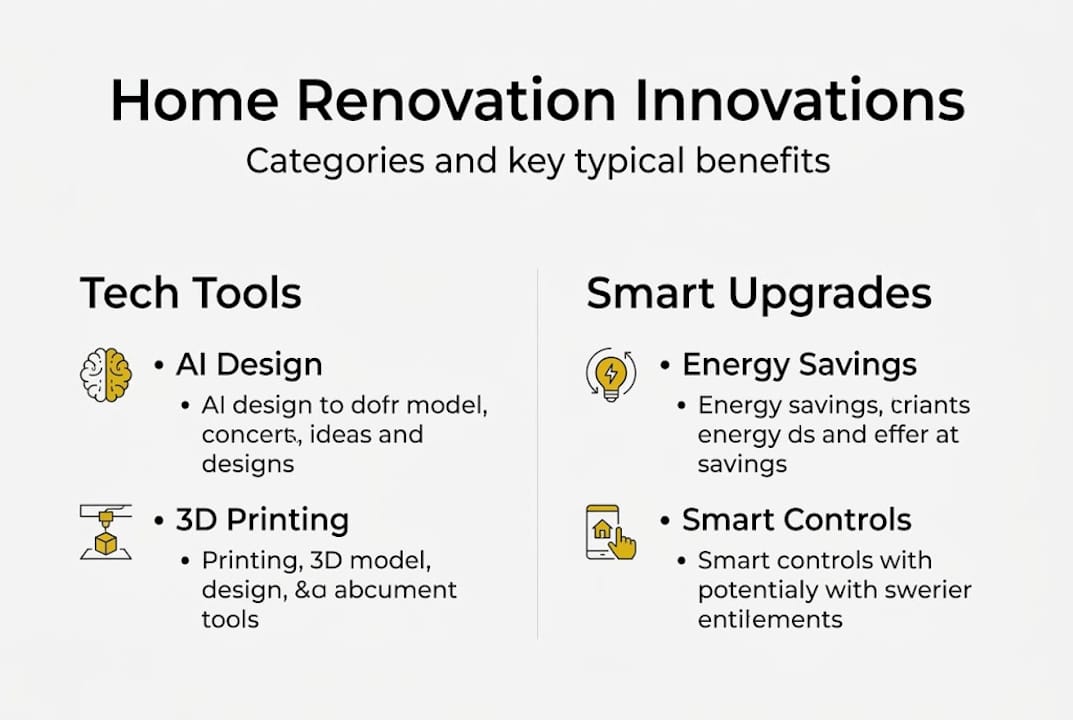
- AI-driven design tools: Software platforms that generate optimized floor plans, material selections, and cost projections based on homeowner inputs, reducing guesswork and revision cycles.
- Smart home technologies: Integrated systems covering lighting, HVAC, security, and appliances that communicate through a central hub, improving comfort and energy performance. Explore how smart home technologies can be incorporated into steel frame homes specifically.
- Modular and prefabricated construction: Factory-built components assembled on-site, which reduce labor hours, material waste, and weather-related delays.
- Building Information Modeling (BIM): A digital 3D modeling process that maps every structural, mechanical, and electrical element before construction begins, catching conflicts early and improving cost accuracy.
- High-performance materials: Products such as fiber-cement siding, engineered lumber, and advanced insulation systems that outperform traditional materials in durability, thermal efficiency, and moisture resistance.
According to a 2025 European industry study, methodologies like BIM and prefabrication are fundamentally reshaping how renovation projects are planned and executed, cutting rework and improving predictability across project types.
| Innovation category | Primary benefit | Typical application |
|---|---|---|
| AI design tools | Faster decisions, fewer revisions | Kitchen and bath planning |
| Smart home systems | Energy savings, comfort | Whole-home integration |
| Modular construction | Reduced waste, faster build | Additions, ADUs |
| BIM | Cost accuracy, conflict detection | Full renovations, new builds |
| High-performance materials | Durability, thermal efficiency | Siding, insulation, windows |
Despite clear benefits, adoption is not universal. Research shows that barriers to adoption include difficulty finding qualified contractors, uncertainty about cost, and limited awareness of available technologies. Understanding these barriers is the first step toward overcoming them.
How innovation boosts efficiency and value
With a clear picture of what innovation entails, it is time to examine what it delivers in real homes and real budgets. The financial case for strategic renovation is stronger than many homeowners realize, particularly when innovative methods are applied to midrange projects rather than luxury overhauls.
The Cost vs Value Report 2026 highlights several upgrades with exceptional return profiles. Garage door replacement leads at 194% ROI, followed by fiber-cement siding installation and minor kitchen remodels. These are not high-end luxury projects. They are functional, well-executed upgrades that align with buyer expectations in most markets, including Jacksonville.
Innovative construction methods amplify these returns in three concrete ways. First, 3D printing technology can reduce certain build phases to as little as 24 hours, compressing timelines that would otherwise span weeks. Second, modular approaches significantly cut on-site material waste, reducing both disposal costs and environmental impact. Third, precision planning through BIM reduces costly change orders, which are one of the leading drivers of budget overruns in traditional renovation projects.
| Renovation type | Average ROI | Payback period |
|---|---|---|
| Garage door replacement | 194% | Immediate at resale |
| Fiber-cement siding | ~88% | 3 to 5 years |
| Minor kitchen remodel | ~96% | 2 to 4 years |
| Smart/energy systems | Up to 248% | 4 to 7 years |
| Tile upgrade | ~70 to 80% | 3 to 5 years |
Research from Pella's 2026 design trends confirms that sustainable upgrades, particularly smart systems and insulation improvements, can yield ROI as high as 2.48, meaning every dollar invested returns nearly two and a half dollars in value. That figure places energy-focused innovation among the most financially sound renovation decisions available today.
Exploring sustainable construction trends in the context of fix-and-flip investing reveals how these principles translate directly to investment property performance. For owner-occupied homes, the emphasis on function over aesthetics consistently drives stronger long-term outcomes.
Pro Tip: Focus innovative upgrades on midrange projects rather than luxury finishes. The data consistently shows that functional, well-executed midrange renovations outperform high-end upgrades in terms of cost recovery at resale.
Sustainability, smart tech, and long-term gains
Beyond immediate savings and value, innovation sets the stage for a home that performs well for years in Jacksonville's unique market. The city's subtropical climate, with high humidity, intense heat, and hurricane exposure, places specific demands on building materials and systems that standard renovation approaches often fail to address adequately.
Energy-efficient upgrades that align with Jacksonville's conditions include:
- High-performance windows: Reduce solar heat gain and air infiltration, lowering cooling loads significantly in Florida's long summer season.
- Spray foam and rigid board insulation: Provide superior thermal resistance and moisture control compared to traditional fiberglass batts, which are particularly vulnerable in humid climates.
- Smart HVAC systems: Programmable and learning thermostats reduce energy consumption without sacrificing comfort, adapting to occupancy patterns automatically.
- Solar-ready electrical infrastructure: Prepares the home for photovoltaic panel installation without requiring a full electrical overhaul later.
- Impact-resistant roofing and siding: Addresses Jacksonville's wind exposure and reduces insurance premiums over time.
Sustainable building practices in 2026 increasingly emphasize whole-system thinking, where individual upgrades are planned as part of an integrated strategy rather than isolated improvements. This approach maximizes the compounding effect of multiple energy-saving measures working together.
"Smart systems' ROI can reach 2.48; professional integration is strongly advised to ensure systems communicate correctly and deliver their full performance potential."
Pella's 2026 research confirms that energy-efficient windows and insulation offer strong payback while reducing a home's carbon emissions, a factor that increasingly influences buyer decisions in competitive markets.
For homeowners seeking detailed guidance on insulation strategies suited to Florida's climate, energy savings tips specific to steel frame construction provide a practical framework. For those considering net zero building goals, understanding permitting costs and compliance requirements is an essential early step.
Pro Tip: Always engage licensed professionals for smart system installation. Improper integration between HVAC, lighting, and security systems creates performance gaps that are expensive to diagnose and correct after the fact.
Challenges and expert strategies for adopting innovation
While innovation delivers clear value, smart adoption depends on understanding and overcoming common challenges. Not every home is a suitable candidate for every technology, and not every innovation delivers equivalent returns across all property types and price points.
The primary challenges homeowners and investors face include:
- Upscaling barriers: Transitioning from pilot-scale innovation to full project implementation requires contractors with specific training and equipment, which are not always locally available.
- Structural incompatibility: Older homes may have framing, electrical, or mechanical systems that are not compatible with modern renovation technologies without significant preliminary work.
- ROI mismatch with luxury projects: Upscaling innovation in renovation research identifies that high-end luxury upgrades frequently fail to recover their costs at resale, particularly in markets where median home values set a ceiling on achievable sale prices.
A structured approach to innovation adoption reduces these risks considerably. The following steps provide a practical framework:
- Assess the property baseline. Evaluate the existing structural, mechanical, and electrical systems before selecting any innovation. This assessment determines compatibility and identifies prerequisite work.
- Define the renovation goal clearly. Establish whether the primary objective is resale value, energy performance, functional improvement, or a combination. This goal shapes every subsequent decision.
- Research local market ceilings. Understand the median sale prices in your Jacksonville neighborhood to avoid over-improving beyond what the market will support.
- Prioritize functional upgrades first. NKBA research shows that 68% of homeowners renovate primarily for functional improvement, and these projects consistently deliver stronger satisfaction and ROI than purely aesthetic ones.
- Engage qualified professionals early. Explore renovation service strategies and prefabrication approaches with contractors who have verifiable experience in the specific technologies you plan to use.
The impact of finishes on perceived quality and resale value is often underestimated. Selecting durable, well-installed finish materials compounds the value of structural and systems improvements made earlier in the project.
Pro Tip: For multigenerational homes or properties with aging-in-place requirements, prioritize accessibility and functional innovation above all else. These upgrades serve immediate household needs while broadening the buyer pool at resale.
A Jacksonville perspective: Function first, smart always pays off
After more than 15 years of residential construction and renovation work in Jacksonville, one principle holds consistently: functional innovation outperforms aesthetic trends in both client satisfaction and financial return. Homeowners who invest in energy-efficient systems, resilient materials, and smart home integration consistently report stronger outcomes than those who focus primarily on visual upgrades.
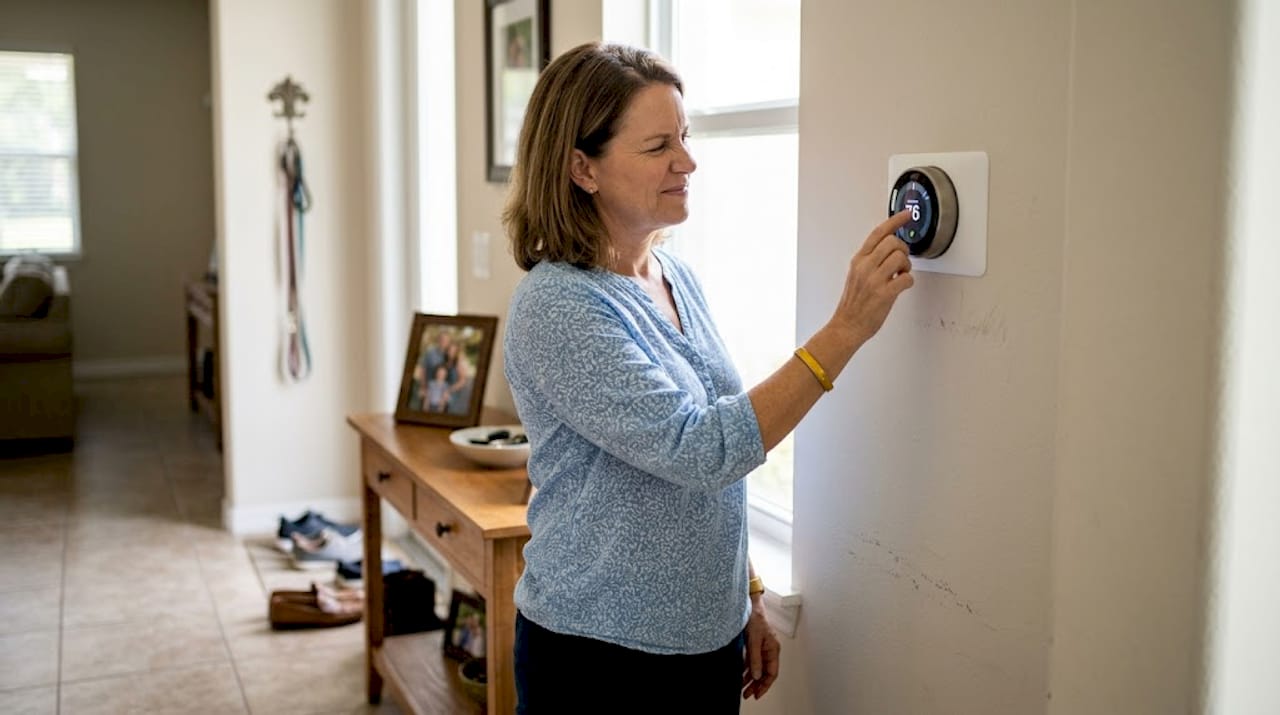
Jacksonville's climate makes this especially true. Homes that perform well thermally and structurally command attention in a market where buyers are increasingly aware of long-term operating costs. A beautifully finished home with inadequate insulation or an aging HVAC system will lose ground to a functionally superior property at every price point.
The edge cases worth acknowledging are multigenerational households and climate-resilient construction, both of which justify higher upfront investment in innovation because the returns extend beyond resale value into daily livability and reduced maintenance costs. In these scenarios, professional guidance is not optional. It is the factor that separates a well-executed project from an expensive correction.
For homeowners ready to apply these principles, remodeling insights grounded in Jacksonville's specific market conditions provide a reliable starting point.
Innovate with confidence: Start your home's transformation
Putting innovation to work in a Jacksonville home requires more than good intentions. It requires a contractor with the technical depth to plan, permit, and execute upgrades that deliver on their financial and performance promises.
Ofir Engineering brings over 15 years of licensed residential construction experience to every project, from targeted home remodeling services to full-scale construction solutions using Light Gauge Steel and Wood Frame systems. Whether you are planning a smart home integration, an energy-efficient retrofit, or exploring new construction options for a Jacksonville property, the team provides precise planning and meticulous execution at every stage. Contact Ofir Engineering to discuss your renovation goals and build a strategy grounded in proven local expertise.
Frequently asked questions
Which home renovations offer the best ROI in Jacksonville?
Midrange garage door replacements and minor kitchen remodels offer the highest ROI, with garage doors averaging 194% return and minor kitchen remodels returning approximately 96% of project costs.
What are the top innovative technologies for home renovation?
AI design tools, modular construction, smart home systems, and high-efficiency materials are the leading innovations shaping residential renovation decisions in 2026.
How do energy-efficient upgrades increase home value?
They reduce utility costs, improve buyer appeal, and offer ROI up to 2.48 for smart and insulation upgrades, making them among the most financially sound renovation investments available.
What is Building Information Modeling (BIM) and why does it matter?
BIM is a digital planning process that models every structural and systems element before construction begins, and BIM improves project efficiency by reducing conflicts, rework, and cost overruns on renovation projects.
Is professional installation necessary for smart home systems?
Yes. Professional integration prevents communication failures between systems and ensures smart home components deliver their full performance and energy-saving potential from day one.
Recommended
- Home Remodeling Jacksonville FL | Ofir Engineering
- Construction & Steel Services Jacksonville | Ofir Engineering
- 8 Creative Interior Ideas to Customize Steel Frame Homes in Jacksonville, FL - Ofir Engineering
- Top Sustainable Construction and Green Building Trends For 2025 - Ofir Engineering
- How Much Are You Spending On Home Improvements?