
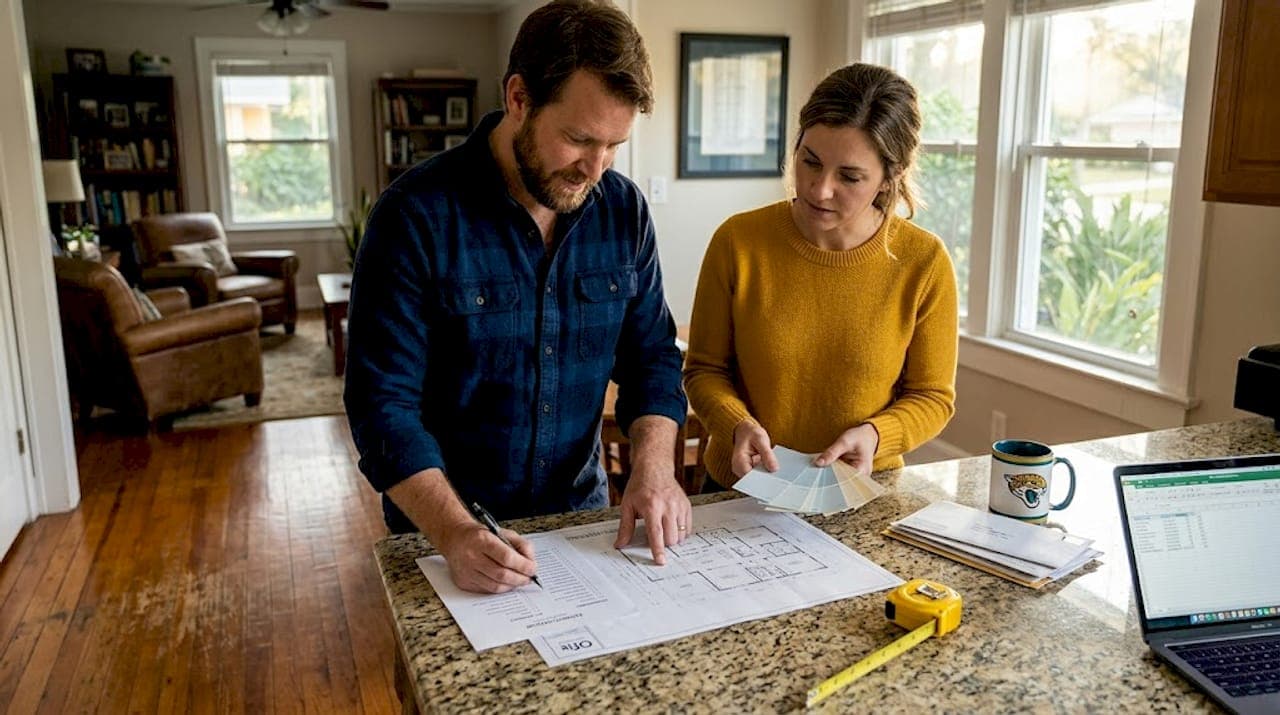
Roughly 37% of homeowners who tackle a kitchen remodel alone exceed their original budget, and that figure climbs even higher in coastal markets like Jacksonville, where hurricane codes, high humidity, and fluctuating labor demand add layers of complexity that most generic renovation guides simply ignore. A well-built checklist, tailored to local realities, is what separates a project that finishes on time and within budget from one that stalls mid-construction. This guide walks Jacksonville homeowners through every critical phase, from goal-setting and permitting to material selection and scheduling, with specific local insights built into every step.
Table of Contents
- Set your remodeling goals and realistic budget
- Obtain permits and plan for local regulations
- Select materials and plan for Jacksonville's unique climate
- Build your step-by-step remodeling schedule
- The truth about sticking to your plan in Jacksonville remodels
- Ready to simplify your Jacksonville remodel?
- Frequently asked questions
Key Takeaways
| Point | Details |
|---|---|
| Always budget 10-20% extra | Unexpected costs due to codes, climate, or material delays are common in Jacksonville remodels. |
| Permits and codes matter | Ensuring correct permits and following local hurricane and humidity codes avoids costly headaches. |
| Material choice impacts longevity | Invest in humidity-resistant and hurricane-rated materials to extend your remodel’s life. |
| Sequenced scheduling prevents delays | Order materials early and schedule trades in the correct order for efficient project completion. |
| Stay flexible and communicate | Adapting to surprises and keeping lines open with contractors helps keep your remodel on track. |
Set your remodeling goals and realistic budget
Every successful remodel begins with clarity. Before a single contractor is called or a material is ordered, you need to define exactly what the project must accomplish. Are you improving daily function, updating aesthetics, increasing resale value, or some combination of all three? The answer directly shapes every decision that follows, including which trades you hire, which materials you specify, and how much you realistically need to spend.
When setting a budget, local benchmarks matter far more than national averages. That said, national data still provides a useful starting point. The median kitchen spend sits at $24,000 according to Houzz 2026 data, and 91% of homeowners who undertake such projects hire professionals rather than attempting full DIY execution. Jacksonville-specific costs are shaped by coastal factors including the need for humidity-resistant materials, compliance with Florida Building Code hurricane provisions, and elevated labor demand during peak construction seasons.
Key budgeting considerations for Jacksonville homeowners include:
- Material premiums: Moisture-resistant and impact-rated products cost more upfront but reduce long-term maintenance expenses significantly.
- Labor rates: Skilled trades in Jacksonville command competitive rates, particularly for licensed electricians and plumbers familiar with Florida codes.
- Inspection fees: Permit and inspection fees vary by project scope and must be factored into the total budget from day one.
- Seasonal timing: Starting a remodel during hurricane season can create supply chain delays and contractor availability issues.
Cost considerations for Jacksonville remodels consistently point to a 10 to 20% contingency reserve as essential, not optional. Unexpected structural issues, concealed water damage, and code-required upgrades discovered during demolition are common in older Jacksonville homes, and without a contingency buffer, these discoveries can halt a project entirely.
Pro Tip: Build your contingency into the budget before you finalize your scope of work. If you set a $50,000 renovation budget, treat $42,000 as your actual spending limit and hold $8,000 in reserve. This discipline prevents the budget overruns that affect more than a third of remodeling projects nationally.
One of the most common budgeting mistakes is treating the renovation as a single line item rather than breaking it into phase-by-phase costs. Structural work, mechanical systems, finishes, and fixtures each carry their own cost profiles and lead times. Reviewing planning tips for Jacksonville remodels by phase allows you to identify where costs are most likely to escalate and prioritize accordingly.
Obtain permits and plan for local regulations
With goals and budget established, the next step is aligning your plans with Jacksonville's regulatory framework. Skipping this step is one of the most expensive mistakes a homeowner can make. Unpermitted work can result in stop-work orders, mandatory demolition of completed construction, difficulty selling the property, and voided homeowner's insurance coverage for work-related damages.
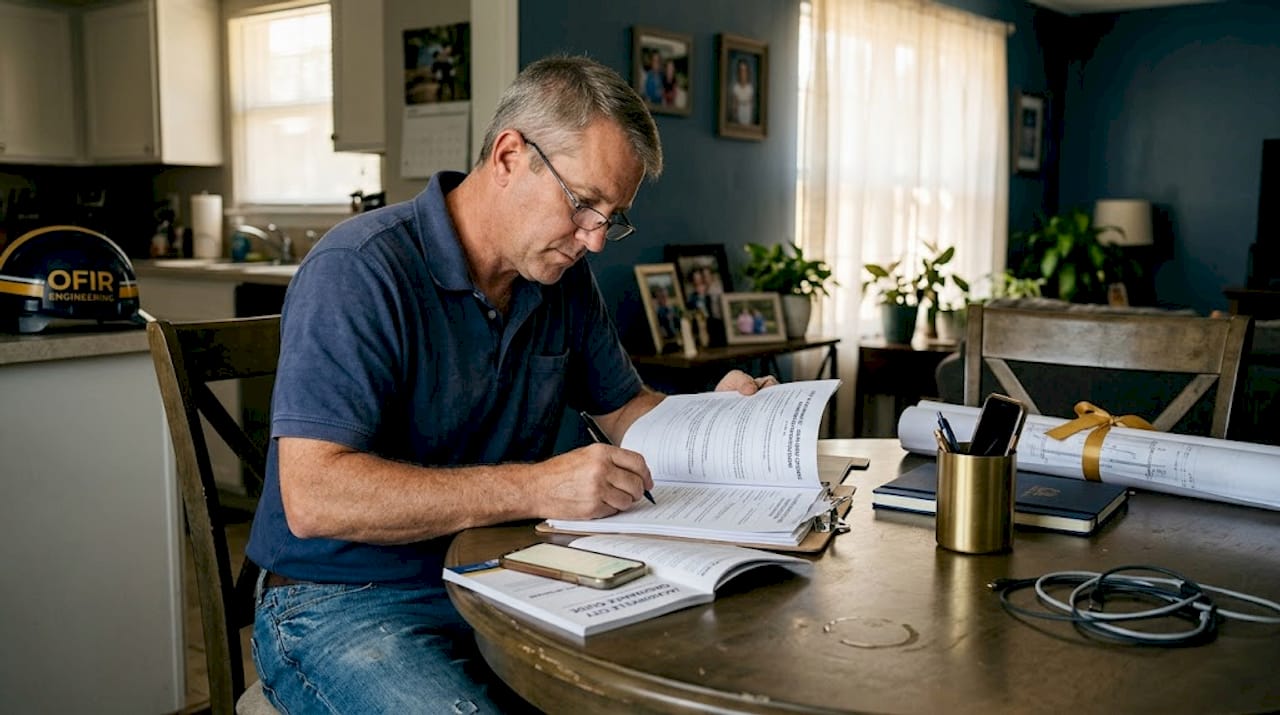
Jacksonville remodeling projects require permits for any structural, electrical, or plumbing changes. Cosmetic updates such as painting, flooring replacement, and cabinet refacing are generally exempt, but the line between cosmetic and structural is not always obvious. When in doubt, confirm with the City of Jacksonville Building Inspection Division before proceeding.
The standard permitting process follows this sequence:
- Define the project scope in sufficient detail to determine which permits apply.
- Prepare or commission construction documents if structural or mechanical work is involved.
- Submit permit applications to the City of Jacksonville, either online through the city's portal or in person.
- Allow approximately two weeks for standard permit approval, though complex projects requiring plan review can take longer.
- Schedule inspections at required milestones during construction, such as rough-in electrical and plumbing before drywall installation.
- Obtain a Certificate of Completion once all inspections pass, which closes the permit and documents the work legally.
Jacksonville falls within an ASCE 7 high-wind zone, which means structural work must comply with Florida's hurricane provisions. This affects everything from roof-to-wall connections to window and door specifications. Contractors unfamiliar with these requirements can inadvertently create compliance failures that surface during final inspection.
The standard renovation process includes a structural and systems inspection before demolition begins, ensuring that hidden issues are identified before walls are opened. This step is particularly important in Jacksonville's older housing stock, where original construction may predate current wind-load and moisture-barrier requirements.
Coordinating permit timelines with your contractor schedule is critical. Many homeowners make the mistake of scheduling trades to begin work before permits are approved, which creates costly delays when approval takes longer than expected. A reliable permit checklist for Jacksonville helps you sequence these steps correctly from the outset. For broader context on what the full process looks like, the Jacksonville renovation guide covers regulatory requirements across different project types.
Select materials and plan for Jacksonville's unique climate
Jacksonville's climate is demanding. The combination of high annual humidity, salt air in coastal neighborhoods, intense summer heat, and the ever-present risk of tropical storm activity means that material selection is not simply an aesthetic decision. It is a durability and compliance decision with direct financial consequences.
The following comparison illustrates how two common framing systems perform in Jacksonville's environment:
| Attribute | Wood framing | Light gauge steel framing |
|---|---|---|
| Moisture resistance | Susceptible to rot and mold | Does not rot or support mold growth |
| Termite vulnerability | High | None |
| Hurricane performance | Moderate with proper connectors | Superior with engineered connections |
| Dimensional stability | Can warp or shrink | Dimensionally stable |
| Fire resistance | Lower | Higher |
| Cost | Lower upfront | Higher upfront, lower long-term maintenance |
Beyond framing, several other material categories require careful consideration in Jacksonville's climate:
- Roofing: Impact-resistant shingles or metal roofing rated for high-wind zones are strongly preferred. Standard 3-tab shingles are generally inadequate for sustained wind exposure.
- Windows and doors: Florida Product Approval (FPA) rated windows and doors are required in many Jacksonville remodel scenarios, particularly when existing openings are modified.
- Exterior cladding: Fiber cement siding outperforms vinyl and wood in high-humidity coastal environments, resisting moisture intrusion and maintaining finish integrity over time.
- Insulation: Closed-cell spray foam insulation provides both thermal performance and moisture barrier properties, which is particularly valuable in Jacksonville's hot, humid summers.
Jacksonville's coastal cost factors reinforce that investing in durable, code-compliant materials reduces the total cost of ownership over a 10 to 20-year horizon, even when upfront costs are higher. Insurance carriers also take note: homes with hurricane-rated windows, doors, and roofing systems often qualify for meaningful premium discounts under Florida's wind mitigation credit program.
Pro Tip: Before finalizing any material specification, confirm that the product carries Florida Product Approval and is listed on the Florida Building Code's approved product directory. Using non-approved materials, even if they appear equivalent, can result in failed inspections and costly replacement. Explore interior ideas for Jacksonville homes to see how climate-appropriate material choices can also support strong design outcomes. For a detailed look at what goes wrong when material decisions are rushed, the guide on mistakes to avoid with materials is a practical reference.
Build your step-by-step remodeling schedule
A detailed schedule is what transforms a list of tasks into a functioning project. Without one, trades overlap, materials arrive out of sequence, and the project loses momentum. Jacksonville's specific conditions, including weather windows, permit timelines, and trade availability, make scheduling discipline especially important.
The following table outlines typical phase durations for a mid-scale Jacksonville residential remodel:
| Phase | Typical duration |
|---|---|
| Goal setting and design | 2 to 4 weeks |
| Contractor selection and contracts | 1 to 3 weeks |
| Permit application and approval | 2 to 4 weeks |
| Demolition and site prep | 1 to 2 weeks |
| Structural and rough framing | 2 to 4 weeks |
| Rough-in plumbing and electrical | 1 to 3 weeks |
| Inspections (rough-in stage) | 3 to 7 business days |
| Insulation and drywall | 1 to 2 weeks |
| Finishes, fixtures, and cabinetry | 2 to 4 weeks |
| Final inspections and punch list | 1 to 2 weeks |
The sequencing of trades is non-negotiable. Plumbing and electrical rough-in must be completed and inspected before insulation and drywall proceed. Cabinetry and finish flooring follow after drywall is painted. Appliances and fixtures are installed last. Deviating from this sequence creates rework, which is the single largest driver of cost overruns and schedule delays.
The recommended steps for building your schedule are:
- Confirm permit approval dates before locking in any trade start dates.
- Order long-lead materials early, particularly custom cabinetry, specialty windows, and structural steel components, which can carry 6 to 12-week lead times.
- Sequence trades in writing, with each subcontractor's start and end dates documented in the contract.
- Build buffer days between trade phases to accommodate inspection scheduling and minor rework.
- Schedule weekly check-ins with your general contractor to review progress against the schedule and identify emerging issues before they become delays.
Ordering long-lead materials early and sequencing trades correctly are the two most impactful scheduling decisions a homeowner can make. Both require advance planning that begins weeks before construction starts, not after demolition is underway.
Living through a remodel adds another layer of complexity. If you are remaining in the home during construction, establish clear zones with your contractor: which areas are active work zones, which remain livable, and how dust and debris will be contained. Jacksonville's heat also makes HVAC continuity a genuine comfort and safety issue during summer remodels.
Pro Tip: Request a written schedule from your contractor before signing any contract. If a contractor cannot produce a phase-by-phase timeline with trade sequencing, that is a strong indicator of limited project management capability. Review sequenced renovation steps to understand what a professionally managed timeline looks like in practice.
The truth about sticking to your plan in Jacksonville remodels
After 15 years of managing residential construction and renovation projects in Jacksonville, one pattern is consistent: the homeowners who experience the least stress are not the ones with the most detailed checklists. They are the ones who combine solid planning with genuine flexibility and clear, consistent communication with their project team.
No checklist survives first contact with a Jacksonville remodel entirely intact. Walls opened during demolition reveal moisture damage that was invisible during the pre-construction inspection. A tropical weather system delays exterior work by two weeks. A supplier's lead time extends unexpectedly. These are not failures of planning. They are the normal conditions of residential construction in a coastal market, and the homeowners who understand this from the start navigate them far more effectively than those who expect a perfectly linear process.
The practical implication is that your checklist should function as a living document, not a fixed contract with reality. When site conditions require a change, the question is not "why didn't the plan account for this?" but rather "what is the best decision given what we now know?" That shift in perspective, from rigidity to informed adaptability, is what experienced contractors bring to every project.
Communication frequency matters as much as communication quality. Weekly check-ins with your contractor, documented in writing, create a record of decisions and keep both parties aligned. When a change order is required, reviewing Jacksonville construction planning advice alongside your contractor ensures that scope changes are evaluated against both budget and schedule before they are approved.
Local contractor knowledge is also genuinely irreplaceable. A contractor who has managed dozens of Jacksonville remodels knows which inspectors require specific documentation formats, which suppliers have reliable lead times, and which structural details are most likely to trigger code review. That institutional knowledge cannot be replicated by a checklist alone, however thorough.
Ready to simplify your Jacksonville remodel?
Managing permits, material specifications, trade sequencing, and code compliance simultaneously is a significant undertaking, and the margin for error in Jacksonville's regulatory environment is narrow. Working with experienced local professionals reduces that risk substantially.
Ofir Engineering has managed residential remodeling and new construction projects across Jacksonville for over 15 years, with deep familiarity with Florida Building Code requirements, wind zone compliance, and the material specifications that perform in this climate. Whether you are planning a kitchen renovation, a full-home remodel, or a structural upgrade, the team at Jacksonville home remodeling experts provides turnkey project management from permitting through final inspection. For homeowners who want to start with a stronger planning foundation, expert planning tips are available to help you build a project framework before the first contractor conversation.
Frequently asked questions
What permits are required for home remodeling in Jacksonville?
Structural, electrical, and plumbing changes require permits in Jacksonville, while most cosmetic updates such as painting, flooring, and cabinet refacing do not.
How much should I budget for a kitchen remodel in Jacksonville?
The median kitchen remodel spend is approximately $24,000 nationally, but Jacksonville homeowners should add a 10 to 20% contingency to account for local material premiums and code compliance costs.
How long does it take to get permits for a remodel in Jacksonville?
Standard permit approval takes approximately two weeks, though projects requiring detailed plan review or multiple trade permits can take longer.
What materials should I use to withstand Jacksonville's weather?
Prioritize humidity-resistant and hurricane-rated materials, including Florida Product Approval rated windows and doors, fiber cement cladding, and closed-cell spray foam insulation.
How can I avoid remodeling delays?
Order long-lead materials early and sequence trades in writing before construction begins, ensuring plumbing and electrical rough-in are completed and inspected before drywall proceeds.