
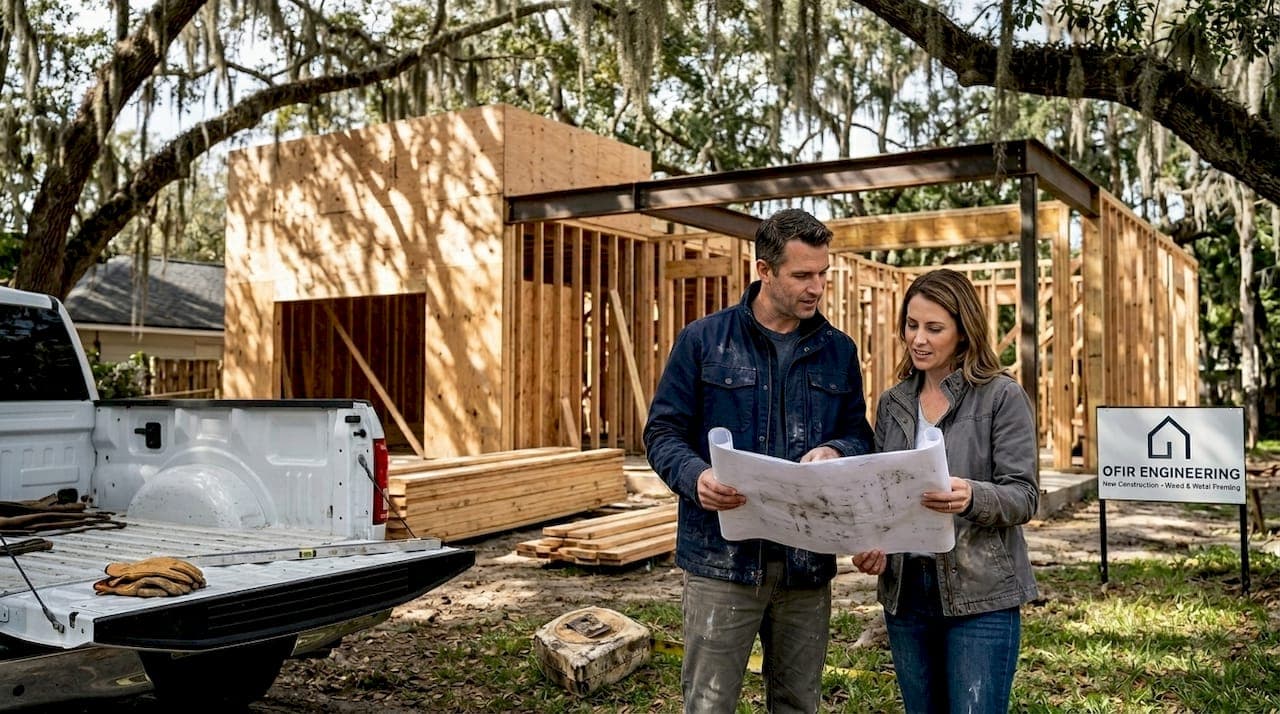
Many Jacksonville homeowners assume that buying a new construction home automatically means they can design it however they want. That assumption leads to disappointment. The reality is that most new homes built in this region fall into the spec or production category, where floor plans, finishes, and structural decisions have already been locked in long before a buyer walks through the door. True custom home building is a fundamentally different process, one that places decision-making authority directly in the hands of the owner, from the choice of lot to the last cabinet pull. This guide clarifies how custom building works, what you can control, and how to approach the process with realistic expectations.
Table of Contents
- What is custom home building?
- How custom home building works step by step
- What you can customize: Layouts, plans, and finishes
- Custom home timelines and what impacts them
- Your role: Making smart choices with your builder
- A Jacksonville contractor's perspective: What most guides miss about custom homes
- Ready to build your custom home in Jacksonville?
- Frequently asked questions
Key Takeaways
| Point | Details |
|---|---|
| Custom builds are owner-driven | You get to guide every major design and construction decision for your home. |
| Timeline is longer than spec homes | Expect your custom home project to take several months to more than a year, due to design and approval steps. |
| Customization has levels | Options range from adjusting base plans to creating a one-of-a-kind design built around your needs. |
| Local expertise matters | Working with a contractor who knows Jacksonville streamlines permits and custom requests. |
| Your choices shape success | Active, informed collaboration with your builder minimizes delays and gets the results you want. |
What is custom home building?
Custom home building is not simply picking a paint color or upgrading the countertops in a builder's pre-designed unit. The distinction matters because it affects your budget, timeline, and the final result in significant ways.
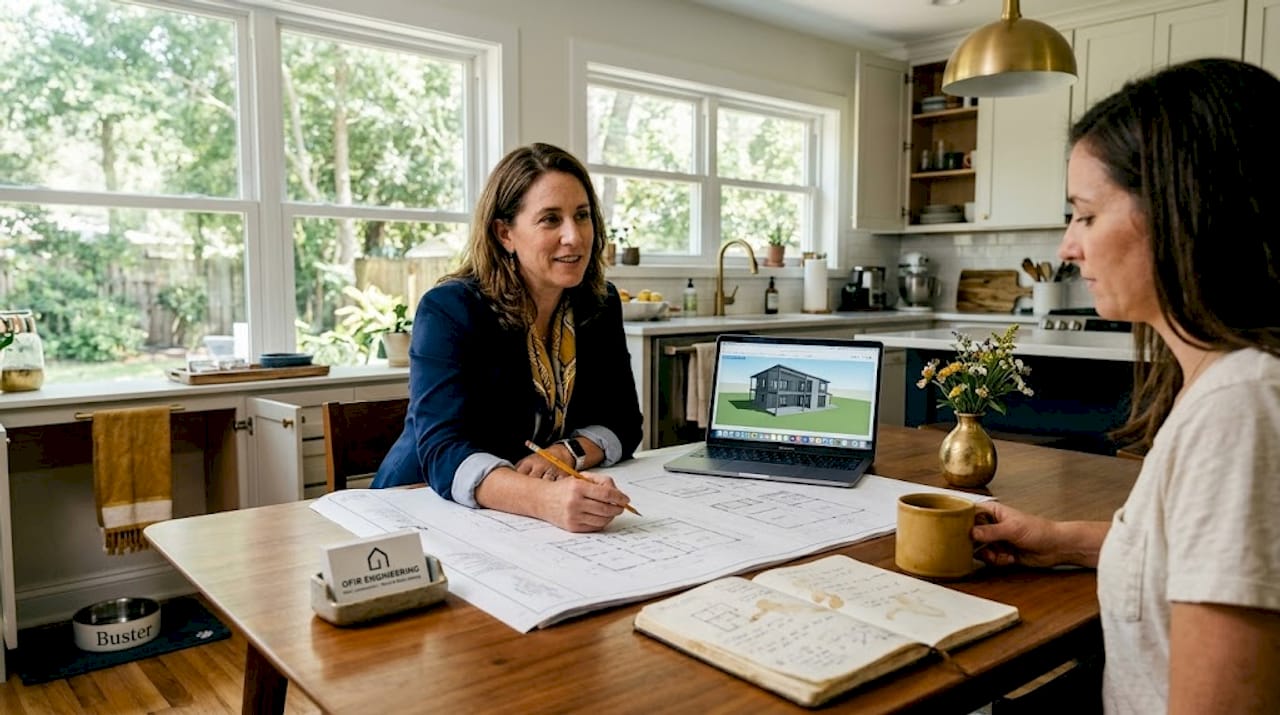
As defined by industry sources, custom home building is a new-home construction approach where the home is designed for a specific buyer and typically involves collaboration on items like the layout, design elements, and finishes, as opposed to buying a largely pre-selected spec home. That definition cuts to the core of the difference: with custom construction, the design process starts with you, not with a developer's spreadsheet.
In contrast, a spec home (short for speculative home) is designed and built by a developer who anticipates what buyers in a given price range will want. The developer assumes the financial risk, selects the floor plan, and chooses the finishes, usually in tiers. A production home works similarly, but at greater scale, with standardized plans repeated across entire communities. Both approaches prioritize speed and cost efficiency for the builder, not personalization for the buyer.
True custom new construction homes offer a different set of features entirely:
- Choice of lot and site placement, including orientation, setbacks, and drainage planning
- Fully customizable floor plan, from room count and dimensions to ceiling heights and traffic flow
- Selection of structural systems, such as Light Gauge Steel or Wood Frame construction
- Design control over all interior and exterior finishes, including roofing, siding, flooring, cabinetry, and fixtures
- Integration of lifestyle-specific features, such as home offices, accessible design, or multi-generational living spaces
- Input on mechanical systems, including HVAC design, electrical load planning, and plumbing layout
"A custom home is not a product pulled from a catalog. It is a collaborative construction process where the homeowner's vision directly shapes every decision made on the project, from the foundation to the roof system."
Understanding the home building lifecycle from the start helps you ask the right questions and set appropriate expectations before any contracts are signed.
How custom home building works step by step
Once you understand the core concept, it helps to see how the process unfolds from idea to move-in. The sequence is more iterative than most buyers expect, and each stage requires decisions that feed into the next.
A typical custom home journey in Jacksonville follows these stages:
- Define your vision and budget. Before any design work begins, the owner and builder align on the overall scope, must-have features, target square footage, and hard budget limits. This conversation prevents costly redesigns later.
- Site selection and evaluation. The chosen lot determines what can be built. Soil composition, flood zone classification, utility access, and local zoning ordinances all shape the design parameters before an architect draws a single line.
- Design collaboration and architectural drawings. Working with an architect and your builder, the floor plan takes shape through a series of reviewed drafts. Structural decisions, such as span lengths, load paths, and framing systems, are finalized during this phase.
- Engineering and permit submission. In Jacksonville, construction documents must be submitted to the Duval County Building Inspection Division. Engineering calculations, energy compliance documentation, and site plans are all required. This stage alone can take several weeks to a few months depending on plan complexity and review backlog.
- Site preparation and foundation work. Once permits are approved, the site is cleared, graded, and prepared. Foundation type (slab-on-grade is most common in the Jacksonville area given soil conditions) is poured and inspected before framing begins.
- Framing and structural construction. This is the most visible phase. The structural frame, whether wood or cold-formed steel, rises according to the engineered drawings. Rough-in work for electrical, plumbing, and HVAC follows.
- Inspections and mechanical rough-ins. Jacksonville's building department requires inspections at multiple stages. Framing, rough electrical, rough plumbing, and insulation inspections each must be passed before work can proceed.
- Interior and exterior finishing. Drywall, flooring, cabinetry, roofing, siding, and all finish work happen in a coordinated sequence. Lead times on specialty items can affect the schedule significantly.
- Final inspection and certificate of occupancy. A final building inspection confirms that all work meets Florida Building Code requirements. The certificate of occupancy is issued before the owner takes possession.
As noted by construction industry analysis, custom builds take longer than spec or production homes because of design iterations, permitting, and the need to coordinate many trades and material lead times. Understanding this reality from day one prevents unnecessary frustration.
Pro Tip: Request a detailed milestone schedule from your builder at the project kickoff and identify which milestones require your approval before work proceeds. Missing a design approval window can stall the entire schedule by weeks, especially if it delays permit submission.
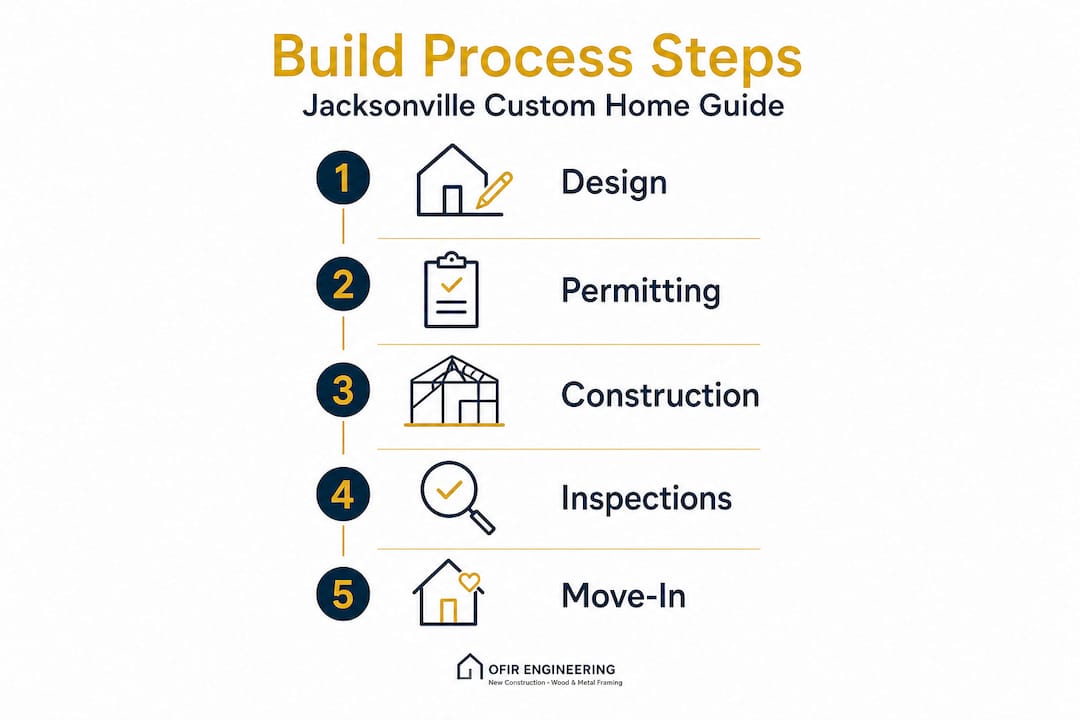
Reviewing a new construction guide specific to Jacksonville helps owners understand local regulatory requirements before they commit to a timeline. It also helps to understand general contractor roles so you know who is responsible for each phase.
What you can customize: Layouts, plans, and finishes
Understanding the workflow is just the start. The range of customization available to you depends significantly on the builder you choose and the contract structure you agree to.
It is worth noting that not all custom builds offer unlimited freedom. The degree of freedom can vary: some builders start from base plans that are adjustable, while truly custom work may mean your plan and site placement are created in partnership or engineered specifically for your property and lifestyle.
| Feature | Base plan build | Semi-custom build | Full custom build |
|---|---|---|---|
| Floor plan flexibility | Limited to pre-set options | Adjustable within structural limits | Fully designed to owner spec |
| Lot selection | Developer-controlled community | Some lot choice within phases | Any compatible lot |
| Structural system | Standard framing only | Some material options | Owner-selected system |
| Interior finishes | Tiered packages | Expanded selection | Unlimited within budget |
| Exterior design | Pre-selected options | Moderate flexibility | Fully owner-driven |
| Engineering collaboration | None | Partial | Full |
For Jacksonville homeowners, the most commonly personalized features in a full custom build include:
- Kitchen configuration, including island size, pantry design, appliance placement, and cabinetry layout
- Primary suite design, covering bedroom size, walk-in closet dimensions, and en-suite bathroom layout
- Outdoor living integration, with covered lanais, summer kitchens, pool decks, and screen enclosures that are especially popular in Northeast Florida's climate
- Garage design, including multi-car configurations, workshop spaces, or EV charging readiness
- Accessibility features, such as wider doorways, roll-in showers, and step-free entries
- Energy efficiency upgrades, including spray foam insulation, high-SEER HVAC systems, and solar-ready electrical panels
For inspiration on how structural choices affect interior possibilities, reviewing creative interior ideas for steel frame homes illustrates how framing decisions made early in the process open or close design options later. Solid planning tips and informed construction upgrades guidance can also help owners prioritize where their budget delivers the greatest long-term return.
Custom home timelines and what impacts them
With so much flexibility, it is logical to wonder how long a custom build might actually take. The honest answer depends on project complexity, site conditions, and local regulatory timing.
| Project phase | Typical duration (custom) | Typical duration (spec/production) |
|---|---|---|
| Design and planning | 2 to 4 months | Pre-completed by builder |
| Permitting and approvals | 1 to 3 months | 2 to 6 weeks |
| Site prep and foundation | 3 to 6 weeks | 2 to 4 weeks |
| Framing and structural | 6 to 10 weeks | 4 to 6 weeks |
| Mechanical rough-ins and inspections | 4 to 8 weeks | 3 to 5 weeks |
| Finish work and landscaping | 2 to 4 months | 6 to 10 weeks |
| Total estimated range | 9 to 18 months | 5 to 9 months |
The extended timeline for custom builds is primarily driven by design iterations, permitting, and the coordination demands across multiple trades and material suppliers. Several factors can push a Jacksonville project toward the longer end of that range:
Permitting complexity. Projects in flood zones, on irregularly shaped lots, or with non-standard structural systems typically require additional engineering documentation, which extends the review cycle at the Duval County Building Inspection Division.
Material lead times. Specialty items such as custom cabinetry, imported tile, engineered wood products, and high-performance window systems regularly carry lead times of 8 to 16 weeks. Ordering these items before you need them, based on a carefully sequenced schedule, is critical.
Owner decision delays. One of the most underappreciated causes of schedule extension is delayed owner approvals on finish selections, change orders, or design revisions. Builders typically build buffer time into schedules, but repeated delays compound quickly.
Hurricane preparedness upgrades. Jacksonville falls within Florida's wind zone requirements under ASCE 7. Homes designed to exceed minimum code, incorporating impact-resistant windows, reinforced roof connections, or continuous load path framing, may require additional engineering review time.
Statistic to note: Custom homes in Florida commonly take 12 to 16 months from design through certificate of occupancy, with projects involving complex sites or specialty systems trending toward the upper end of that range.
Pro Tip: Work with a local contractor who has direct experience with Duval County's permitting process and established relationships with regional material suppliers. Familiarity with local construction terminology and review procedures can shave weeks off the permit phase alone.
Your role: Making smart choices with your builder
Now let's clarify what is expected from you and how to ensure you get the custom home you imagine. The owner's role in a custom project is more active than most people anticipate, and that involvement is actually a major advantage if approached correctly.
Custom home building typically involves collaboration on items like the layout, design elements, and finishes, which means the owner must be present and decisive throughout the process. Here is how to do that effectively:
- Define your non-negotiables before the first meeting. Know which features are essential and which are aspirational. A clear list prevents scope creep and helps your builder allocate budget appropriately from the start.
- Engage fully during design review sessions. This is where mistakes are caught at zero cost. Revisions on paper are free; revisions in the field are expensive and time-consuming.
- Approve finish selections on schedule. Establish a deadline for every selection category, such as tile, cabinetry, and fixtures, and commit to meeting it. Your builder's subcontractor schedule depends on it.
- Communicate concerns in writing. A brief email documenting any conversation about changes or concerns protects both parties and keeps the project record clean.
- Stay involved in inspections. You are not required to be present at every inspection, but understanding which ones are happening and what they cover keeps you informed and engaged.
- Trust your contractor's expertise on local conditions. Jacksonville's coastal environment, soil variability, and wind exposure requirements are not abstract. A builder with local experience will steer structural and material decisions that perform well in this specific climate.
Understanding how to work with a contractor effectively is as important as any design decision you make. The owner-contractor relationship sets the tone for the entire project.
A Jacksonville contractor's perspective: What most guides miss about custom homes
Most guides about custom home building focus heavily on the exciting part: the options. The finishes, the layouts, the freedom of choice. That emphasis is accurate but incomplete, because what determines whether a custom home project succeeds or fails is rarely about the selections themselves.
After delivering custom residential projects in Jacksonville for over 15 years, the pattern is consistent. Projects that finish on time and within budget share one trait: the owner and contractor maintain honest, frequent communication when something does not go according to plan. And on every custom project, something will deviate from the original schedule or scope. Material lead times shift. A subcontractor encounters an unexpected site condition. A permit review takes longer than projected.
The owners who handle these moments well are not the ones with the most experience in construction. They are the ones who have set realistic expectations from the start and trust their contractor to problem-solve rather than react with alarm to every adjustment. The owners who struggle most are often those who mistake a builder's confidence in the process for a guarantee that nothing will change.
There is also a gap between what some builders market as "custom" and what the word actually means. A builder who offers 12 floor plan options with three finish tiers is offering choice, not customization. Recognizing that difference before you sign a contract protects you from spending a premium price for a production-level product. Ask directly: will my plan be drawn specifically for my lot, or will you start from an existing base plan? The answer tells you exactly where you stand.
For a detailed look at how thoughtful planning at every phase leads to better outcomes, the renovation process insights from Jacksonville projects illustrate principles that apply equally to new construction.
Ready to build your custom home in Jacksonville?
Building a custom home in Jacksonville is a significant investment of time, money, and decision-making energy. Getting it right requires a team with local knowledge, technical capability, and a transparent approach to project management.
Ofir Engineering (license CHC1540016) has been delivering custom residential construction and renovation projects in Jacksonville for over 15 years, using Light Gauge Steel and Wood Frame systems designed to meet Florida's demanding climate requirements. Whether you are starting a new build from the ground up or planning a full-home renovation, the team provides precision planning, meticulous execution, and clear communication at every stage. Explore new construction services to understand the full scope of what a custom build entails, or review the Jacksonville renovation guide to see how similar principles apply to existing homes. Contact Ofir Engineering directly to discuss your project goals with a licensed local expert.
Frequently asked questions
How long does it take to build a custom home in Jacksonville?
Most custom homes in Jacksonville take between 9 and 18 months from design through certificate of occupancy, because custom builds take longer than spec or production homes due to design iterations, permitting, and trade coordination demands. Projects with complex sites or specialty structural systems typically trend toward the longer end of that range.
What can I customize in a new home build?
You can typically choose the floor plan, room dimensions, structural framing system, interior and exterior finishes, and lifestyle-specific features when working with a true custom builder. As industry sources confirm, a genuine custom build involves collaboration on layout, design elements, and finishes, not just cosmetic upgrades.
What's the difference between a custom and a spec home?
A custom home is designed and built specifically for one buyer, with decisions made collaboratively throughout the process. A spec home is pre-designed by a developer for anticipated buyer demand, offering limited customization compared to a home built to your direct specifications.
Do all builders offer the same level of customization?
No. The degree of freedom varies considerably: some builders offer adjustable base plans with limited structural flexibility, while true custom builders create plans and site placements in direct partnership with the owner, often with engineer-of-record involvement from the design phase forward.