
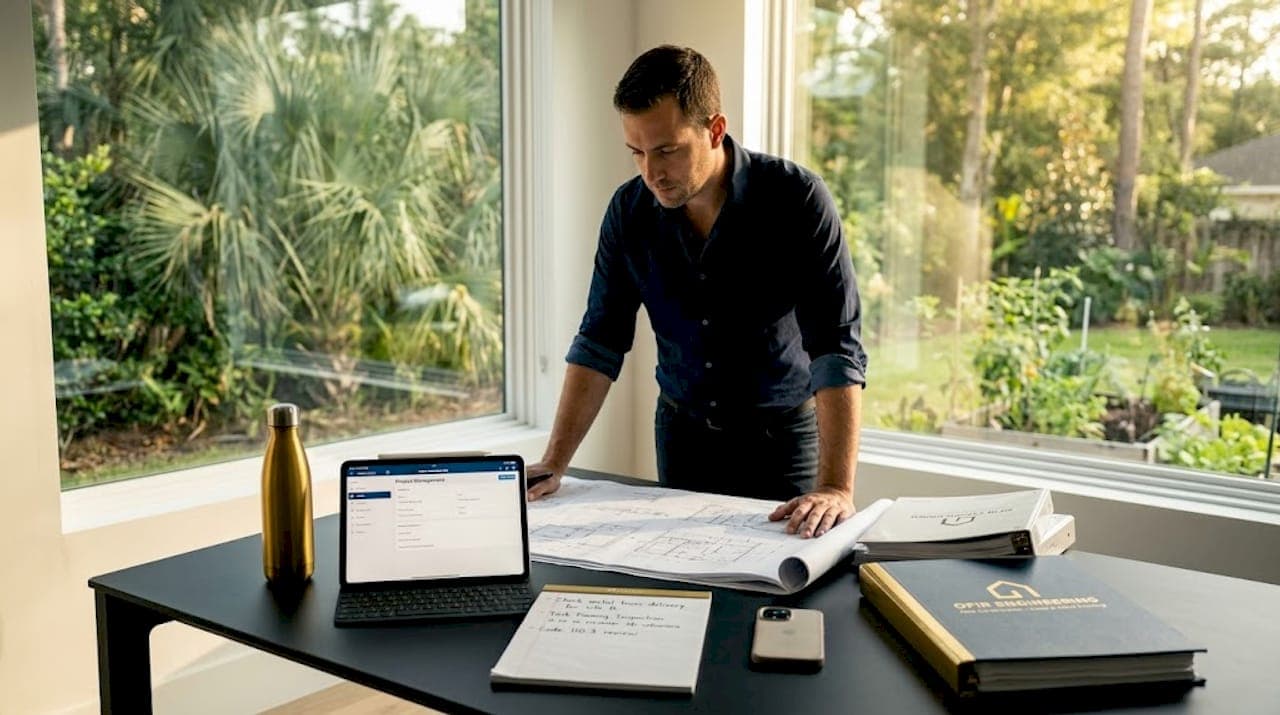
Residential construction in Jacksonville carries real financial risk. 98% of North American projects face delays, running an average of 37% longer than planned, while nine out of ten projects exceed their original budgets by a mean of 28%. For Jacksonville homeowners and real estate investors, those numbers translate directly into unexpected costs, contractor disputes, and renovations that drag on for months beyond their promised completion dates. The good news is that structured project management principles, when applied deliberately to residential construction, address the root causes of these failures rather than their symptoms.
Table of Contents
- What project management in construction really means
- The phases of a residential construction project
- Popular project management approaches for residential success
- Jacksonville-specific tips and pitfalls for homeowners and investors
- The building blocks: Principles that define great construction project management
- Why project management is your greatest advantage in Jacksonville construction
- Ready to take the next step? Start your Jacksonville project with expert guidance
- Frequently asked questions
Key Takeaways
| Point | Details |
|---|---|
| Most projects exceed budget | Up to 80% of North American construction projects run over budget or schedule. |
| Phases define success | Following structured project phases, from planning to closeout, prevents confusion and error. |
| Choose the right approach | Waterfall, Lean, or Agile methods each suit different types of residential projects. |
| Local knowledge matters | Jacksonville homeowners face weather and regulation delays best handled with local expertise. |
| Principles drive ROI | Applying proven project management principles reduces risk and increases returns on renovations. |
What project management in construction really means
Construction project management is not simply about keeping a schedule on a whiteboard. Construction project management (CPM) is the process of planning, coordinating, and controlling a project from initiation to completion, ensuring it meets scope, time, cost, quality, safety, and regulatory requirements simultaneously. That multi-dimensional definition matters because each element affects the others. A contractor who accelerates the schedule without adjusting resources, for example, often sacrifices quality or runs over budget.
For Jacksonville homeowners and investors, CPM provides a structured framework that replaces reactive decision-making with deliberate planning. Consider what happens without it: trades arrive out of sequence, inspections get missed, materials are ordered late, and the owner receives confusing updates from multiple subcontractors with no single source of truth. These are not random events. They are predictable outcomes of inadequate project oversight.
Key functions that CPM brings to a residential project include:
- Scope definition: Establishing exactly what work will and will not be done before a single nail is driven
- Budget control: Tracking costs against a baseline throughout execution, not just at the end
- Schedule management: Coordinating trade sequences so each crew arrives when the previous work is ready
- Quality assurance: Setting inspection checkpoints at critical milestones rather than discovering defects at closeout
- Regulatory compliance: Managing permit applications, inspections, and code requirements specific to Duval County and the City of Jacksonville
"A project without a project manager is like a job site without a foreman — everyone knows their trade, but no one is responsible for the whole." This principle holds as true for a 1,200-square-foot bathroom remodel as it does for a multi-unit development.
A good CPM checklist for Jacksonville captures these functions in a format that owners can reference throughout their project, keeping expectations aligned with reality.
The phases of a residential construction project
Understanding the goal is just the first step. Here is how any well-managed residential project unfolds, from start to finish, broken into five distinct phases.
| Phase | Primary goal | Critical tasks |
|---|---|---|
| Preconstruction | Define scope, budget, and feasibility | Site survey, permit research, design finalization, contractor selection |
| Procurement | Secure materials and subcontractors | Material lead times, subcontractor contracts, delivery scheduling |
| Scheduling | Build the project timeline | Trade sequencing, milestone setting, float analysis |
| Field operations | Execute the work | Daily supervision, quality checks, RFI management, progress reporting |
| Closeout | Deliver a finished, compliant project | Punch list completion, final inspections, warranty documentation |
Key phases in residential construction follow this preconstruction, procurement, scheduling, operations, and closeout sequence, and each phase must be completed with adequate documentation before the next begins. Skipping or rushing preconstruction is the single most common reason Jacksonville renovation projects spiral into cost overruns, because undiscovered site conditions and permit delays compound every subsequent phase.
A typical well-managed Jacksonville home project follows these steps in order:
- Site assessment and existing conditions survey to identify structural, mechanical, or environmental issues before design is finalized
- Design and scope freeze to lock in drawings, finishes, and specifications that subcontractors can bid accurately
- Permit application submitted to the Jacksonville Building Inspection Division with complete drawing sets
- Subcontractor procurement with written contracts that include scope, schedule, and payment terms
- Material procurement timed to trade sequencing so lead times do not create schedule gaps
- Field execution with daily logs, weekly owner updates, and documented quality inspections
- Punch list and closeout verified against the original scope document before final payment is released
For a practical walkthrough of how this applies to local renovation projects, the step-by-step renovation guide breaks each phase into actionable tasks tied to Jacksonville's specific permitting and inspection requirements.
Pro Tip: Document the scope in writing before construction begins, and require any scope changes to go through a formal written change order. This single practice eliminates the majority of payment disputes and prevents scope creep, which is one of the leading causes of budget overruns in residential projects.
Popular project management approaches for residential success
Once you understand the phases, the next challenge is managing them effectively. Not all projects benefit from the same methodology, and selecting the wrong approach can create friction rather than clarity.
| Methodology | Best suited for | Core advantage | Limitation |
|---|---|---|---|
| Waterfall | New construction, fixed-scope builds | Clear sequence, easy to schedule | Inflexible when conditions change |
| Lean | Budget-sensitive renovations | Eliminates waste, improves efficiency | Requires disciplined supplier coordination |
| Critical Path Method | Large or complex projects with many trades | Identifies schedule-driving tasks | Requires detailed upfront planning |
| Agile | Highly customized or phased renovations | Adapts to changing owner decisions | Less predictable cost and schedule |
Core construction methodologies include Waterfall for sequential fixed-scope residential projects, Lean for waste minimization, CPM for schedule-critical work, and Agile for iterative or complex renovations. Each carries distinct trade-offs that matter at the residential scale.
For most Jacksonville new construction projects, Waterfall remains the most practical choice. The scope is fixed, the sequence of trades is predictable, and the municipality's permit process is linear by nature. Lean principles are particularly valuable for renovations where material costs are a primary concern, since they focus on eliminating excess inventory, wait times, and rework. CPM scheduling is the right tool when multiple subcontractor trades overlap and a delay in one creates cascading effects across others.
Key considerations when matching a methodology to your project:
- Project size and complexity: Larger projects with more trades benefit from CPM scheduling; smaller renovations can succeed with a simple Waterfall sequence
- Owner involvement: Agile works best when the owner is highly engaged and willing to make decisions quickly at each iteration
- Budget sensitivity: Lean principles reduce material waste and reduce the risk of ordering excess inventory that drives up costs
- Schedule certainty: CPM gives investors the clearest picture of which tasks are truly time-critical, allowing them to focus oversight where it matters most
For investors focused on returns, understanding which methodology applies to their project type is directly connected to ROI-focused renovations and the ability to control timelines that affect holding costs and rental income.
Jacksonville-specific tips and pitfalls for homeowners and investors
While general project management principles apply everywhere, there are several Jacksonville-specific factors that can make or break a residential project.
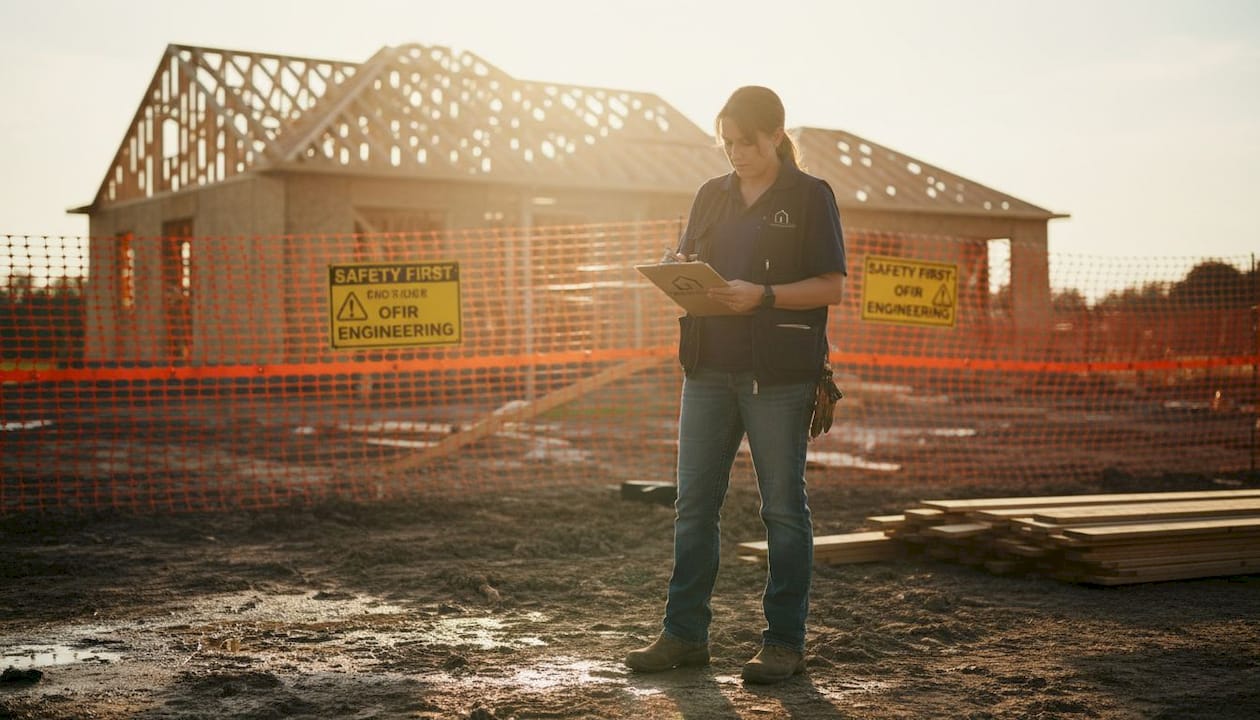
Scope freeze is non-negotiable. Every change made after construction begins costs more than it would have during design. Residential renovation best practices emphasize freezing scope early, maintaining 20-30% budget buffers, coordinating proper trade sequencing through demolition, rough-ins, and finishes, and involving owners through weekly updates. That 20-30% buffer is not conservatism for its own sake. It reflects real data on how often unforeseen conditions, permit revisions, and material price changes affect residential projects in active construction markets like Jacksonville.
Permit coordination is a local bottleneck. The City of Jacksonville's permit review process has specific sequencing requirements that affect when electrical, mechanical, and plumbing rough-in inspections can be scheduled. Contractors unfamiliar with Duval County's workflow often schedule inspections before prerequisites are met, resulting in failed inspections that push subsequent trades back by days or even weeks.
Weather and labor shortages are genuine schedule risks. Weather and labor shortages amplify delays significantly, with weather alone accounting for 25.7% of project delays in the region. Jacksonville's subtropical climate means that summer thunderstorm seasons create predictable schedule risk for roofing, framing, and exterior work. Experienced project managers build float into the schedule during these windows rather than treating them as unexpected events.
Additional pitfalls to monitor on any Jacksonville residential project:
- Subcontractors who are committed to multiple projects simultaneously and deprioritize yours when their primary project demands more attention
- Material lead times for specialty items like custom windows, steel framing components, or imported tile that routinely exceed six to eight weeks
- Existing conditions that differ from original drawings, which is especially common in pre-1990s Jacksonville homes where prior unpermitted work is frequently discovered during demolition
Pro Tip: Request a weekly written progress report from your contractor that covers completed tasks, upcoming work, any items currently blocking progress, and any pending decisions you need to make. This single discipline keeps you informed, creates a paper trail, and signals to your contractor that you are an engaged owner.
For owners who want a practical framework for managing Jacksonville projects or need a starting point before their first meeting with a contractor, a detailed remodeling checklist for Jacksonville provides the structure to organize decisions before work begins.
The building blocks: Principles that define great construction project management
With these practical tips in mind, achieving a consistently organized project comes down to a set of foundational principles that the world's most effective project managers apply regardless of project size or type.
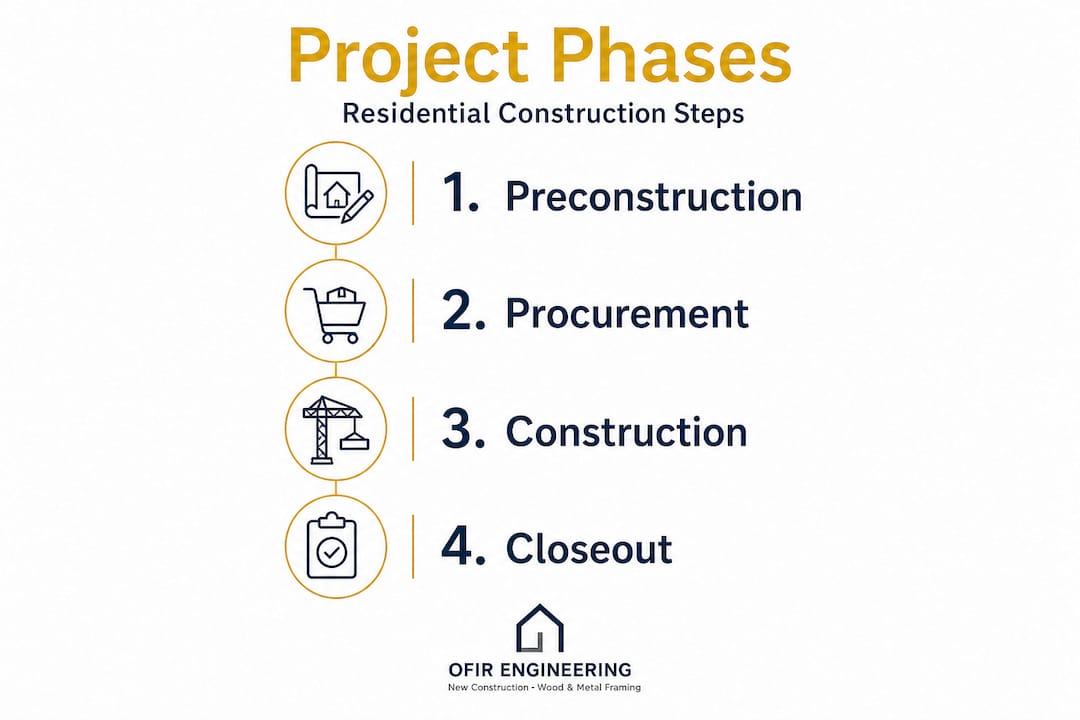
PMI's PMBOK 7th edition principles define a framework that includes stewardship, team collaboration, leadership, value focus, tailoring, adaptability, quality, risk management, and proactive change control. These principles were designed for enterprise projects but translate directly to residential construction when applied at the appropriate scale.
The most relevant principles for Jacksonville homeowners and investors are:
- Stewardship: The project manager acts as a responsible guardian of the owner's budget and time, not simply as a construction supervisor
- Tailoring: No two projects are identical; methodologies and documentation requirements should be calibrated to the specific project rather than applied as rigid templates
- Adaptability: Jacksonville's permitting environment and subcontractor market change regularly; effective PM anticipates disruption rather than reacting to it
- Risk management: Identifying risks during preconstruction, before they become problems in the field, is what separates organized projects from chaotic ones
- Change control: Every scope change must be evaluated for schedule and budget impact before approval, not after the work is done
"Projects managed with high PM maturity meet their budget targets 67% of the time, compared to the industry baseline where 15-28% of projects run significantly over budget." That performance gap is not the result of better luck. It is the direct result of applying structured principles consistently.
For real estate investors, tracking key performance indicators (KPIs) such as RFI cycle times, submittal approval rates, and schedule variance gives objective insight into whether a project is on track. These metrics make it possible to intervene early rather than discovering problems at the point of cost impact. A solid home renovation guide explains how these principles apply at the residential scale, while strategic planning for remodeling addresses how to build them into a project before ground is broken.
Why project management is your greatest advantage in Jacksonville construction
Having worked on residential construction and renovation projects across Jacksonville for over 15 years, a pattern emerges that is consistent regardless of project size: the projects that fail do not fail because of bad craftsmanship. They fail because of oversight gaps, unclear roles, and a lack of transparency between owners, contractors, and subcontractors.
Most homeowners entering a renovation or new build believe the quality of materials and the reputation of the contractor are the primary variables. Those factors matter, but they are secondary to the quality of the project management structure surrounding them. A skilled framer working without a clear schedule and a coordinated procurement plan will still produce delays. An experienced electrician without a defined scope of work will still generate change orders.
The uncomfortable truth is that owner involvement has a measurable impact on outcomes. Owners who attend weekly site meetings, review progress reports, and document decisions in writing consistently see better timelines and fewer disputes than owners who hand off the project and disengage. This does not mean micromanaging tradespeople. It means maintaining visibility into the management layer above them.
Investing in PM expertise at the start of a project, rather than bringing in oversight after problems have emerged, is almost always the more cost-effective path. Understanding the difference between remodeling vs renovation from a project management standpoint, for example, changes how scope, permits, and budgets are structured from day one.
Process consistently outperforms improvisation. Jacksonville homeowners and investors who embrace structured project management do not just complete projects more smoothly. They build the knowledge base and documentation habits that make every subsequent project faster, cheaper, and less stressful than the last.
Ready to take the next step? Start your Jacksonville project with expert guidance
If these principles resonate with your current or upcoming project, the logical next step is accessing tools and expertise that put them into practice from day one.
Ofir Engineering (license CHC1540016) has managed residential construction and renovation projects across Jacksonville for over 15 years, applying structured project management to both Jacksonville new construction and full-home renovations. Whether you are planning a remodel or building from the ground up, starting with the right documentation and planning framework makes every phase easier. Download the free Jacksonville project management checklist to organize your project before construction begins, or explore the Jacksonville home renovation guide for a complete overview of what to expect at each stage.
Frequently asked questions
What does a construction project manager do in residential projects?
A construction project manager plans, coordinates, and controls the project from start to finish, making sure it stays on budget, meets deadlines, and satisfies all applicable regulatory requirements. CPM covers scope, time, cost, quality, safety, and compliance simultaneously.
How can homeowners avoid budget overruns and delays in Jacksonville projects?
Freeze your project scope before construction begins, carry a 20-30% budget buffer for unforeseen conditions, and require weekly written progress updates from your contractor to stay informed throughout execution.
What's the most common cause of residential construction project delays?
Weather and labor shortages are the leading causes of delay in Jacksonville residential projects, with weather alone responsible for 25.7% of project delays, making schedule float during summer months essential.
What is the Critical Path Method (CPM) in construction?
CPM is a scheduling technique that maps the sequence of tasks which, if delayed, directly extend the project completion date. CPM scheduling helps project managers identify where to focus oversight and resources to protect the overall timeline.
How do project management principles benefit real estate investors in Jacksonville?
Structured project management significantly improves budget and schedule performance. High PM maturity projects meet their budget targets 67% of the time, compared to the industry norm where the majority of projects run 15-28% over budget, directly protecting investor returns.