
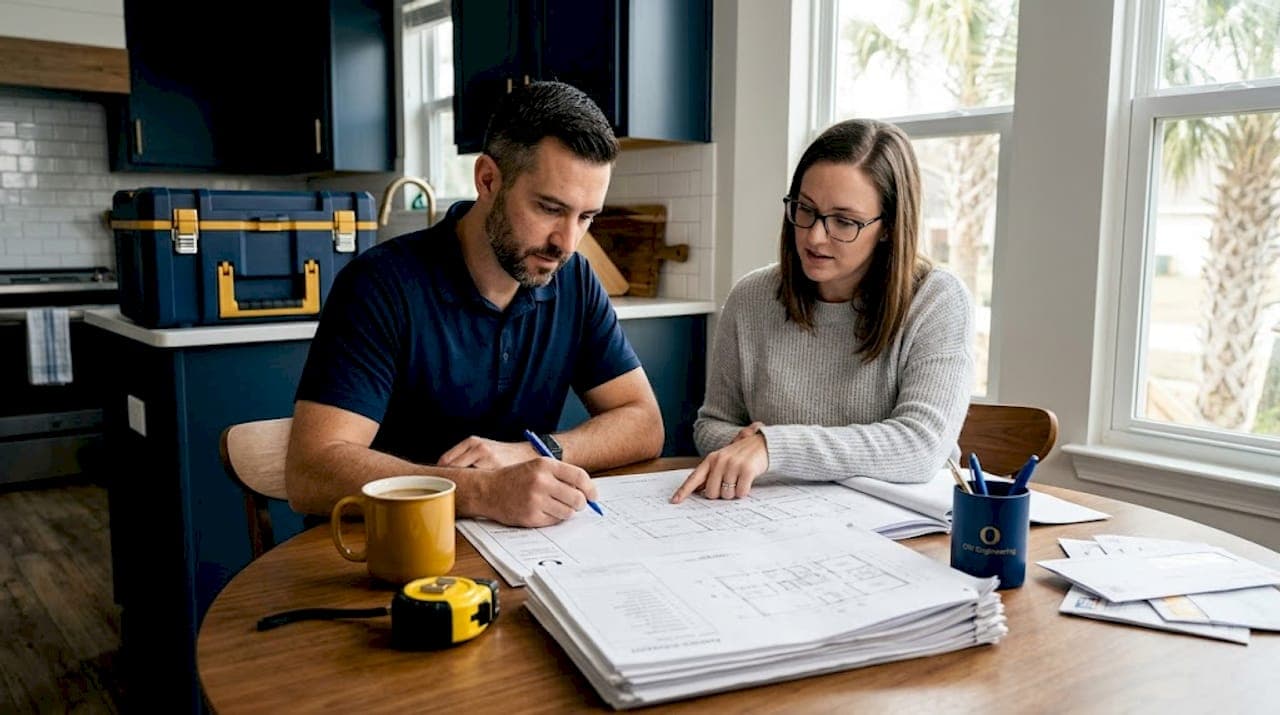
Managing a residential construction project in Jacksonville demands far more than hiring a contractor and waiting for the keys. Between Florida's strict building codes, hurricane-resilience requirements, and the ever-present risk of budget overruns, both homeowners and property investors face a complex web of decisions that can derail even well-funded projects. A structured, phased checklist cuts through that complexity. It creates accountability at every stage, surfaces potential compliance gaps before they become costly corrections, and gives you a clear framework from the first planning meeting through final occupancy. This article walks through each critical phase, with practical guidance tailored specifically to Jacksonville's construction environment.
Table of Contents
- Phase 1: Pre-construction essentials
- Phase 2: Contracts and compliance
- Phase 3: Quality control and phased inspections
- Phase 4: Project closeout and investor controls
- Hard-won lessons: What most checklists get wrong
- Get expert help for your Jacksonville project
- Frequently asked questions
Key Takeaways
| Point | Details |
|---|---|
| Phased checklists | Breaking your project into clear phases ensures nothing critical gets missed. |
| Contract protections | Well-crafted agreements and payment milestones safeguard your investment from delays and overruns. |
| Quality control | Scheduled inspections and thorough documentation can save thousands by preventing errors. |
| Scope management | Controlling scope changes is essential for keeping costs on track, especially for investors. |
| Local expertise | Consulting Jacksonville specialists on hurricane resistance and compliance is crucial for project longevity. |
Phase 1: Pre-construction essentials
Every successful build begins well before a single shovel breaks ground. The pre-construction phase is where decisions carry the most weight and mistakes are the least expensive to fix. Residential project checklists consistently identify this phase as foundational, covering planning, financing, permits, and site preparation as the pillars that support everything that follows.
Defining scope and goals is the first task. Homeowners should document the project's intended use, square footage targets, structural system preferences (Light Gauge Steel versus Wood Frame), finish levels, and timeline expectations. Investors need to layer in exit strategy considerations from day one, whether that means a rental-ready finish or a resale-optimized layout. Vague scope at this stage is the primary driver of change orders and budget drift later.
Securing financing before design work begins protects the project from costly mid-stream interruptions. Construction loans in Florida typically require a detailed scope of work, a licensed contractor, and a draw schedule tied to project milestones. Lenders increasingly require evidence of hurricane-resilient design features, particularly in Duval County's wind exposure zones.
Permitting in Jacksonville follows the Duval County Building Inspection Division's requirements, which include plan review for structural, electrical, mechanical, and plumbing systems. For new construction, the process typically takes four to eight weeks depending on project complexity and submission quality. Incomplete applications are the single most common cause of permit delays. Good construction planning tips emphasize submitting complete, code-compliant drawings the first time to avoid re-review cycles.
Site preparation tasks include soil analysis (particularly important in Jacksonville's coastal plain soils, which can include expansive clay layers), tree removal permits, utility locates, and establishing site access for heavy equipment. Drainage planning is critical given the region's high water table and frequent heavy rainfall.
Key pre-construction tasks to complete before breaking ground:
- Finalize architectural and engineering drawings with a licensed Florida professional
- Confirm zoning compliance and any HOA restrictions
- Submit permit application with complete structural, MEP (mechanical, electrical, plumbing) drawings
- Complete geotechnical (soil) report for foundation design
- Establish a construction budget with a 10 to 15 percent contingency reserve
- Arrange temporary utilities and site fencing
Pro Tip: Submit hurricane-resistant feature specifications, including impact-rated windows, reinforced roof-to-wall connections, and continuous load path details, during the initial permit review. Getting these approved early prevents costly design revisions after structural framing begins, and it satisfies Florida Building Code Section 1609 requirements from the outset. You can review more about planning new construction to understand how these structural decisions affect long-term performance.
Phase 2: Contracts and compliance
Once the plan and permits are in place, the next hurdle is securing contracts that protect the owner and establish clear accountability for every party involved. A poorly drafted contract is one of the most common sources of financial exposure on residential projects, yet many homeowners sign agreements without fully understanding the terms.
Construction contracts must specify the price type (fixed lump sum or Guaranteed Maximum Price), a written change order process requiring owner approval before work proceeds, payment milestones tied to inspection sign-offs, insurance naming the owner as an additional insured, and liquidated damages clauses for schedule delays. Each of these provisions serves a specific protective function.
Fixed versus GMP pricing affects risk allocation. A fixed lump sum places material and labor risk on the contractor, which is favorable for owners when the scope is well-defined. A Guaranteed Maximum Price (GMP) contract shares savings if costs come in under budget but caps the owner's exposure, making it better suited for projects with some design flexibility. Investors managing multiple properties often prefer GMP contracts because they provide both a cost ceiling and incentive for efficiency.
Change order discipline is where many projects unravel. Every change, regardless of how minor it seems, should require a written change order with a defined cost and schedule impact before work begins. Verbal approvals are unenforceable and create disputes at project closeout.
Retainage (typically 10 percent of each payment withheld until final completion) protects the owner if the contractor fails to complete punch list items or correct deficiencies. Florida Statute 715.12 governs retainage on construction contracts, and owners should confirm their contract aligns with these requirements.
| Contract term | Homeowner priority | Investor priority |
|---|---|---|
| Price type | Fixed lump sum for budget certainty | GMP for flexibility and savings sharing |
| Change orders | Written approval, cost and schedule impact | Written approval, tied to BOQ line items |
| Payment milestones | Tied to inspection sign-offs | Tied to draw schedule and budget tracking |
| Insurance | Owner as additional insured | Owner and lender as additional insured |
| Liquidated damages | Schedule protection | Exit strategy timeline protection |
| Retainage | 10% held to final completion | 10% with clear release conditions |
Review Jacksonville construction services to understand what a well-structured service agreement looks like in practice, and how project management services can help enforce these contract terms throughout the build.
Pro Tip: Include a liquidated damages clause specifying a daily dollar amount for each day the project runs past the agreed completion date. This provision incentivizes the contractor to maintain schedule and gives the owner a defined remedy without having to prove actual damages in court.
Phase 3: Quality control and phased inspections
With contracts signed, maintaining quality becomes the owner's most active responsibility. The most expensive construction mistakes are not the ones caught during inspections. They are the ones that get covered up before anyone looks closely. Fixing errors after drywall installation can cost 10 to 25 times more than correcting them during the rough-in stage, a figure that underscores why phased inspection discipline is non-negotiable.
Jacksonville's Florida Building Code requirements mandate inspections at specific stages, but the mandatory minimums are not sufficient for quality assurance on their own. Owners and project managers should conduct independent reviews at each phase, documented with dated photographs and written logs.
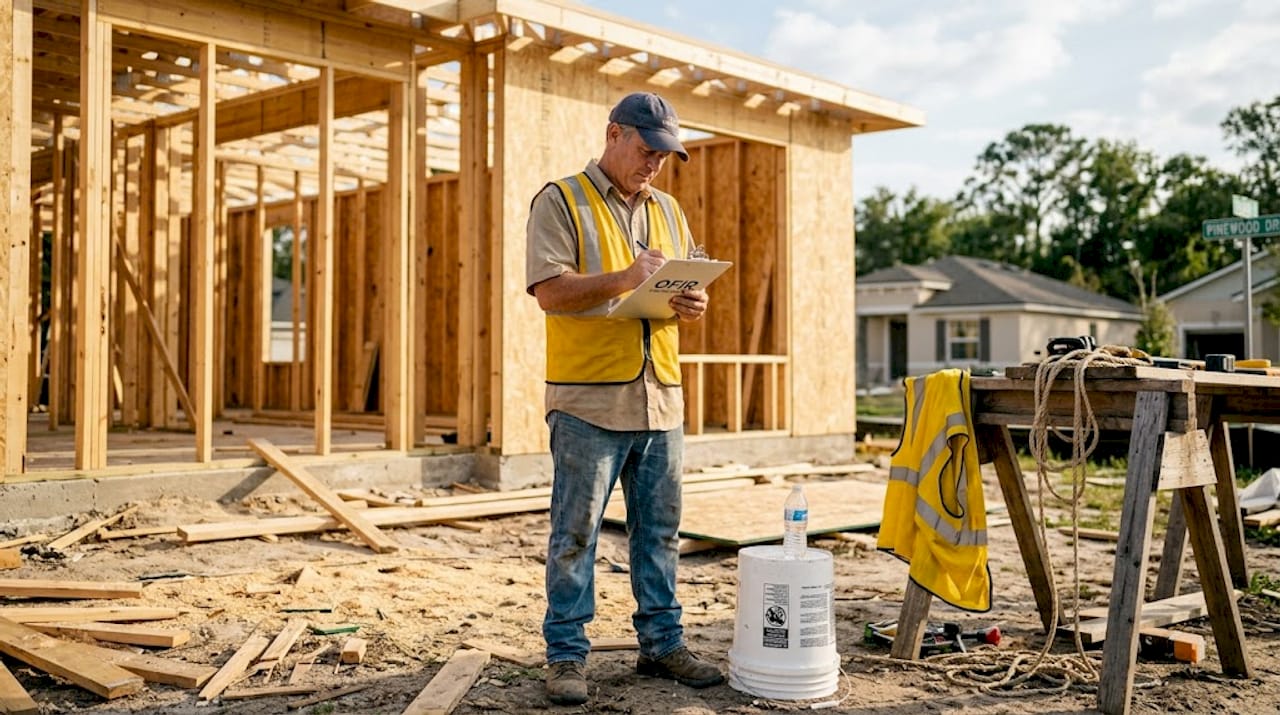
Foundation and structural stage inspections verify that footings, slab reinforcement, and anchor bolt placement match the engineered drawings. In Jacksonville's soil conditions, this stage also confirms that any required soil treatment or compaction has been completed and tested. For steel frame homes, this is also when cold-formed steel member connections and bracing are verified against the structural drawings before any sheathing is applied.
Rough-in inspections cover electrical, plumbing, and HVAC systems installed within wall cavities and floor assemblies before they are concealed. This is the last opportunity to verify that hurricane-strapping, hurricane clips, and roof-to-wall connections are correctly installed and meet Florida Building Code wind uplift requirements.
Finish stage and final walk-through inspections address cosmetic and functional items: door hardware, cabinetry alignment, tile grout, paint coverage, fixture operation, and appliance function. A structured punch list at this stage, with each item assigned to a responsible party and a completion deadline, prevents the common problem of minor deficiencies being left unresolved after the owner takes possession.
Phased inspection schedule and documentation requirements:
- Foundation: Footing depth, rebar placement, anchor bolt location, soil compaction report
- Structural framing: Member sizing, connection hardware, shear wall sheathing, hurricane straps
- Rough-in MEP: Pipe pressure tests, electrical rough-in approval, HVAC duct layout
- Insulation and air barrier: R-value verification, continuous air barrier at penetrations
- Finishes: Tile, paint, trim, fixture installation, appliance operation
- Final: Certificate of Occupancy inspection, punch list completion, utility activation
Detailed guidance on constructing steel frame homes in Florida's climate highlights how cold-formed steel framing, when properly installed and documented, provides a measurable advantage in wind resistance compared to conventional wood framing, particularly relevant for Jacksonville's ASCE 7 wind exposure categories.
"Integrating quality control via phase inspections before covering work, using photos and daily logs, and addressing hurricane-resistant features such as impact windows and reinforced roofs from the earliest stages is the standard of practice for Florida residential construction." — Home Building Checklist for Homeowners
Phase 4: Project closeout and investor controls
After quality control, the project moves toward its final stage: closing inspections, compliance documentation, and formal handover. This phase is where many projects stall, particularly when punch lists are left open or occupancy documentation is incomplete.
Final completion checklist items include the Certificate of Occupancy (CO) issued by Duval County after the final building inspection, confirmation that all subcontractor lien waivers have been collected, final utility connections and meter activation, and the formal punch list sign-off by the owner. The CO is a legal requirement before any residential occupancy, and lenders typically require it before releasing final loan draws.
Steps to close out a residential construction project properly:
- Schedule the final building inspection with Duval County at least five business days in advance
- Conduct an owner walk-through and document all punch list items with photos
- Assign each punch list item to the responsible contractor with a written completion deadline
- Collect signed lien waivers from the general contractor and all major subcontractors
- Confirm all permit cards are signed off and filed with the county
- Verify that all warranties (structural, mechanical, appliance) are transferred to the owner in writing
- Activate utilities and test all systems under normal operating conditions
- Obtain the Certificate of Occupancy and store it with the project file
Investor-specific controls require an additional layer of discipline. Scope creep is the leading cause of cost overruns on investment properties, and tracking the Bill of Quantities (BOQ) against actual expenditures throughout the project is the most reliable method for catching budget drift early. The BOQ is a detailed, itemized list of all materials, quantities, and unit costs that forms the basis of the project budget. Comparing actual invoices against BOQ line items at each draw request reveals where costs are running over before the overrun becomes unmanageable.
Average cost overruns on residential construction projects range from 7 to 15 percent when scope is not actively controlled, a figure that can significantly erode an investor's projected return on a renovation or new build.
Pro Tip: Align the project completion date explicitly with your exit strategy. If you are planning a resale, the completion date should account for market seasonality in Jacksonville. If you are targeting a rental, the completion date should align with lease-up timing. A project that finishes three months late in a slow leasing season costs more than just the delay penalty. Review the commercial project guide for additional scope control frameworks applicable to investment-grade residential projects.
Hard-won lessons: What most checklists get wrong
Most construction checklists are structured around compliance minimums, covering what is legally required rather than what actually produces a well-managed project. After more than 15 years of managing residential builds and renovations in Jacksonville, the pattern is consistent: the projects that finish on time and within budget are not the ones with the longest checklists. They are the ones where scope control and documentation discipline were treated as non-negotiable from day one.
The most common gap in standard checklists is the treatment of hurricane-resilient features as optional upgrades rather than structural requirements. In Jacksonville's wind exposure environment, impact-rated windows, reinforced roof-to-wall connections, and continuous load path detailing are not premium add-ons. They are fundamental to the building's long-term performance and insurance eligibility. Cutting corners on these features to save money during construction reliably produces larger costs at the insurance renewal or after the first significant storm event.
Scope control matters more than finish quality for investors. A beautifully tiled bathroom does not recover a project that ran 20 percent over budget because change orders were approved verbally and never tracked. The Jacksonville renovation guide reinforces this point: documented change orders, photo logs, and BOQ tracking are the practical tools that separate a well-managed project from one that simply got finished.
Every inspection, every change order, and every subcontractor communication should exist in writing. Paper trails are not bureaucracy. They are the owner's primary protection when disputes arise at closeout.
Get expert help for your Jacksonville project
Navigating Jacksonville's permitting requirements, wind zone compliance, and contractor agreements is significantly more manageable with an experienced local partner who has handled these exact challenges across hundreds of residential projects.
Ofir Engineering (license CHC1540016) brings over 15 years of Jacksonville-specific construction and project management experience to every engagement, from initial scope definition through Certificate of Occupancy. Whether you are planning new construction using Light Gauge Steel or Wood Frame systems, or managing a full home remodeling project, the team provides structured checklists, contract review support, phased inspection oversight, and BOQ tracking tailored to your project's scope and your investment goals. Contact Ofir Engineering to discuss a customized project management plan for your Jacksonville build.
Frequently asked questions
How many phases does a typical residential construction checklist have?
Most residential construction checklists break down into five key phases: pre-construction, foundation and structural, systems rough-in, interior finishing, and final completion. Each phase has distinct inspection and documentation requirements.
What should I look for in a construction contract to protect myself as a homeowner?
Your contract should specify price type, require written change orders with cost and schedule impacts, tie payments to inspection milestones, name you as an additional insured, and include liquidated damages for late completion.
How can I avoid expensive mistakes during construction?
Schedule independent inspections at each phase, document everything with dated photos and written logs, and address hurricane-resistant features before work is covered up, since correcting post-drywall errors can cost up to 25 times more than fixing them during rough-in.
What is scope creep and how does it impact my project?
Scope creep refers to uncontrolled additions or changes to the project requirements, and it is the leading cause of overruns on residential builds, with average cost overruns reaching 7 percent or more when BOQ tracking is absent.
How is hurricane-proofing handled in Jacksonville construction projects?
Hurricane-resistant features such as impact windows and reinforced roof assemblies must be integrated at the planning phase and approved during permitting to meet Florida Building Code requirements, not added as afterthoughts during construction.