
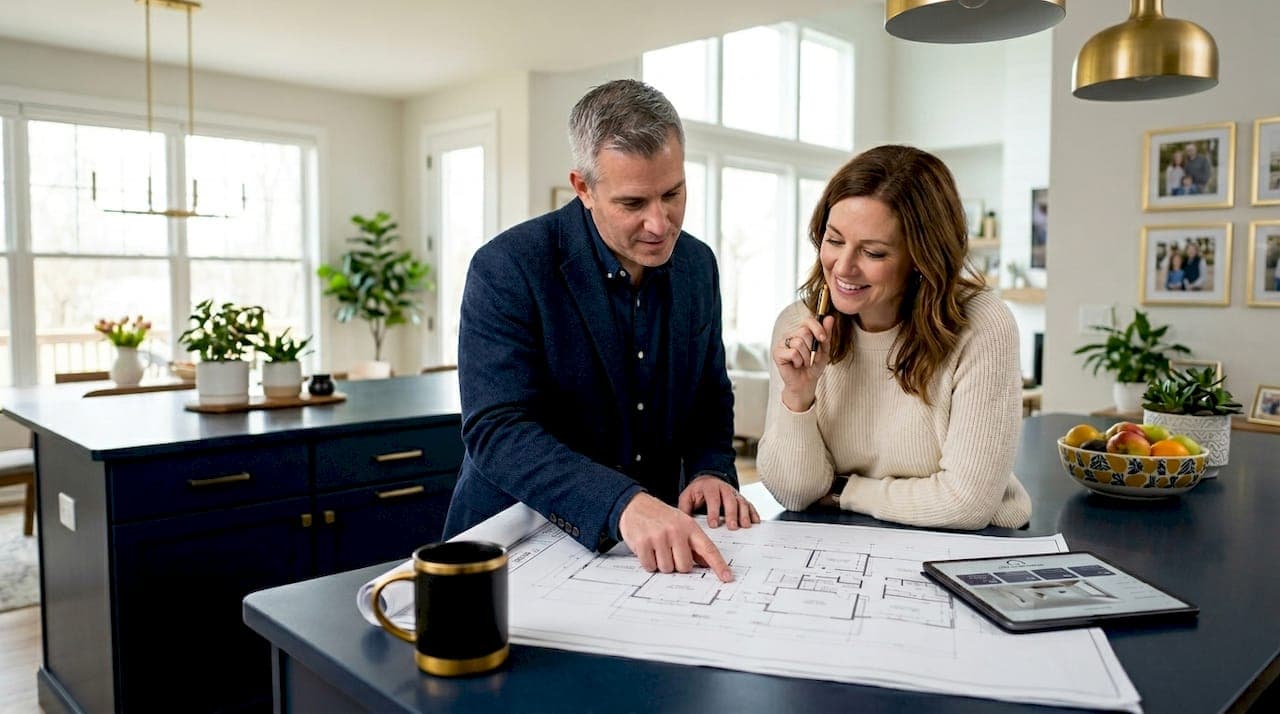
Most people assume the benefits of custom home building are limited to aesthetics. They think it simply means picking your tile color or choosing a floor plan from a catalog. That assumption is wrong, and it costs prospective buyers real money. Custom home building gives you complete control over structural decisions, material quality, energy systems, and long-term operating costs. For Jacksonville homeowners considering their options, understanding what a truly tailored build offers, compared to buying pre-built, changes the calculation entirely.
Table of Contents
- Key takeaways
- Financial benefits of custom home building
- Design flexibility and personalization advantages
- Construction process quality and timeline management
- Energy efficiency and sustainability in custom builds
- Custom homes vs. pre-built: a side-by-side comparison
- My perspective on what custom building actually delivers
- Build your Jacksonville home with Ofirengineering
- FAQ
Key takeaways
| Point | Details |
|---|---|
| Long-term savings are substantial | New custom homes save an average of $25,000+ over 10 years compared to comparable existing homes. |
| Design control goes beyond aesthetics | Custom builds allow layout, material, and technology choices that pre-built homes simply cannot match. |
| Process quality determines outcomes | The builder's organization and process matter more than the complexity of the specifications. |
| Energy efficiency is built in from day one | Site-specific design and modern systems reduce utility costs for the lifetime of the home. |
| Builder experience is non-negotiable | Integrated design-build teams reduce delays, budget overruns, and costly mid-project changes. |
Financial benefits of custom home building
The upfront cost of a custom build is real, and it would be misleading to minimize it. What most buyers fail to account for, however, is the total cost of ownership over time. A Realtor.com analysis found that new-construction homes provide an average of $25,335 in savings over 10 years compared to comparable existing homes, primarily through lower energy bills and reduced repair costs. In climate-heavy regions, those savings can reach $39,000 or more.
Custom homes are built with current materials, current code compliance, and modern mechanical systems. That means you are not inheriting a 20-year-old HVAC system, degraded insulation, or outdated electrical wiring. Maintenance costs on new construction are measurably lower across the board because there is simply less deferred work to address.
The table below compares approximate 10-year ownership costs between a custom new build and a comparable pre-built existing home in the Jacksonville market:
| Cost Category | Custom New Build | Pre-Built Existing Home |
|---|---|---|
| Energy costs (10 years) | Lower by 20-30% | Higher baseline costs |
| Major repairs (10 years) | Minimal under warranty | $15,000–$30,000 typical |
| HVAC replacement | Unlikely in first 10 years | Likely within 5-8 years |
| Roof replacement | Unlikely in first 15-20 years | Possible within first decade |
| Total 10-year cost edge | $25,000–$39,000 savings | Baseline comparison |
There are also potential tax advantages worth exploring. Energy-efficient custom homes may qualify for federal tax credits tied to solar installations, heat pump systems, or high-performance insulation upgrades. Working with a licensed contractor who understands current incentive programs helps you capture those benefits during the planning phase, not after construction is complete.
Pro Tip: When budgeting for a custom build, request a 10-year total cost of ownership projection from your builder. Compare it directly against comparable pre-built homes in the same area to make an informed financial decision rather than reacting to sticker price alone.
Design flexibility and personalization advantages
The personalized home advantages of a custom build extend well beyond interior finishes. When you build from scratch, you determine how every square foot functions. A family with aging parents might prioritize single-floor accessibility. A remote-working couple may need separate office spaces with soundproofing built into the framing. A custom layout addresses those needs from the foundation up, rather than forcing occupants to adapt to a structure built for a theoretical average buyer.
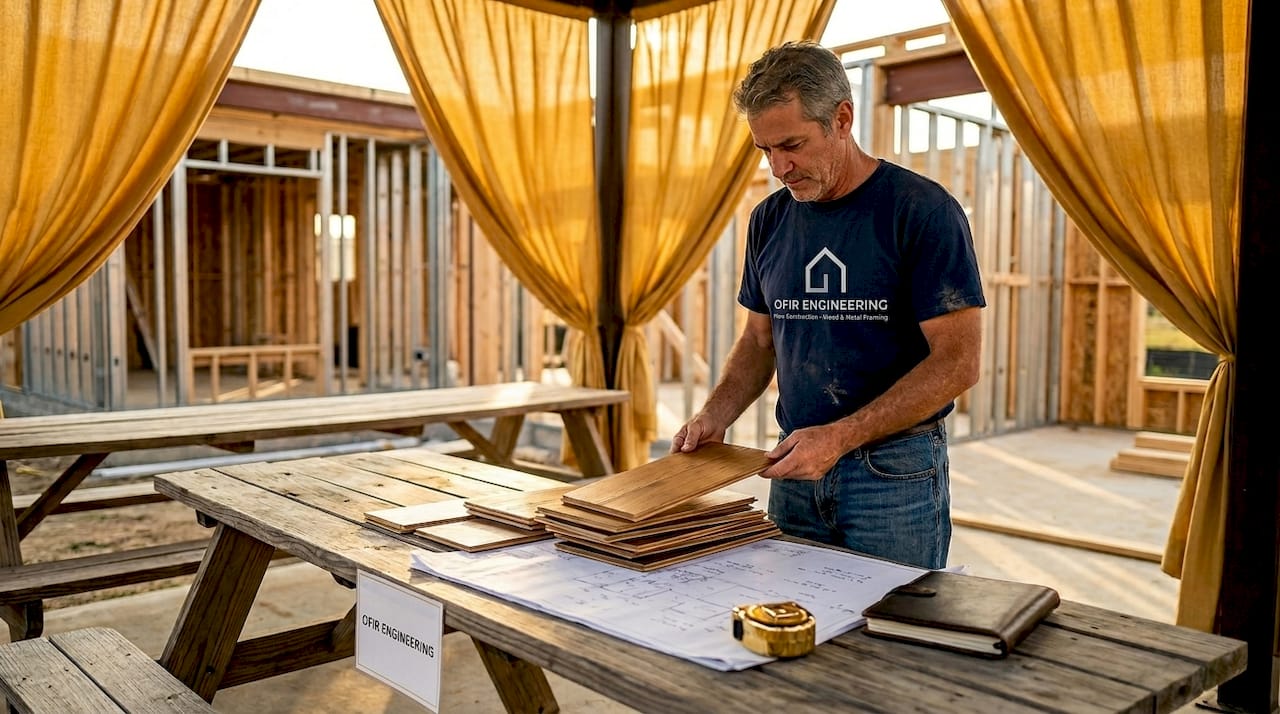
The customization possibilities include layout configuration, material selection, architectural style, mechanical systems, smart home technology integration, and finish specifications. That range of control is simply not available in a production home where margins depend on standardization. Pre-built homes are designed to appeal to the widest possible buyer pool, which means compromises at nearly every level.
The custom home design benefits also extend to technology integration. Modern custom builds can incorporate structured wiring for whole-home audio, pre-wired EV charging infrastructure in the garage, centralized smart home control systems, and energy monitoring panels. Installing these systems during construction costs a fraction of what retrofitting them into an existing home requires.
Key personalization advantages specific to custom builds include:
- Floor plan configuration tailored to how your household actually lives, not how a developer assumes you will
- Material and finish selections based on durability preferences, not cost-cutting production schedules
- Structural choices such as ceiling height, open spans, or reinforced framing for specific use cases
- Technology pre-wiring for EV charging, solar-ready conduit, and smart home systems
- Architectural style alignment with the surrounding neighborhood or a specific design vision
Pro Tip: Finalize all interior selections, including fixtures, flooring, and cabinetry, before construction begins. Late changes are one of the most common causes of cost overruns in custom home projects.
Ofirengineering works with Jacksonville homeowners during the pre-construction phase to solidify design decisions early. Reviewing the Jacksonville homeowner's guide to the custom building process gives you a clear picture of how those early decisions affect the entire project.
Construction process quality and timeline management
A persistent myth about custom home building is that it takes significantly longer than buying a pre-built home. The reality is more nuanced. An experienced builder operating with an integrated design-build approach manages a predictable, stage-by-stage process. Early decision-making and clear communication are the primary drivers of staying on schedule. Delays happen when selections are deferred, approvals are incomplete, or subcontractor coordination breaks down.
The typical construction phases for a custom build proceed as follows:
- Site assessment and permitting — Survey, soil analysis, engineering review, and permit submission. Duration varies by jurisdiction but is predictable with an experienced local contractor.
- Foundation work — Excavation, forming, and concrete placement. Proper sequencing here prevents costly structural issues later.
- Framing — Structural assembly using Light Gauge Steel or Wood Frame systems depending on design requirements and site conditions.
- Mechanical rough-in — Electrical, plumbing, and HVAC installation before walls are closed.
- Insulation and exterior cladding — Weatherproofing and energy performance systems installed to specification.
- Interior finishes — Drywall, flooring, cabinetry, trim, and fixture installation.
- Final inspections and punch list — Code compliance verification and final walkthrough corrections.
Precision prefabrication of structural components in controlled factory environments reduces weather-related delays and improves dimensional accuracy. Components manufactured off-site meet tighter tolerances than field-cut lumber, which directly improves insulation performance and structural integrity. This approach is particularly effective in Florida's climate, where moisture management and wind resistance are non-negotiable.
The home construction timeline is largely determined by builder organization, not the complexity of the custom specifications themselves. Choosing an experienced firm like Ofirengineering, which has over 15 years of residential construction experience in Jacksonville, significantly reduces the risk of timeline disruptions.
Energy efficiency and sustainability in custom builds
Custom homes offer a meaningful advantage when it comes to energy performance, and the reason is straightforward. Every system is specified and installed for the actual site, the actual climate zone, and the actual occupancy patterns of the people living there. That site-specific approach to passive heating and cooling design is not possible when you purchase a home built to fit a mass-market profile.
The energy efficiency gains available in custom construction include:
- Advanced insulation assemblies using spray foam, rigid board, or hybrid systems calibrated to Florida's mixed-humid climate classification
- High-performance windows with low-E coatings and thermally broken frames that reduce solar heat gain in summer without sacrificing natural light
- Heat pump systems sized precisely for the home's load calculations, replacing oversized conventional HVAC equipment that cycles inefficiently
- Solar-ready design with pre-installed conduit, panel space, and roof orientation optimized for photovoltaic production
- Airtight building envelopes with controlled mechanical ventilation, which reduces infiltration losses that plague older existing homes
Ofirengineering's detailed resource on insulation and energy savings in Florida steel homes demonstrates how these techniques are applied in the Jacksonville market specifically. Light Gauge Steel framing, one of Ofirengineering's core construction systems, offers dimensional stability and compatibility with continuous insulation strategies that improve overall thermal performance compared to conventional wood framing.
Custom homes vs. pre-built: a side-by-side comparison
Understanding why choose custom building over a pre-built option requires an honest look at both sides. Custom construction offers clear advantages in design control, material quality, and long-term value. Pre-built homes offer speed to occupancy and a more predictable upfront transaction. The right choice depends on your timeline, priorities, and how long you intend to occupy the home.
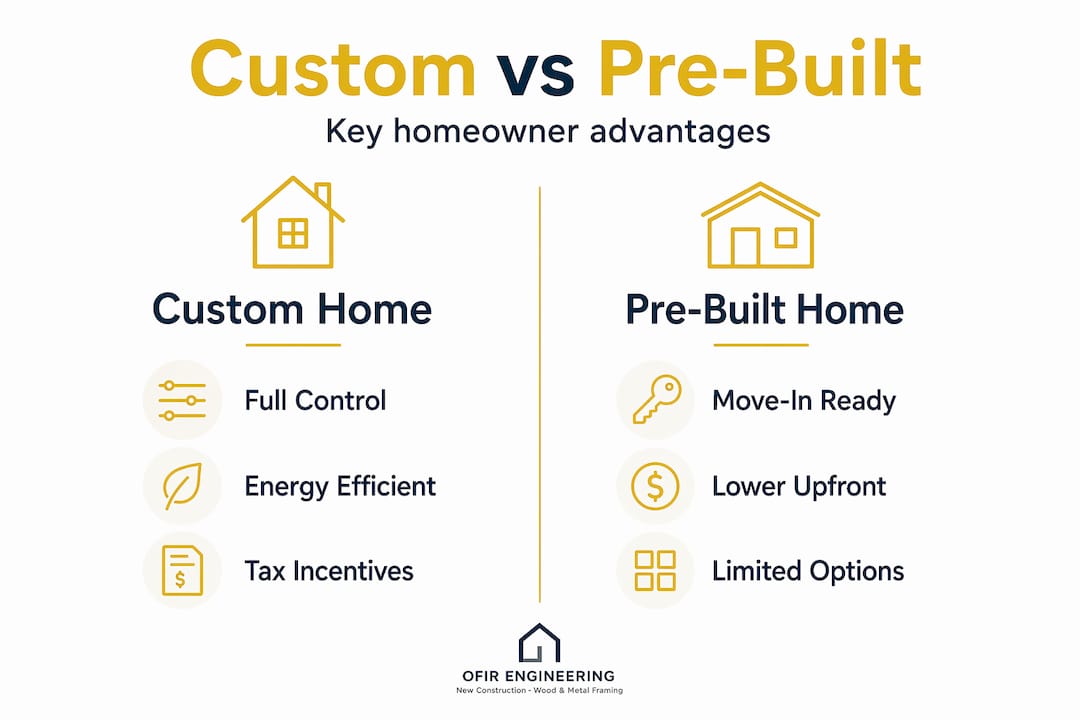
| Decision Factor | Custom Home | Pre-Built Home |
|---|---|---|
| Design control | Full, from structural to finish | Limited to available inventory |
| Upfront cost | Higher, but negotiable by scope | Fixed at listing price |
| Move-in timeline | 8-18 months typical | Immediate to 60 days |
| Long-term savings | $25,000+ over 10 years | Dependent on condition of home |
| Energy efficiency | Optimized at construction | Variable, often requires upgrades |
| Material quality | Specified by owner and builder | Set by developer's cost targets |
| Technology integration | Pre-wired during construction | Retrofit costs apply |
| Maintenance exposure | Low in first 10-15 years | Higher if home is 10+ years old |
The custom home investment benefits become most apparent over a 7 to 10-year holding period. If you plan to stay in a home for a decade or more, the financial math consistently favors building custom over purchasing an existing home and immediately absorbing its deferred maintenance backlog.
For buyers with a compressed timeline, a pre-built home may still be the practical choice. But for those who have 12 to 18 months of planning runway and a clear vision for how they want to live, the advantages of custom homes are measurable, not just aspirational.
My perspective on what custom building actually delivers
I've worked closely enough with the custom home building process to form a clear opinion: the biggest misconception buyers carry into this decision is that the complexity of the custom specifications is what creates risk. It does not. The risk comes from choosing the wrong builder.
I've seen projects with straightforward layouts go sideways because the builder had no coordinated process for managing subcontractors or tracking selections. I've also seen intricate, technically demanding builds finish on time and on budget because the builder treated project management as seriously as construction itself. Integrated design-build processes that consolidate design decisions, material selections, and contractor coordination under one roof are the clearest predictor of a smooth project.
What actually leads to greater homeowner satisfaction is not the number of custom features. It's how well the builder-client relationship functions from the first planning meeting to the final walkthrough. Early clarity on budget, selections locked in before framing begins, and a builder who serves as a single accountable point of contact throughout the project are what separate successful builds from cautionary tales.
The long-term financial data supports building custom, but the real reason people who go through the process report higher satisfaction is simpler. They live in a home that was designed for them, not for a median buyer who doesn't exist.
— Owen
Build your Jacksonville home with Ofirengineering
Ofirengineering brings over 15 years of licensed residential construction experience to Jacksonville homeowners considering a custom new construction project. The firm's capabilities span Light Gauge Steel and Wood Frame construction systems, full project management from permitting through final inspection, and a client-first planning process designed to eliminate the surprises that drive cost overruns. Whether you are starting with a lot and a vision or need guidance on what is realistic for your budget, Ofirengineering provides the technical depth and local market knowledge to move your project forward with confidence. Explore the project management guide for Jacksonville to understand exactly how a well-managed custom build comes together from start to finish.
FAQ
How much can you save by building a custom home?
New-construction custom homes save an average of $25,335 over 10 years compared to existing homes, primarily through lower energy and repair costs. In some regions, those savings exceed $39,000.
How long does it take to build a custom home?
Most custom home projects take between 8 and 18 months from design finalization to move-in, depending on permitting timelines, site conditions, and how quickly selections are made. Early decision-making is the single most effective way to keep the timeline on track.
Are custom homes more energy-efficient than pre-built homes?
Yes. Custom homes are designed and built with site-specific insulation, mechanical systems, and building envelope specifications. Passive heating and cooling strategies and properly sized HVAC equipment produce measurably lower utility costs compared to older existing homes.
What are the biggest risks in custom home building?
The primary risks are budget overruns from late changes and delays caused by poor subcontractor coordination. Choosing an experienced builder with an integrated design-build process and transparent budgeting practices substantially reduces both risks.
Is a custom home a better long-term investment than a pre-built home?
For homeowners planning to stay 7 to 10 years or more, custom homes consistently outperform pre-built options in total cost of ownership. Buyers of new construction avoid the repair and upgrade costs that accumulate in older homes, which directly supports long-term equity growth.